 Add to Chrome
 Add to Firefox
 Add to Edge
Semantic Invariance in Agentic AI
Mar 16, 2026
Large Language Models (LLMs) increasingly serve as autonomous reasoning agents in decision support, scientific problem-solving, and multi-agent coordination systems. However, deploying LLM agents in consequential applications requires assurance that their reasoning remains stable under semantically equivalent input variations, a property we term semantic invariance. Standard benchmark evaluations, which assess accuracy on fixed, canonical problem formulations, fail to capture this critical reliability dimension. To address this shortcoming, in this paper we present a metamorphic testing framework for systematically assessing the robustness of LLM reasoning agents, applying eight semantic-preserving transformations (identity, paraphrase, fact reordering, expansion, contraction, academic context, business context, and contrastive formulation) across seven foundation models spanning four distinct architectural families: Hermes (70B, 405B), Qwen3 (30B-A3B, 235B-A22B), DeepSeek-R1, and gpt-oss (20B, 120B). Our evaluation encompasses 19 multi-step reasoning problems across eight scientific domains. The results reveal that model scale does not predict robustness: the smaller Qwen3-30B-A3B achieves the highest stability (79.6% invariant responses, semantic similarity 0.91), while larger models exhibit greater fragility.

Tree-Based Learning in RNNs for Power Consumption Forecasting
Sep 03, 2022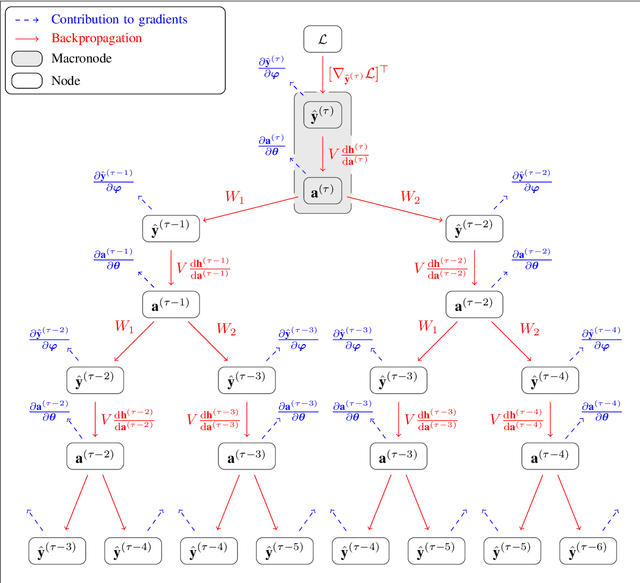
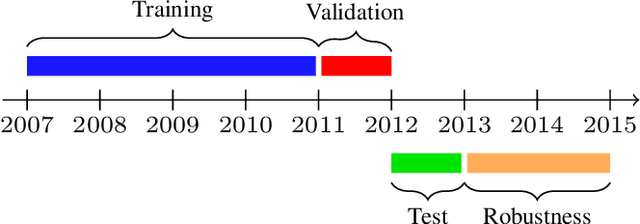
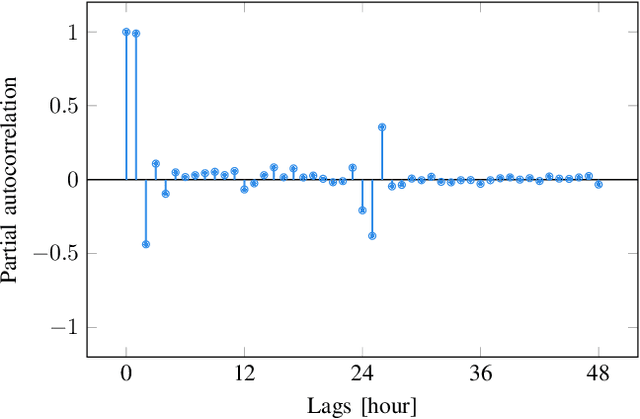
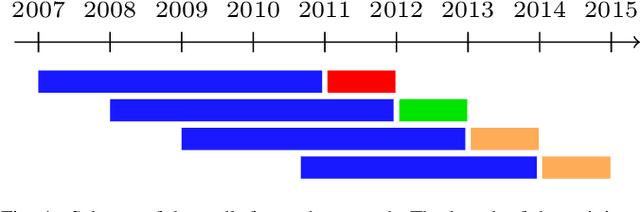
A Recurrent Neural Network that operates on several time lags, called an RNN(p), is the natural generalization of an Autoregressive ARX(p) model. It is a powerful forecasting tool when different time scales can influence a given phenomenon, as it happens in the energy sector where hourly, daily, weekly and yearly interactions coexist. The cost-effective BPTT is the industry standard as learning algorithm for RNNs. We prove that, when training RNN(p) models, other learning algorithms turn out to be much more efficient in terms of both time and space complexity. We also introduce a new learning algorithm, the Tree Recombined Recurrent Learning, that leverages on a tree representation of the unrolled network and appears to be even more effective. We present an application of RNN(p) models for power consumption forecasting on the hourly scale: experimental results demonstrate the efficiency of the proposed algorithm and the excellent predictive accuracy achieved by the selected model both in point and in probabilistic forecasting of the energy consumption.