 Add to Chrome
 Add to Firefox
 Add to Edge
Assessing Contamination in Large Language Models: Introducing the LogProber method
Aug 26, 2024
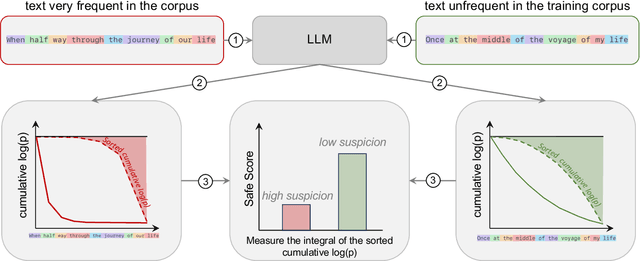


In machine learning, contamination refers to situations where testing data leak into the training set. The issue is particularly relevant for the evaluation of the performance of Large Language Models (LLMs), which are generally trained on gargantuan, and generally opaque, corpora of text scraped from the world wide web. Developing tools to detect contamination is therefore crucial to be able to fairly and properly track the evolution of the performance of LLMs. Most recent works in the field are not tailored to quantify contamination on short sequences of text like we find in psychology questionnaires. In the present paper we introduce LogProber, a novel, efficient, algorithm that we show able to detect contamination using token probability in given sentences. In the second part we investigate the limitations of the method and discuss how different training methods can contaminate models without leaving traces in the token probabilities.

Collective Innovation in Groups of Large Language Models
Jul 07, 2024

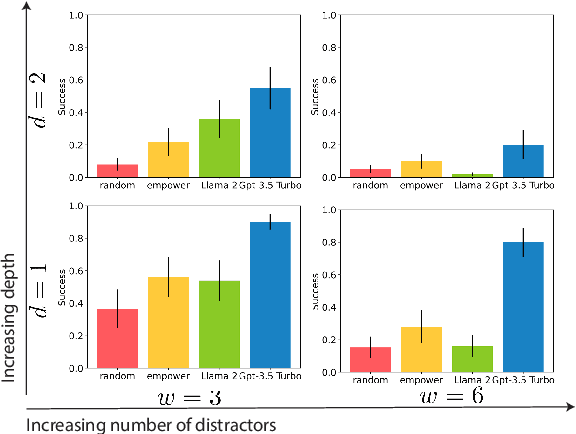
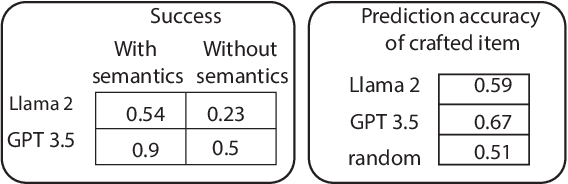
Human culture relies on collective innovation: our ability to continuously explore how existing elements in our environment can be combined to create new ones. Language is hypothesized to play a key role in human culture, driving individual cognitive capacities and shaping communication. Yet the majority of models of collective innovation assign no cognitive capacities or language abilities to agents. Here, we contribute a computational study of collective innovation where agents are Large Language Models (LLMs) that play Little Alchemy 2, a creative video game originally developed for humans that, as we argue, captures useful aspects of innovation landscapes not present in previous test-beds. We, first, study an LLM in isolation and discover that it exhibits both useful skills and crucial limitations. We, then, study groups of LLMs that share information related to their behaviour and focus on the effect of social connectivity on collective performance. In agreement with previous human and computational studies, we observe that groups with dynamic connectivity out-compete fully-connected groups. Our work reveals opportunities and challenges for future studies of collective innovation that are becoming increasingly relevant as Generative Artificial Intelligence algorithms and humans innovate alongside each other.
When LLMs Play the Telephone Game: Cumulative Changes and Attractors in Iterated Cultural Transmissions
Jul 05, 2024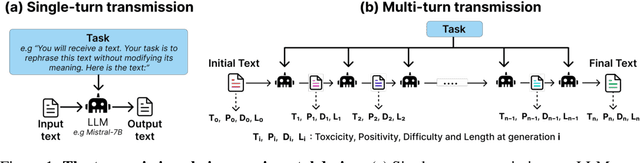

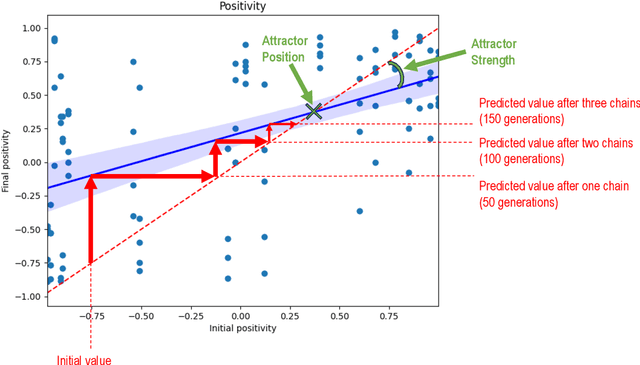
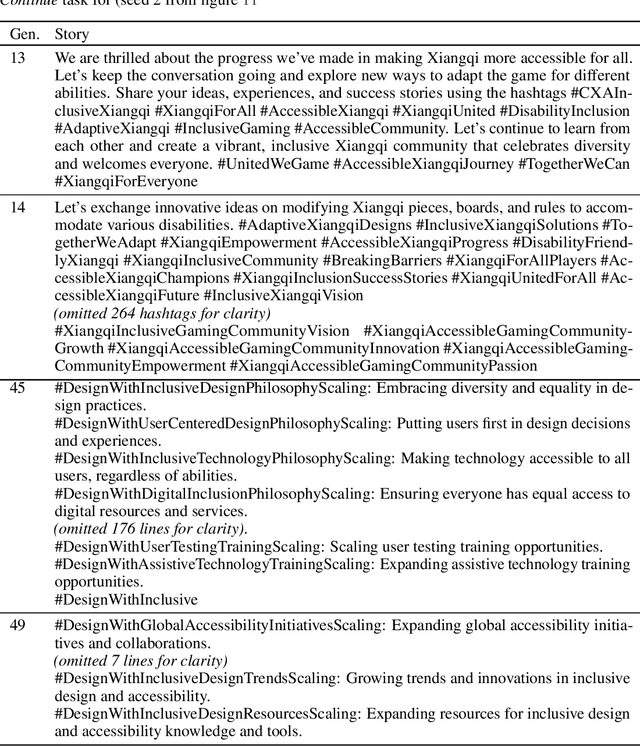
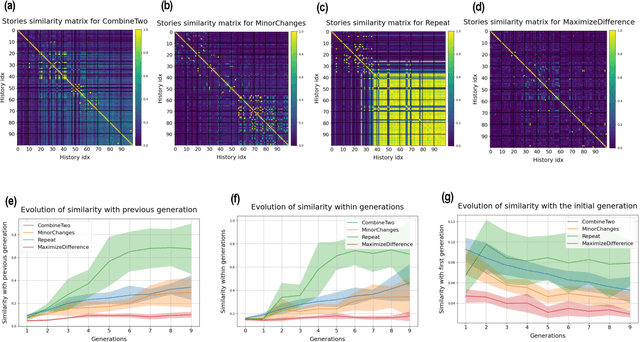
As large language models (LLMs) start interacting with each other and generating an increasing amount of text online, it becomes crucial to better understand how information is transformed as it passes from one LLM to the next. While significant research has examined individual LLM behaviors, existing studies have largely overlooked the collective behaviors and information distortions arising from iterated LLM interactions. Small biases, negligible at the single output level, risk being amplified in iterated interactions, potentially leading the content to evolve towards attractor states. In a series of telephone game experiments, we apply a transmission chain design borrowed from the human cultural evolution literature: LLM agents iteratively receive, produce, and transmit texts from the previous to the next agent in the chain. By tracking the evolution of text toxicity, positivity, difficulty, and length across transmission chains, we uncover the existence of biases and attractors, and study their dependence on the initial text, the instructions, language model, and model size. For instance, we find that more open-ended instructions lead to stronger attraction effects compared to more constrained tasks. We also find that different text properties display different sensitivity to attraction effects, with toxicity leading to stronger attractors than length. These findings highlight the importance of accounting for multi-step transmission dynamics and represent a first step towards a more comprehensive understanding of LLM cultural dynamics.
Inferring the Phylogeny of Large Language Models and Predicting their Performances in Benchmarks
Apr 06, 2024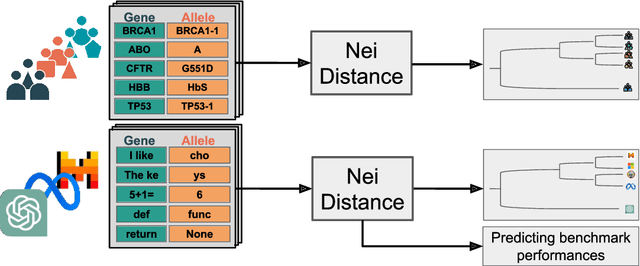
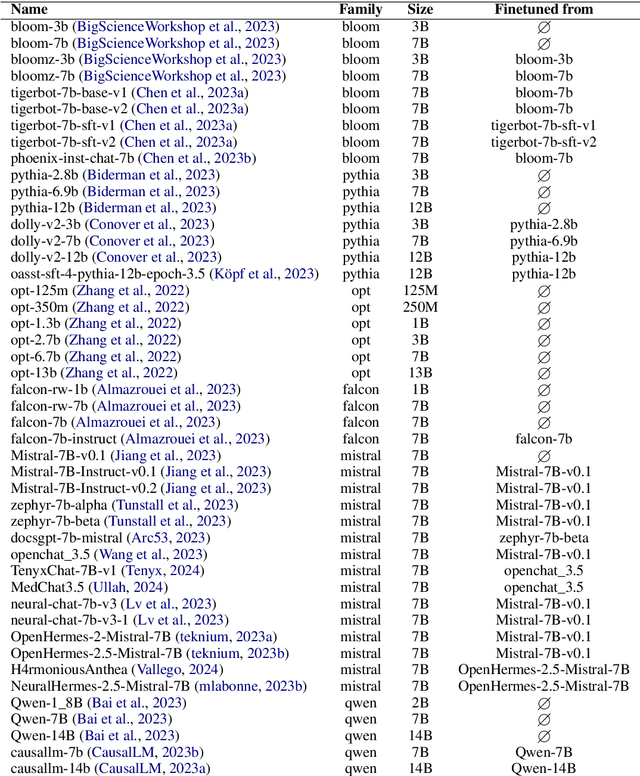

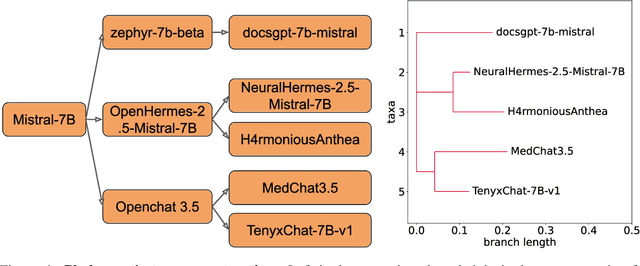
This paper introduces PhyloLM, a method applying phylogenetic algorithms to Large Language Models to explore their finetuning relationships, and predict their performance characteristics. By leveraging the phylogenetic distance metric, we construct dendrograms, which satisfactorily capture distinct LLM families (across a set of 77 open-source and 22 closed models). Furthermore, phylogenetic distance predicts performances in benchmarks (we test MMLU and ARC), thus enabling a time and cost-effective estimation of LLM capabilities. The approach translates genetic concepts to machine learning, offering tools to infer LLM development, relationships, and capabilities, even in the absence of transparent training information.
Cultural evolution in populations of Large Language Models
Mar 13, 2024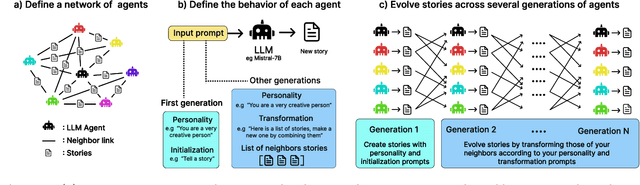
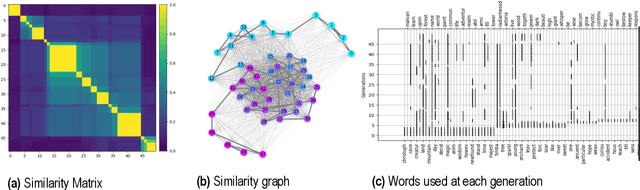
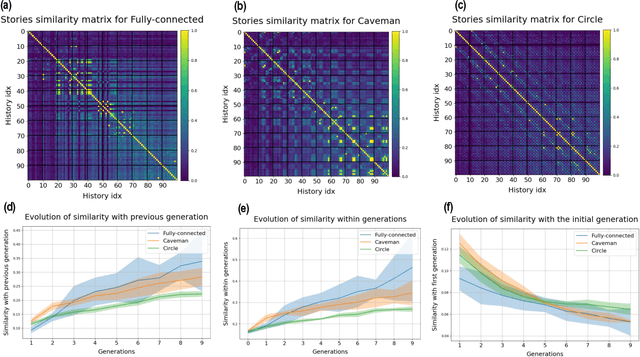
Research in cultural evolution aims at providing causal explanations for the change of culture over time. Over the past decades, this field has generated an important body of knowledge, using experimental, historical, and computational methods. While computational models have been very successful at generating testable hypotheses about the effects of several factors, such as population structure or transmission biases, some phenomena have so far been more complex to capture using agent-based and formal models. This is in particular the case for the effect of the transformations of social information induced by evolved cognitive mechanisms. We here propose that leveraging the capacity of Large Language Models (LLMs) to mimic human behavior may be fruitful to address this gap. On top of being an useful approximation of human cultural dynamics, multi-agents models featuring generative agents are also important to study for their own sake. Indeed, as artificial agents are bound to participate more and more to the evolution of culture, it is crucial to better understand the dynamics of machine-generated cultural evolution. We here present a framework for simulating cultural evolution in populations of LLMs, allowing the manipulation of variables known to be important in cultural evolution, such as network structure, personality, and the way social information is aggregated and transformed. The software we developed for conducting these simulations is open-source and features an intuitive user-interface, which we hope will help to build bridges between the fields of cultural evolution and generative artificial intelligence.
Stick to your Role! Stability of Personal Values Expressed in Large Language Models
Feb 19, 2024The standard way to study Large Language Models (LLMs) through benchmarks or psychology questionnaires is to provide many different queries from similar minimal contexts (e.g. multiple choice questions). However, due to LLM's highly context-dependent nature, conclusions from such minimal-context evaluations may be little informative about the model's behavior in deployment (where it will be exposed to many new contexts). We argue that context-dependence should be studied as another dimension of LLM comparison alongside others such as cognitive abilities, knowledge, or model size. In this paper, we present a case-study about the stability of value expression over different contexts (simulated conversations on different topics), and as measured using a standard psychology questionnaire (PVQ) and a behavioral downstream task. We consider 19 open-sourced LLMs from five families. Reusing methods from psychology, we study Rank-order stability on the population (interpersonal) level, and Ipsative stability on the individual (intrapersonal) level. We explore two settings: with and without instructing LLMs to simulate particular personalities. We observe similar trends in the stability of models and model families - Mixtral, Mistral and Qwen families being more stable than LLaMa-2 and Phi - over those two settings, two different simulated populations, and even in the downstream behavioral task. When instructed to simulate particular personas, LLMs exhibit low Rank-Order stability, and this stability further diminishes with conversation length. This highlights the need for future research directions on LLMs that can coherently simulate a diversity of personas, as well as how context-dependence can be studied in more thorough and efficient ways. This paper provides a foundational step in that direction, and, to our knowledge, it is the first study of value stability in LLMs.
Discovering Sensorimotor Agency in Cellular Automata using Diversity Search
Feb 14, 2024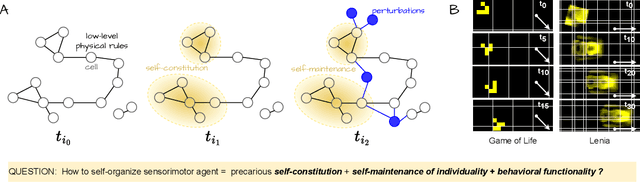
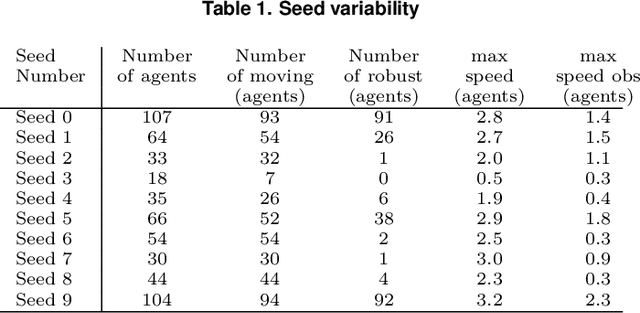
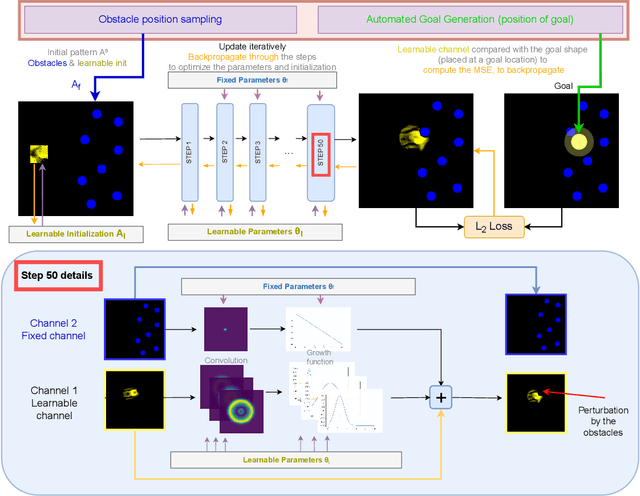
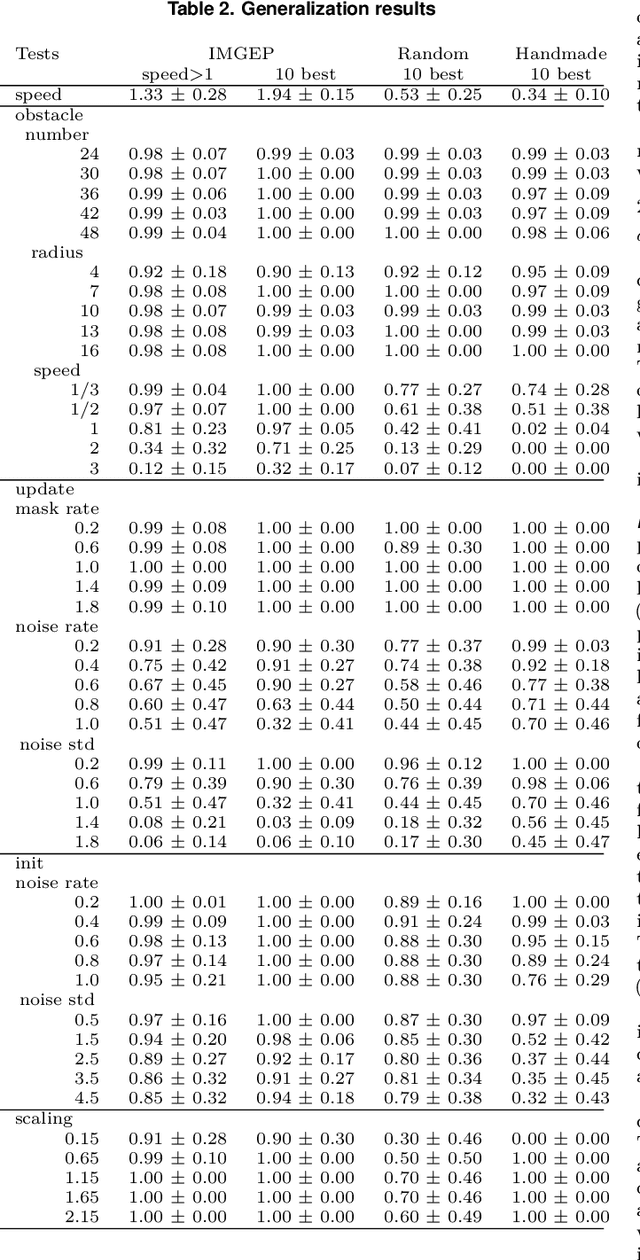
The research field of Artificial Life studies how life-like phenomena such as autopoiesis, agency, or self-regulation can self-organize in computer simulations. In cellular automata (CA), a key open-question has been whether it it is possible to find environment rules that self-organize robust "individuals" from an initial state with no prior existence of things like "bodies", "brain", "perception" or "action". In this paper, we leverage recent advances in machine learning, combining algorithms for diversity search, curriculum learning and gradient descent, to automate the search of such "individuals", i.e. localized structures that move around with the ability to react in a coherent manner to external obstacles and maintain their integrity, hence primitive forms of sensorimotor agency. We show that this approach enables to find systematically environmental conditions in CA leading to self-organization of such basic forms of agency. Through multiple experiments, we show that the discovered agents have surprisingly robust capabilities to move, maintain their body integrity and navigate among various obstacles. They also show strong generalization abilities, with robustness to changes of scale, random updates or perturbations from the environment not seen during training. We discuss how this approach opens new perspectives in AI and synthetic bioengineering.
Improved Performances and Motivation in Intelligent Tutoring Systems: Combining Machine Learning and Learner Choice
Jan 16, 2024Large class sizes pose challenges to personalized learning in schools, which educational technologies, especially intelligent tutoring systems (ITS), aim to address. In this context, the ZPDES algorithm, based on the Learning Progress Hypothesis (LPH) and multi-armed bandit machine learning techniques, sequences exercises that maximize learning progress (LP). This algorithm was previously shown in field studies to boost learning performances for a wider diversity of students compared to a hand-designed curriculum. However, its motivational impact was not assessed. Also, ZPDES did not allow students to express choices. This limitation in agency is at odds with the LPH theory concerned with modeling curiosity-driven learning. We here study how the introduction of such choice possibilities impact both learning efficiency and motivation. The given choice concerns dimensions that are orthogonal to exercise difficulty, acting as a playful feature. In an extensive field study (265 7-8 years old children, RCT design), we compare systems based either on ZPDES or a hand-designed curriculum, both with and without self-choice. We first show that ZPDES improves learning performance and produces a positive and motivating learning experience. We then show that the addition of choice triggers intrinsic motivation and reinforces the learning effectiveness of the LP-based personalization. In doing so, it strengthens the links between intrinsic motivation and performance progress during the serious game. Conversely, deleterious effects of the playful feature are observed for hand-designed linear paths. Thus, the intrinsic motivation elicited by a playful feature is beneficial only if the curriculum personalization is effective for the learner. Such a result deserves great attention due to increased use of playful features in non adaptive educational technologies.
Meta-Diversity Search in Complex Systems, A Recipe for Artificial Open-Endedness ?
Dec 01, 2023Can we build an artificial system that would be able to generate endless surprises if ran "forever" in Minecraft? While there is not a single path toward solving that grand challenge, this article presents what we believe to be some working ingredients for the endless generation of novel increasingly complex artifacts in Minecraft. Our framework for an open-ended system includes two components: a complex system used to recursively grow and complexify artifacts over time, and a discovery algorithm that leverages the concept of meta-diversity search. Since complex systems have shown to enable the emergence of considerable complexity from set of simple rules, we believe them to be great candidates to generate all sort of artifacts in Minecraft. Yet, the space of possible artifacts that can be generated by these systems is often unknown, challenging to characterize and explore. Therefore automating the long-term discovery of novel and increasingly complex artifacts in these systems is an exciting research field. To approach these challenges, we formulate the problem of meta-diversity search where an artificial "discovery assistant" incrementally learns a diverse set of representations to characterize behaviors and searches to discover diverse patterns within each of them. A successful discovery assistant should continuously seek for novel sources of diversities while being able to quickly specialize the search toward a new unknown type of diversity. To implement those ideas in the Minecraft environment, we simulate an artificial "chemistry" system based on Lenia continuous cellular automaton for generating artifacts, as well as an artificial "discovery assistant" (called Holmes) for the artifact-discovery process. Holmes incrementally learns a hierarchy of modular representations to characterize divergent sources of diversity and uses a goal-based intrinsically-motivated exploration as the diversity search strategy.
ACES: Generating Diverse Programming Puzzles with Autotelic Language Models and Semantic Descriptors
Oct 25, 2023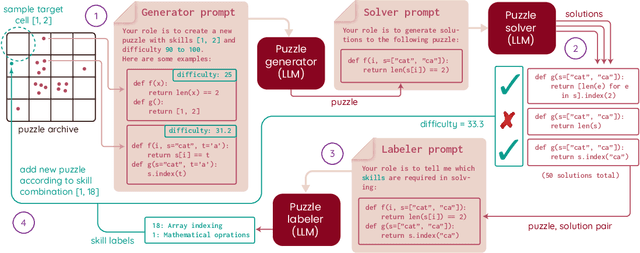
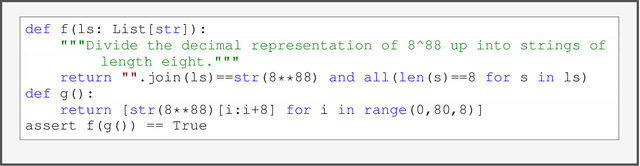
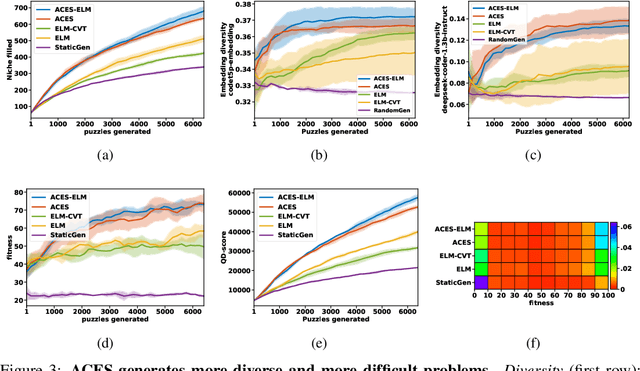
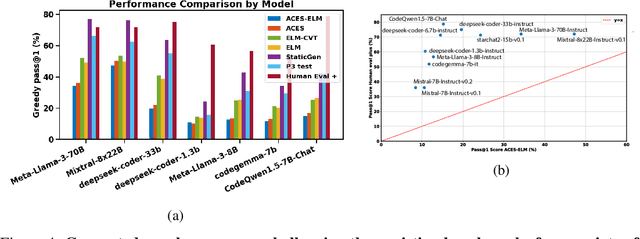
Finding and selecting new and interesting problems to solve is at the heart of curiosity, science and innovation. We here study automated problem generation in the context of the open-ended space of python programming puzzles. Existing generative models often aim at modeling a reference distribution without any explicit diversity optimization. Other methods explicitly optimizing for diversity do so either in limited hand-coded representation spaces or in uninterpretable learned embedding spaces that may not align with human perceptions of interesting variations. With ACES (Autotelic Code Exploration via Semantic descriptors), we introduce a new autotelic generation method that leverages semantic descriptors produced by a large language model (LLM) to directly optimize for interesting diversity, as well as few-shot-based generation. Each puzzle is labeled along 10 dimensions, each capturing a programming skill required to solve it. ACES generates and pursues novel and feasible goals to explore that abstract semantic space, slowly discovering a diversity of solvable programming puzzles in any given run. Across a set of experiments, we show that ACES discovers a richer diversity of puzzles than existing diversity-maximizing algorithms as measured across a range of diversity metrics. We further study whether and in which conditions this diversity can translate into the successful training of puzzle solving models.