 Add to Chrome
 Add to Firefox
 Add to Edge
The Vienna 4G/5G Drive-Test Dataset
Mar 03, 2026
Machine learning for mobile network analysis, planning, and optimization is often limited by the lack of large, comprehensive real-world datasets. This paper introduces the Vienna 4G/5G Drive-Test Dataset, a city-scale open dataset of georeferenced Long Term Evolution (LTE) and 5G New Radio (NR) measurements collected across Vienna, Austria. The dataset combines passive wideband scanner observations with active handset logs, providing complementary network-side and user-side views of deployed radio access networks. The measurements cover diverse urban and suburban settings and are aligned with time and location information to support consistent evaluation. For a representative subset of base stations (BSs), we provide inferred deployment descriptors, including estimated BS locations, sector azimuths, and antenna heights. The release further includes high-resolution building and terrain models, enabling geometry-conditioned learning and calibration of deterministic approaches such as ray tracing. To facilitate practical reuse, the data are organized into scanner, handset, estimated cell information, and city-model components, and the accompanying documentation describes the available fields and intended joins between them. The dataset enables reproducible benchmarking across environment-aware learning, propagation modeling, coverage analysis, and ray-tracing calibration workflows.

PLAIN: Scalable Estimation Architecture for Integrated Sensing and Communication
Mar 27, 2025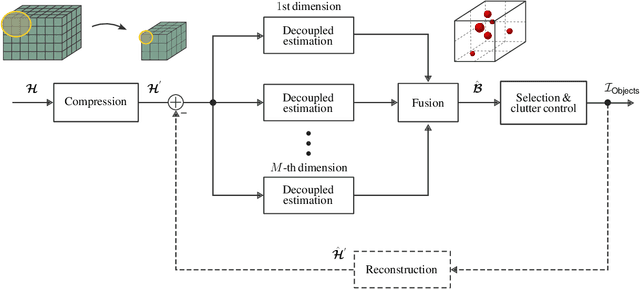
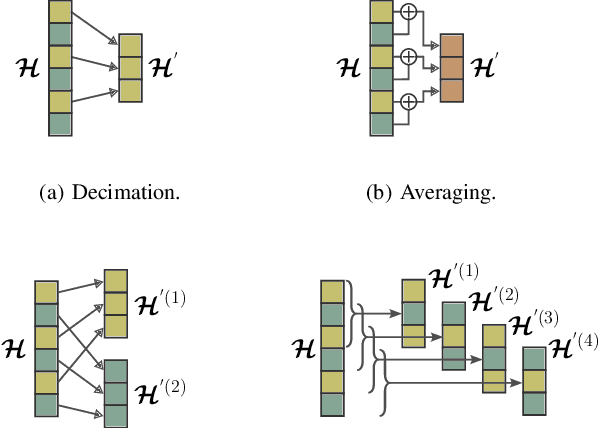
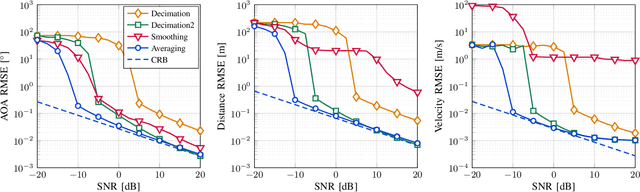
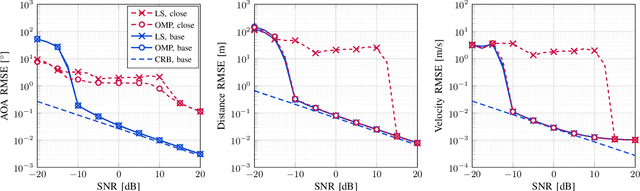
Integrated sensing and communication (ISAC) is envisioned be to one of the paradigms upon which next-generation mobile networks will be built, extending localization and tracking capabilities, as well as giving birth to environment-aware wireless access. A key aspect of sensing integration is parameter estimation, which involves extracting information about the surrounding environment, such as the direction, distance, and velocity of various objects within. This is typically of a high-dimensional nature, which leads to significant computational complexity, if performed jointly across multiple sensing dimensions, such as space, frequency, and time. Additionally, due to the incorporation of sensing on top of the data transmission, the time window available for sensing is likely to be short, resulting in an estimation problem where only a single snapshot is accessible. In this work, we propose PLAIN, a tensor-based estimation architecture that flexibly scales with multiple sensing dimensions and can handle high dimensionality, limited measurement time, and super-resolution requirements. It consists of three stages: a compression stage, where the high dimensional input is converted into lower dimensionality, without sacrificing resolution; a decoupled estimation stage, where the parameters across the different dimensions are estimated in parallel with low complexity; an input-based fusion stage, where the decoupled parameters are fused together to form a paired multidimensional estimate. We investigate the performance of the architecture for different configurations and compare it against practical sequential and joint estimation baselines, as well as theoretical bounds. Our results show that PLAIN, using tools from tensor algebra, subspace-based processing, and compressed sensing, can scale flexibly with dimensionality, while operating with low complexity and maintaining super-resolution.