 Add to Chrome
 Add to Firefox
 Add to Edge
Spectrum Anomaly Detection in OFDMA Systems: Simulation Framework and Benchmark Dataset
Jun 01, 2026
Wireless connectivity underpins modern society and industry, enabling critical applications such as 5G ultra-reliable low-latency communication (URLLC) for industrial automation. However, the openness of the wireless medium exposes it to spectrum anomalies, including unintentional interference and malicious jamming, which threaten communication and sensing functionalities in 5G and emerging 6G networks. Despite its importance, spectrum anomaly detection research is hindered by a lack of publicly available datasets reflecting real-world scenarios. To address this, we present a benchmark dataset for spectrum anomaly detection in orthogonal frequency-division multiplexing access (OFDMA) systems, a core technology for 5G and beyond. The dataset includes spectrograms generated across a distributed network of sensing units, covering five distinct jammer types, from simple noise to advanced pilot-aware attacks. These anomalies are simulated in an industrial factory environment using a versatile open-source framework developed and published as part of this work, enabling extensibility to new scenarios and interference types. We provide baseline evaluations for supervised and unsupervised learning methods, demonstrating the challenges posed by different jammers and highlighting areas for further research. The dataset and framework support reproducible studies and serve as a foundation for advancing spectrum anomaly detection, with applications extending to network digital twins. By bridging the gap in open dataset availability, this work empowers the research community to validate and compare advanced detection methods for resilient next-generation wireless systems.

A Low-Complexity Machine Learning Design for mmWave Beam Prediction
Oct 30, 2023
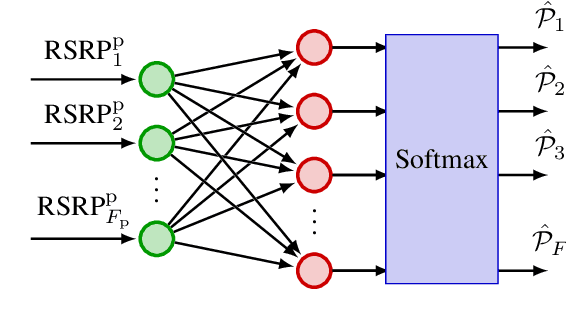
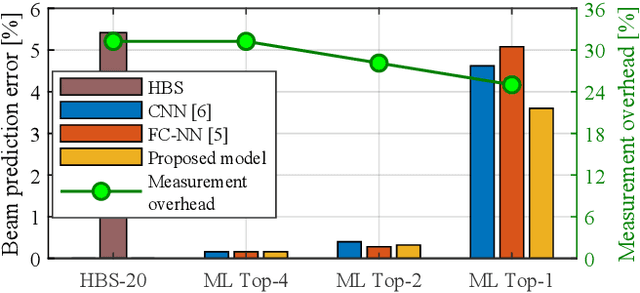
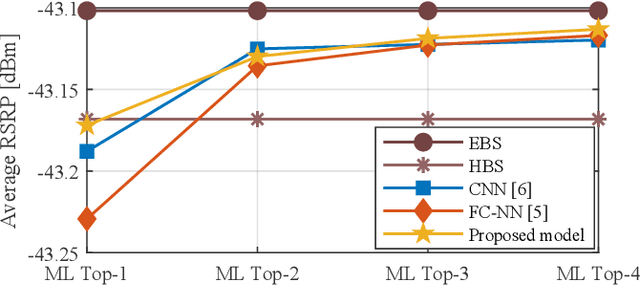
The 3rd Generation Partnership Project (3GPP) is currently studying machine learning (ML) for the fifth generation (5G)-Advanced New Radio (NR) air interface, where spatial and temporal-domain beam prediction are important use cases. With this background, this letter presents a low-complexity ML design that expedites the spatial-domain beam prediction to reduce the power consumption and the reference signaling overhead, which are currently imperative for frequent beam measurements. Complexity analysis and evaluation results showcase that the proposed model achieves state-of-the-art accuracy with lower computational complexity, resulting in reduced power consumption and faster beam prediction. Furthermore, important observations on the generalization of the proposed model are presented in this letter.
Digital Twin of the Radio Environment: A Novel Approach for Anomaly Detection in Wireless Networks
Aug 14, 2023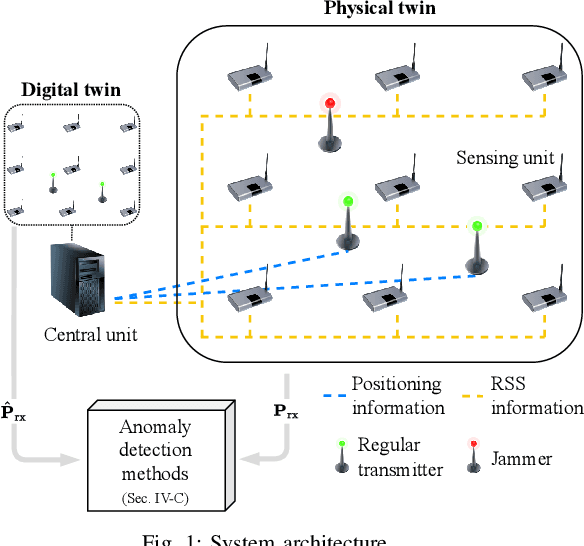
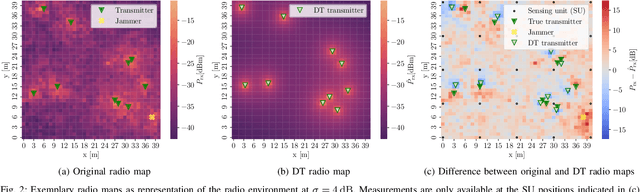
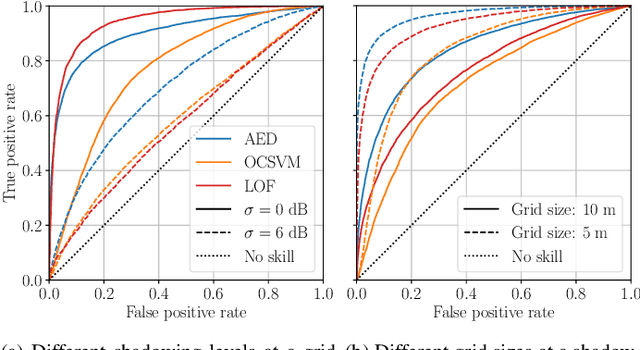
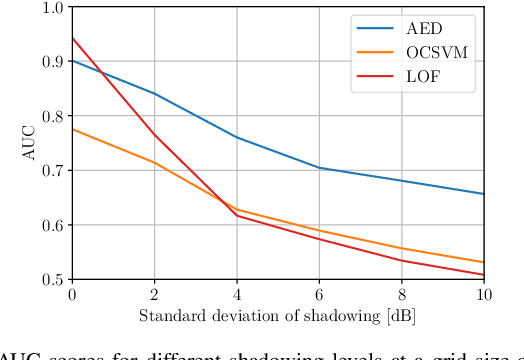
The increasing relevance of resilience in wireless connectivity for Industry 4.0 stems from the growing complexity and interconnectivity of industrial systems, where a single point of failure can disrupt the entire network, leading to significant downtime and productivity losses. It is thus essential to constantly monitor the network and identify any anomaly such as a jammer. Hereby, technologies envisioned to be integrated in 6G, in particular joint communications and sensing (JCAS) and accurate indoor positioning of transmitters, open up the possibility to build a digital twin (DT) of the radio environment. This paper proposes a new approach for anomaly detection in wireless networks enabled by such a DT which allows to integrate contextual information on the network in the anomaly detection procedure. The basic approach is thereby to compare expected received signal strengths (RSSs) from the DT with measurements done by distributed sensing units (SUs). Employing simulations, different algorithms are compared regarding their ability to infer from the comparison on the presence or absence of an anomaly, particular a jammer. Overall, the feasibility of anomaly detection using the proposed approach is demonstrated which integrates in the ongoing research on employing DTs for comprehensive monitoring of wireless networks.
Blind Transmitter Localization Using Deep Learning: A Scalability Study
Jun 06, 2023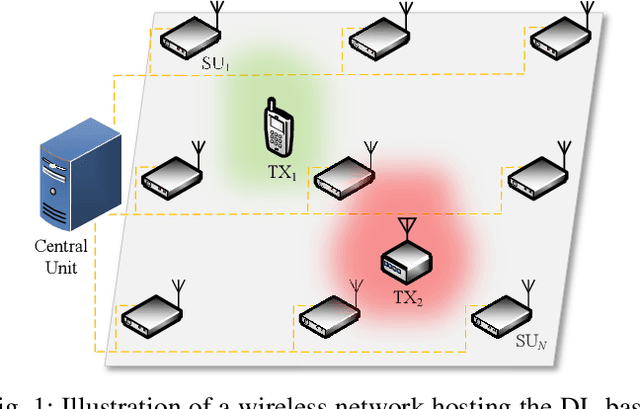
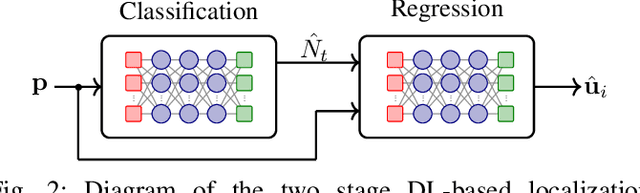
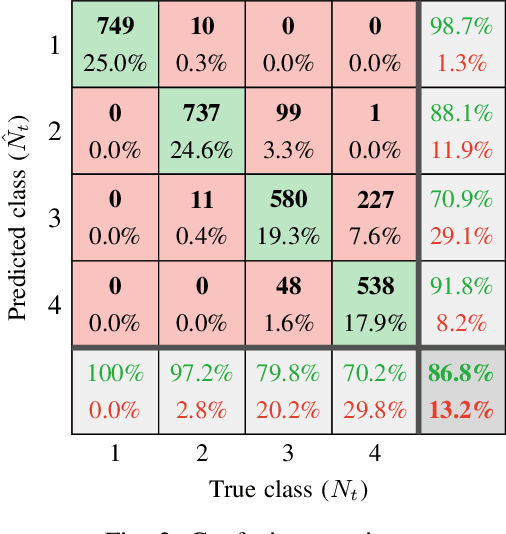
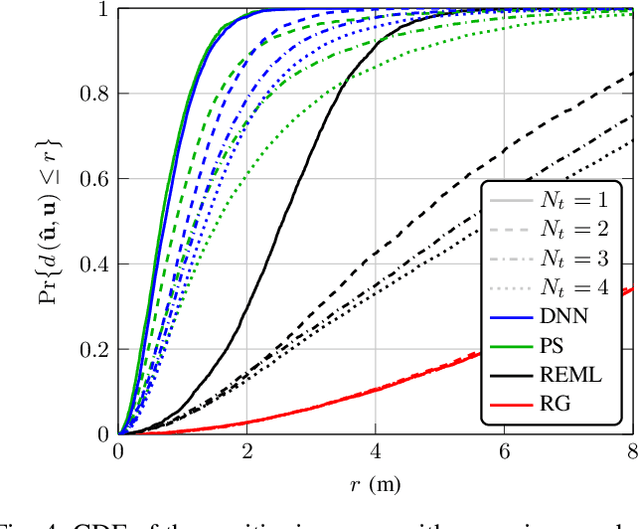
This work presents an investigation on the scalability of a deep leaning (DL)-based blind transmitter positioning system for addressing the multi transmitter localization (MLT) problem. The proposed approach is able to estimate relative coordinates of non-cooperative active transmitters based solely on received signal strength measurements collected by a wireless sensor network. A performance comparison with two other solutions of the MLT problem are presented for demonstrating the benefits with respect to scalability of the DL approach. Our investigation aims at highlighting the potential of DL to be a key technique that is able to provide a low complexity, accurate and reliable transmitter positioning service for improving future wireless communications systems.