 Add to Chrome
 Add to Firefox
 Add to Edge
Review of Machine Learning Models for Solar Energetic Particle Prediction
Jun 17, 2026
Solar energetic particle (SEP) events have attracted increasing attention due to their significant radiation hazards for aviation, spacecraft electronics, and human missions beyond Earth's magnetosphere. From a scientific perspective, SEP events are intriguing because they arise from a set of physical processes extending from the solar surface and corona through the heliosphere, offering insight into particle acceleration and transport mechanisms that are widely applicable across astrophysics. Therefore, advancing our ability to understand and predict SEP events is essential both for deepening our knowledge of such mechanisms and for safeguarding space technologies and exploration. Traditionally, researchers have modeled SEPs using physics-based simulations and empirical methods. More recently, machine learning (ML) has emerged as a new tool for understanding and predicting SEP events. The purpose of this manuscript is to review the currently available ML models for SEP prediction, identify the datasets used for training, compare their architectures, inputs, and outputs, and, based on these insights, outline good practices and recommendations for future research.

A Guide for Manual Annotation of Scientific Imagery: How to Prepare for Large Projects
Aug 20, 2025
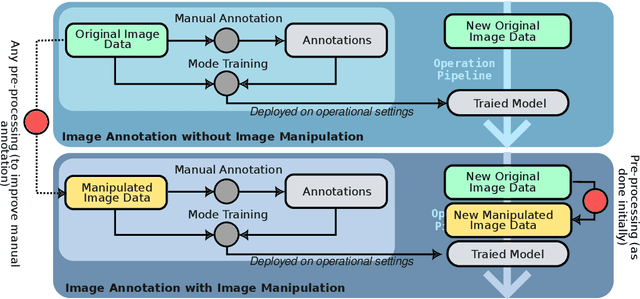
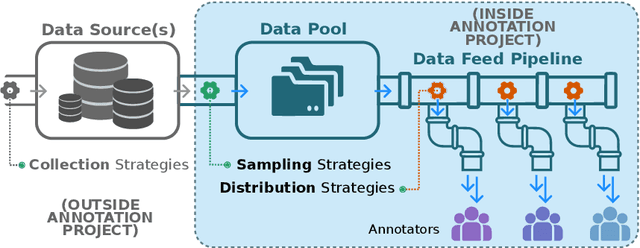
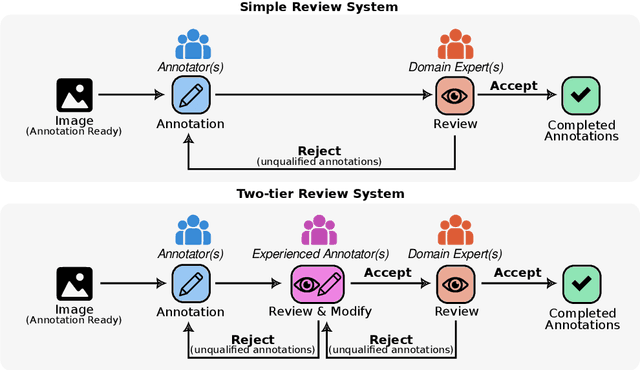
Despite the high demand for manually annotated image data, managing complex and costly annotation projects remains under-discussed. This is partly due to the fact that leading such projects requires dealing with a set of diverse and interconnected challenges which often fall outside the expertise of specific domain experts, leaving practical guidelines scarce. These challenges range widely from data collection to resource allocation and recruitment, from mitigation of biases to effective training of the annotators. This paper provides a domain-agnostic preparation guide for annotation projects, with a focus on scientific imagery. Drawing from the authors' extensive experience in managing a large manual annotation project, it addresses fundamental concepts including success measures, annotation subjects, project goals, data availability, and essential team roles. Additionally, it discusses various human biases and recommends tools and technologies to improve annotation quality and efficiency. The goal is to encourage further research and frameworks for creating a comprehensive knowledge base to reduce the costs of manual annotation projects across various fields.