 Add to Chrome
 Add to Firefox
 Add to Edge
Tell Me Why: Designing an Explainable LLM-based Dialogue System for Student Problem Behavior Diagnosis
Apr 24, 2026
Diagnosing student problem behaviors requires teachers to synthesize multifaceted information, identify behavioral categories, and plan intervention strategies. Although fine-tuned large language models (LLMs) can support this process through multi-turn dialogue, they rarely explain why a strategy is recommended, limiting transparency and teachers' trust. To address this issue, we present an explainable dialogue system built on a fine-tuned LLM. The system uses a hierarchical attribution method based on explainable AI (xAI) to identify dialogue evidence for each recommendation and generate a natural-language explanation based on that evidence. In technical evaluation, the method outperformed baseline approaches in identifying supporting evidence. In a preliminary user study with 22 pre-service teachers, participants who received explanations reported higher trust in the system. These findings suggest a promising direction for improving LLM explainability in educational dialogue systems.

Interpreting Deep Knowledge Tracing Model on EdNet Dataset
Oct 31, 2021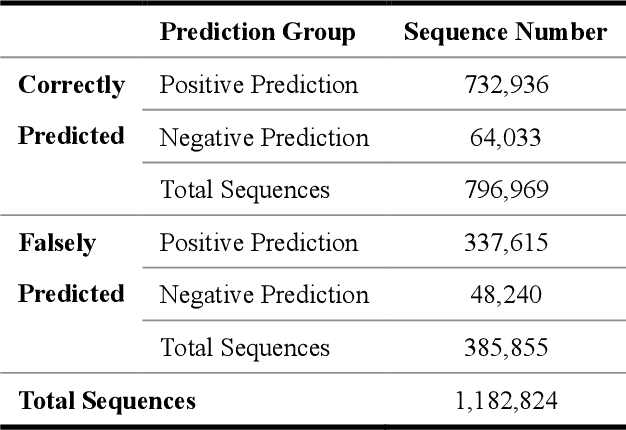
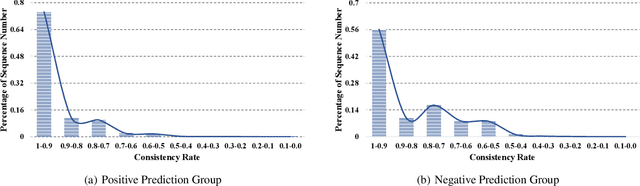
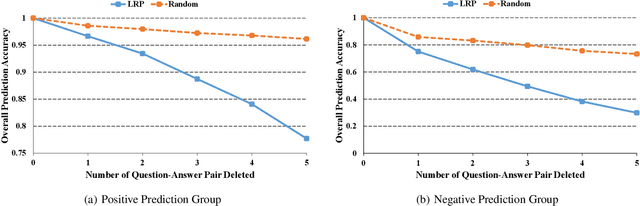
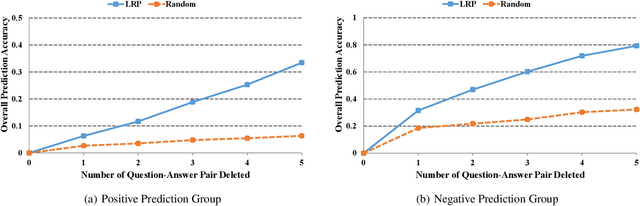
With more deep learning techniques being introduced into the knowledge tracing domain, the interpretability issue of the knowledge tracing models has aroused researchers' attention. Our previous study(Lu et al. 2020) on building and interpreting the KT model mainly adopts the ASSISTment dataset(Feng, Heffernan, and Koedinger 2009),, whose size is relatively small. In this work, we perform the similar tasks but on a large and newly available dataset, called EdNet(Choi et al. 2020). The preliminary experiment results show the effectiveness of the interpreting techniques, while more questions and tasks are worthy to be further explored and accomplished.
Towards Interpretable Deep Learning Models for Knowledge Tracing
May 13, 2020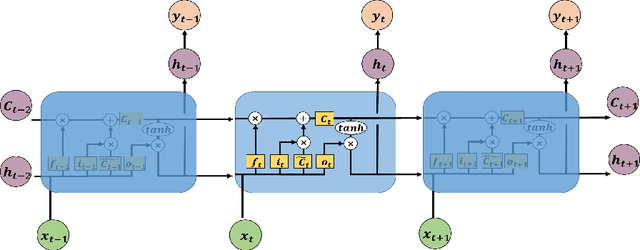

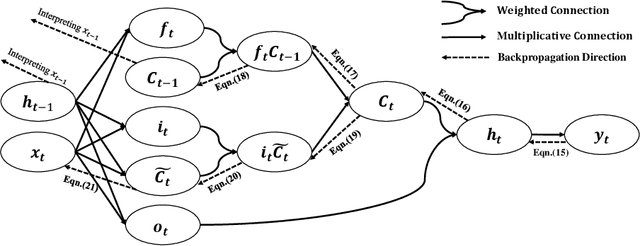
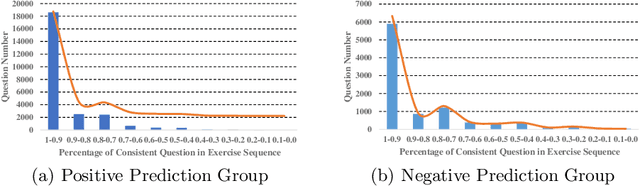
As an important technique for modeling the knowledge states of learners, the traditional knowledge tracing (KT) models have been widely used to support intelligent tutoring systems and MOOC platforms. Driven by the fast advancements of deep learning techniques, deep neural network has been recently adopted to design new KT models for achieving better prediction performance. However, the lack of interpretability of these models has painfully impeded their practical applications, as their outputs and working mechanisms suffer from the intransparent decision process and complex inner structures. We thus propose to adopt the post-hoc method to tackle the interpretability issue for deep learning based knowledge tracing (DLKT) models. Specifically, we focus on applying the layer-wise relevance propagation (LRP) method to interpret RNN-based DLKT model by backpropagating the relevance from the model's output layer to its input layer. The experiment results show the feasibility using the LRP method for interpreting the DLKT model's predictions, and partially validate the computed relevance scores from both question level and concept level. We believe it can be a solid step towards fully interpreting the DLKT models and promote their practical applications in the education domain.