 Add to Chrome
 Add to Firefox
 Add to Edge
End-to-end Differentiable Calibration and Reconstruction for Optical Particle Detectors
Feb 27, 2026
Large-scale homogeneous detectors with optical readouts are widely used in particle detection, with Cherenkov and scintillator neutrino detectors as prominent examples. Analyses in experimental physics rely on high-fidelity simulators to translate sensor-level information into physical quantities of interest. This task critically depends on accurate calibration, which aligns simulation behavior with real detector data, and on tracking, which infers particle properties from optical signals. We present the first end-to-end differentiable optical particle detector simulator, enabling simultaneous calibration and reconstruction through gradient-based optimization. Our approach unifies simulation, calibration, and tracking, which are traditionally treated as separate problems, within a single differentiable framework. We demonstrate that it achieves smooth and physically meaningful gradients across all key stages of light generation, propagation, and detection while maintaining computational efficiency. We show that gradient-based calibration and reconstruction greatly simplify existing analysis pipelines while matching or surpassing the performance of conventional non-differentiable methods in both accuracy and speed. Moreover, the framework's modularity allows straightforward adaptation to diverse detector geometries and target materials, providing a flexible foundation for experiment design and optimization. The results demonstrate the readiness of this technique for adoption in current and future optical detector experiments, establishing a new paradigm for simulation and reconstruction in particle physics.

Variational Autoencoders for Generative Modelling of Water Cherenkov Detectors
Nov 01, 2019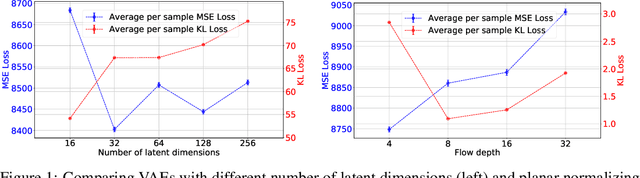


Matter-antimatter asymmetry is one of the major unsolved problems in physics that can be probed through precision measurements of charge-parity symmetry violation at current and next-generation neutrino oscillation experiments. In this work, we demonstrate the capability of variational autoencoders and normalizing flows to approximate the generative distribution of simulated data for water Cherenkov detectors commonly used in these experiments. We study the performance of these methods and their applicability for semi-supervised learning and synthetic data generation.