 Add to Chrome
 Add to Firefox
 Add to Edge
Accuracy potential of visual localization exploiting high-end street-level imagery
Jul 27, 2026
Accurate and reliable pose information with respect to a reference frame is increasingly demanded across applications such as autonomous navigation, surveying, robotics, and augmented and mixed reality. Visual localization can serve as a complementary positioning modality to GNSS, whose applicability and accuracy are often limited. Yet, the accuracy potential of visual localization has not been systematically investigated against survey-grade demands. This is mainly due to the lack of publicly available, large-scale outdoor datasets with ground-truth poses in the sub-centimeter range. In this work, we address both gaps. We introduce a scalable visual localization pipeline that employs precisely georeferenced, high-resolution street-level imagery directly as the scene representation. It combines prior-guided reference candidate selection with on-the-fly local Structure-from-Motion reconstruction and PnP-based pose estimation. We further present the FHNW Muttenz dataset, a real-world dataset covering a contiguous 10 km street network mapped in two mobile mapping campaigns approximately 1.5 years apart. It consists of high-resolution reference imagery and query sequences acquired by four different cameras across five representative scenes. All images are precisely co-registered, yielding 6-DoF ground-truth poses in the sub-centimeter range. Using this dataset, we evaluate the accuracy potential of visual localization. Our experiments demonstrate median pose accuracies in the range of 1-5 cm for translation and 0.05-0.1° for rotation, reaching as low as 1 cm and 0.03° under favorable conditions. These results show that visual localization can complement survey-grade GNSS positioning, paving the way for 3D geospatial data acquisition using consumer devices and fully automated georeferencing approaches. The dataset is publicly available at: https://fhnw-muttenz-vl-dataset.github.io/.

Clinically Ready Magnetic Microrobots for Targeted Therapies
Jan 20, 2025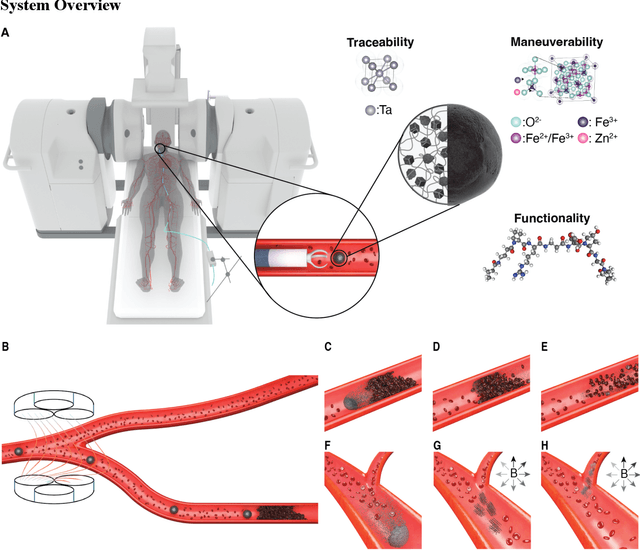
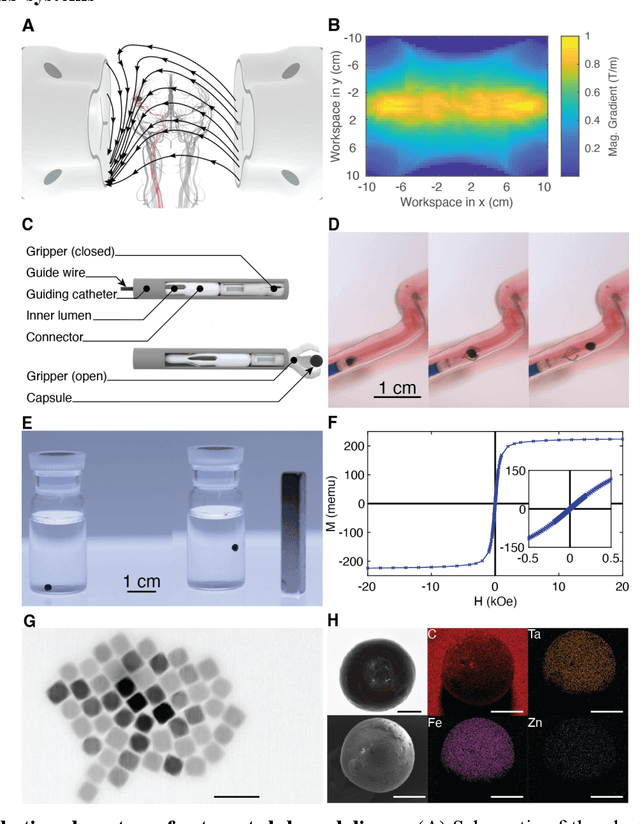
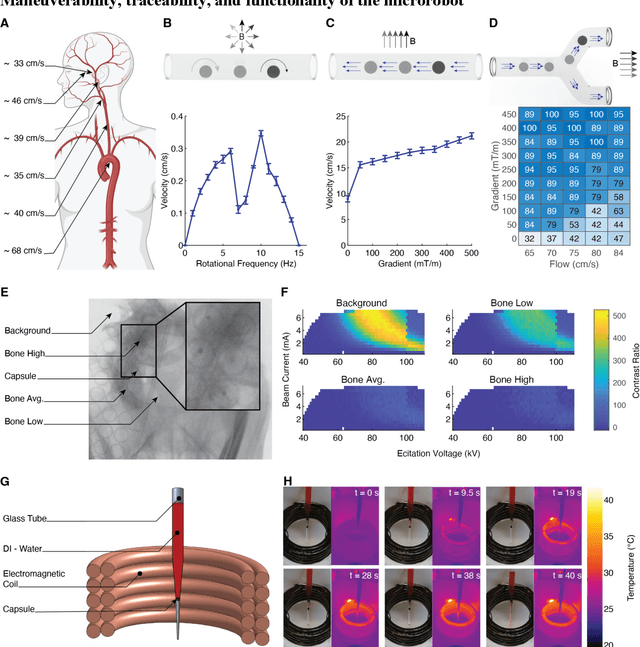
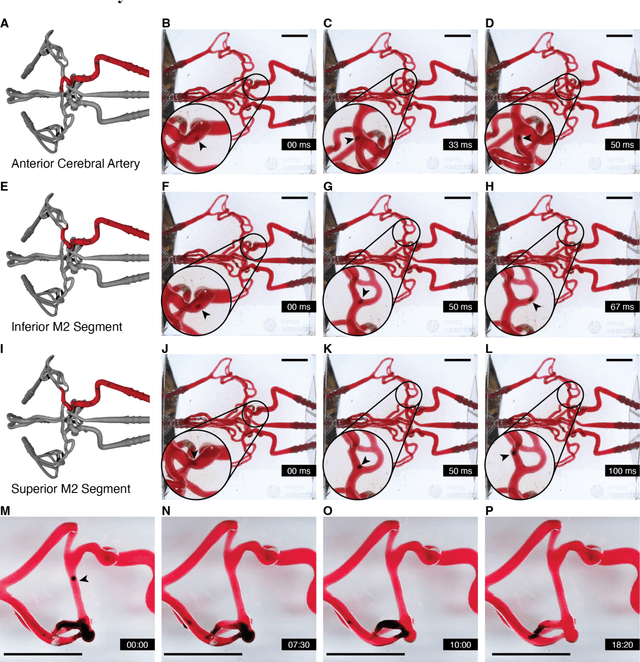
Systemic drug administration often causes off-target effects limiting the efficacy of advanced therapies. Targeted drug delivery approaches increase local drug concentrations at the diseased site while minimizing systemic drug exposure. We present a magnetically guided microrobotic drug delivery system capable of precise navigation under physiological conditions. This platform integrates a clinical electromagnetic navigation system, a custom-designed release catheter, and a dissolvable capsule for accurate therapeutic delivery. In vitro tests showed precise navigation in human vasculature models, and in vivo experiments confirmed tracking under fluoroscopy and successful navigation in large animal models. The microrobot balances magnetic material concentration, contrast agent loading, and therapeutic drug capacity, enabling effective hosting of therapeutics despite the integration complexity of its components, offering a promising solution for precise targeted drug delivery.