 Add to Chrome
 Add to Firefox
 Add to Edge
Halluverse-M^3: A multitask multilingual benchmark for hallucination in LLMs
Feb 06, 2026
Hallucinations in large language models remain a persistent challenge, particularly in multilingual and generative settings where factual consistency is difficult to maintain. While recent models show strong performance on English-centric benchmarks, their behavior across languages, tasks, and hallucination types is not yet well understood. In this work, we introduce Halluverse-M^3, a dataset designed to enable systematic analysis of hallucinations across multiple languages, multiple generation tasks, and multiple hallucination categories. Halluverse-M^3 covers four languages, English, Arabic, Hindi, and Turkish, and supports two generation tasks: question answering and dialogue summarization. The dataset explicitly distinguishes between entity-level, relation-level, and sentence-level hallucinations. Hallucinated outputs are constructed through a controlled editing process and validated by human annotators, ensuring clear alignment between original content and hallucinated generations. Using this dataset, we evaluate a diverse set of contemporary open-source and proprietary language models on fine-grained hallucination detection. Our results show that question answering is consistently easier than dialogue summarization, while sentence-level hallucinations remain challenging even for the strongest models. Performance is highest in English and degrades in lower-resource languages, with Hindi exhibiting the lowest detection accuracy. Overall, Halluverse-M^3 provides a realistic and challenging benchmark for studying hallucinations in multilingual, multi-task settings. We release the dataset to support future research on hallucination detection and mitigation\footnote{https://huggingface.co/datasets/sabdalja/HalluVerse-M3}.

Geometric-k-means: A Bound Free Approach to Fast and Eco-Friendly k-means
Aug 08, 2025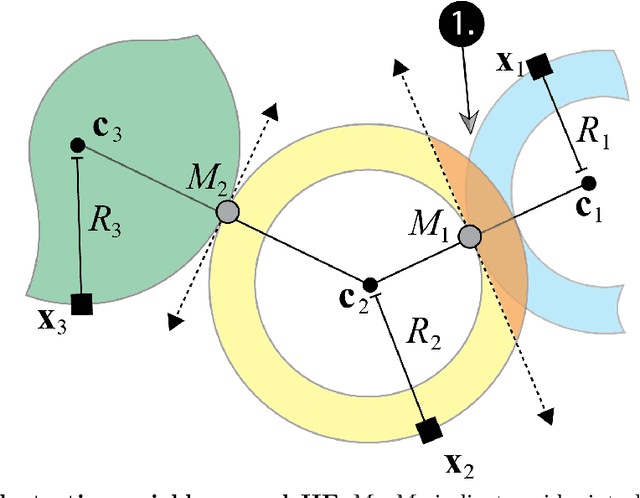
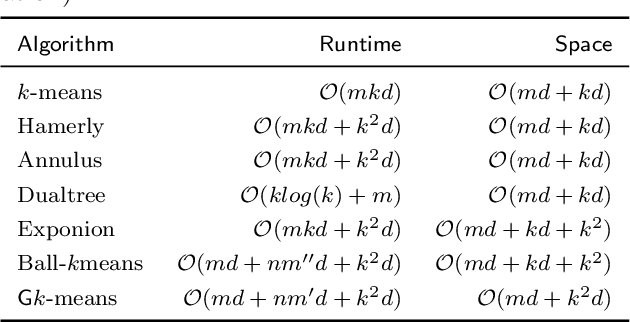
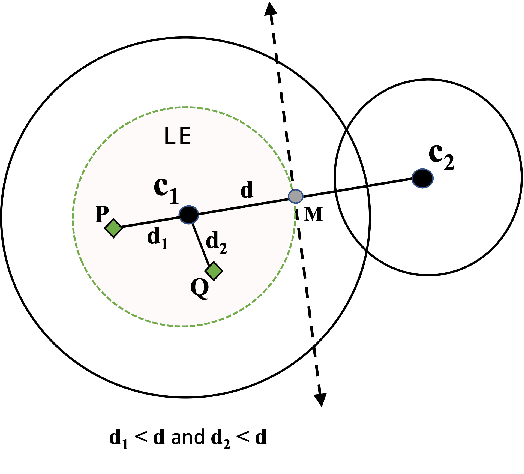

This paper introduces Geometric-k-means (or Gk-means for short), a novel approach that significantly enhances the efficiency and energy economy of the widely utilized k-means algorithm, which, despite its inception over five decades ago, remains a cornerstone in machine learning applications. The essence of Gk-means lies in its active utilization of geometric principles, specifically scalar projection, to significantly accelerate the algorithm without sacrificing solution quality. This geometric strategy enables a more discerning focus on data points that are most likely to influence cluster updates, which we call as high expressive data (HE). In contrast, low expressive data (LE), does not impact clustering outcome, is effectively bypassed, leading to considerable reductions in computational overhead. Experiments spanning synthetic, real-world and high-dimensional datasets, demonstrate Gk-means is significantly better than traditional and state of the art (SOTA) k-means variants in runtime and distance computations (DC). Moreover, Gk-means exhibits better resource efficiency, as evidenced by its reduced energy footprint, placing it as more sustainable alternative.
SINdex: Semantic INconsistency Index for Hallucination Detection in LLMs
Mar 07, 2025Large language models (LLMs) are increasingly deployed across diverse domains, yet they are prone to generating factually incorrect outputs - commonly known as "hallucinations." Among existing mitigation strategies, uncertainty-based methods are particularly attractive due to their ease of implementation, independence from external data, and compatibility with standard LLMs. In this work, we introduce a novel and scalable uncertainty-based semantic clustering framework for automated hallucination detection. Our approach leverages sentence embeddings and hierarchical clustering alongside a newly proposed inconsistency measure, SINdex, to yield more homogeneous clusters and more accurate detection of hallucination phenomena across various LLMs. Evaluations on prominent open- and closed-book QA datasets demonstrate that our method achieves AUROC improvements of up to 9.3% over state-of-the-art techniques. Extensive ablation studies further validate the effectiveness of each component in our framework.