 Add to Chrome
 Add to Firefox
 Add to Edge
HypergraphFormer: Learning Hypergraphs from LLMs for Editable Floor Plan Generation
May 18, 2026
In this work, we propose HypergraphFormer, a novel and efficient approach to floor plan generation based on learning hypergraph representations with a large language model (LLM). The model is trained via supervised fine-tuning to generate a hypergraph-based textual representation that encodes spatial relationships and connectivity information within floor plans. We train and evaluate our approach on the RPLAN dataset, and further demonstrate its generalizability on a separate out-of-distribution dataset, which we release in this paper. Our method outperforms state-of-the-art techniques based on rasterized or vectorized representations across a diverse set of metrics. We also show improved data efficiency, particularly under distribution shift. The hypergraph formulation enables the generation of floor plans for arbitrary, irregular, user-specified boundaries by decoupling apartment footprints from their functional and geometric subdivisions. Furthermore, we show that the proposed methodology offers a high degree of editability, making it particularly well suited to design-oriented workflows supported by LLMs.

Interpretable Lightweight Transformer via Unrolling of Learned Graph Smoothness Priors
Jun 06, 2024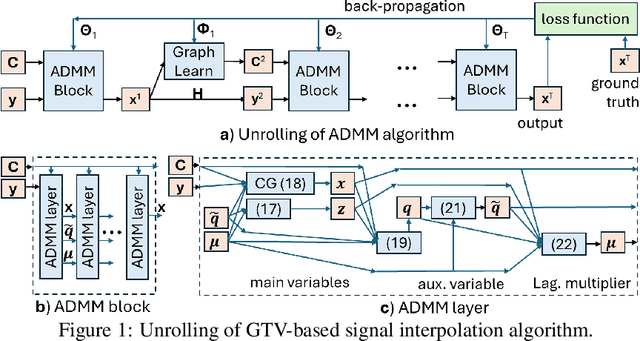

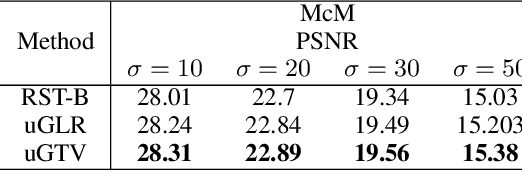

We build interpretable and lightweight transformer-like neural networks by unrolling iterative optimization algorithms that minimize graph smoothness priors -- the quadratic graph Laplacian regularizer (GLR) and the $\ell_1$-norm graph total variation (GTV) -- subject to an interpolation constraint. The crucial insight is that a normalized signal-dependent graph learning module amounts to a variant of the basic self-attention mechanism in conventional transformers. Unlike "black-box" transformers that require learning of large key, query and value matrices to compute scaled dot products as affinities and subsequent output embeddings, resulting in huge parameter sets, our unrolled networks employ shallow CNNs to learn low-dimensional features per node to establish pairwise Mahalanobis distances and construct sparse similarity graphs. At each layer, given a learned graph, the target interpolated signal is simply a low-pass filtered output derived from the minimization of an assumed graph smoothness prior, leading to a dramatic reduction in parameter count. Experiments for two image interpolation applications verify the restoration performance, parameter efficiency and robustness to covariate shift of our graph-based unrolled networks compared to conventional transformers.