 Add to Chrome
 Add to Firefox
 Add to Edge
BIPPO: Budget-Aware Independent PPO for Energy-Efficient Federated Learning Services
Nov 11, 2025
Federated Learning (FL) is a promising machine learning solution in large-scale IoT systems, guaranteeing load distribution and privacy. However, FL does not natively consider infrastructure efficiency, a critical concern for systems operating in resource-constrained environments. Several Reinforcement Learning (RL) based solutions offer improved client selection for FL; however, they do not consider infrastructure challenges, such as resource limitations and device churn. Furthermore, the training of RL methods is often not designed for practical application, as these approaches frequently do not consider generalizability and are not optimized for energy efficiency. To fill this gap, we propose BIPPO (Budget-aware Independent Proximal Policy Optimization), which is an energy-efficient multi-agent RL solution that improves performance. We evaluate BIPPO on two image classification tasks run in a highly budget-constrained setting, with FL clients training on non-IID data, a challenging context for vanilla FL. The improved sampler of BIPPO enables it to increase the mean accuracy compared to non-RL mechanisms, traditional PPO, and IPPO. In addition, BIPPO only consumes a negligible proportion of the budget, which stays consistent even if the number of clients increases. Overall, BIPPO delivers a performant, stable, scalable, and sustainable solution for client selection in IoT-FL.

Leveraging Neural Graph Compilers in Machine Learning Research for Edge-Cloud Systems
Apr 28, 2025This work presents a comprehensive evaluation of neural network graph compilers across heterogeneous hardware platforms, addressing the critical gap between theoretical optimization techniques and practical deployment scenarios. We demonstrate how vendor-specific optimizations can invalidate relative performance comparisons between architectural archetypes, with performance advantages sometimes completely reversing after compilation. Our systematic analysis reveals that graph compilers exhibit performance patterns highly dependent on both neural architecture and batch sizes. Through fine-grained block-level experimentation, we establish that vendor-specific compilers can leverage repeated patterns in simple architectures, yielding disproportionate throughput gains as model depth increases. We introduce novel metrics to quantify a compiler's ability to mitigate performance friction as batch size increases. Our methodology bridges the gap between academic research and practical deployment by incorporating compiler effects throughout the research process, providing actionable insights for practitioners navigating complex optimization landscapes across heterogeneous hardware environments.
Adversarial Robustness of Bottleneck Injected Deep Neural Networks for Task-Oriented Communication
Dec 13, 2024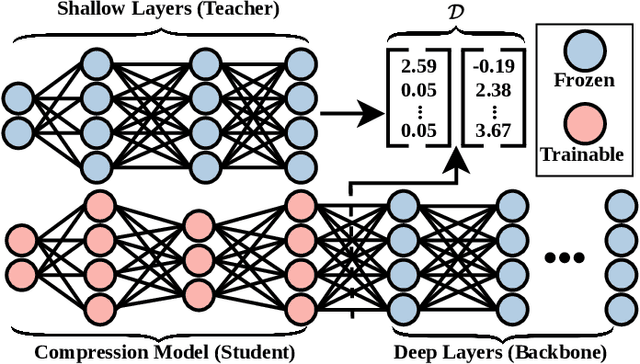
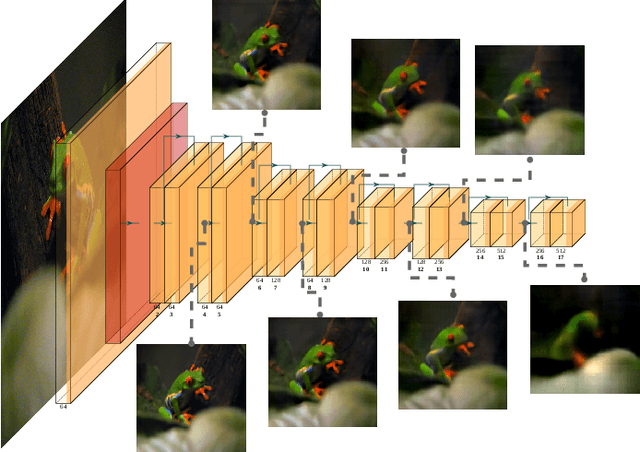
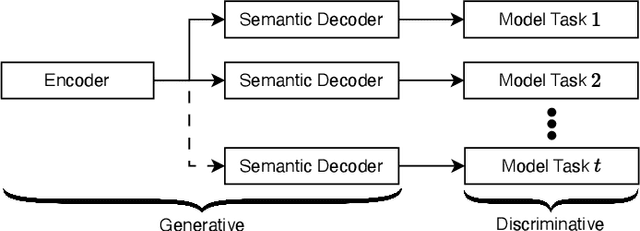
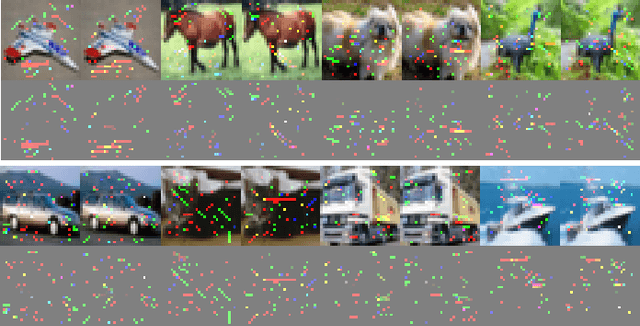
This paper investigates the adversarial robustness of Deep Neural Networks (DNNs) using Information Bottleneck (IB) objectives for task-oriented communication systems. We empirically demonstrate that while IB-based approaches provide baseline resilience against attacks targeting downstream tasks, the reliance on generative models for task-oriented communication introduces new vulnerabilities. Through extensive experiments on several datasets, we analyze how bottleneck depth and task complexity influence adversarial robustness. Our key findings show that Shallow Variational Bottleneck Injection (SVBI) provides less adversarial robustness compared to Deep Variational Information Bottleneck (DVIB) approaches, with the gap widening for more complex tasks. Additionally, we reveal that IB-based objectives exhibit stronger robustness against attacks focusing on salient pixels with high intensity compared to those perturbing many pixels with lower intensity. Lastly, we demonstrate that task-oriented communication systems that rely on generative models to extract and recover salient information have an increased attack surface. The results highlight important security considerations for next-generation communication systems that leverage neural networks for goal-oriented compression.
Split Federated Learning for 6G Enabled-Networks: Requirements, Challenges and Future Directions
Sep 16, 2023Sixth-generation (6G) networks anticipate intelligently supporting a wide range of smart services and innovative applications. Such a context urges a heavy usage of Machine Learning (ML) techniques, particularly Deep Learning (DL), to foster innovation and ease the deployment of intelligent network functions/operations, which are able to fulfill the various requirements of the envisioned 6G services. Specifically, collaborative ML/DL consists of deploying a set of distributed agents that collaboratively train learning models without sharing their data, thus improving data privacy and reducing the time/communication overhead. This work provides a comprehensive study on how collaborative learning can be effectively deployed over 6G wireless networks. In particular, our study focuses on Split Federated Learning (SFL), a technique recently emerged promising better performance compared with existing collaborative learning approaches. We first provide an overview of three emerging collaborative learning paradigms, including federated learning, split learning, and split federated learning, as well as of 6G networks along with their main vision and timeline of key developments. We then highlight the need for split federated learning towards the upcoming 6G networks in every aspect, including 6G technologies (e.g., intelligent physical layer, intelligent edge computing, zero-touch network management, intelligent resource management) and 6G use cases (e.g., smart grid 2.0, Industry 5.0, connected and autonomous systems). Furthermore, we review existing datasets along with frameworks that can help in implementing SFL for 6G networks. We finally identify key technical challenges, open issues, and future research directions related to SFL-enabled 6G networks.