 Add to Chrome
 Add to Firefox
 Add to Edge
Multi-View Deformable Convolution Meets Visual Mamba for Coronary Artery Segmentation
Mar 23, 2026
Accurate segmentation of coronary arteries from computed tomography angiography (CTA) images is of paramount clinical importance for the diagnosis and treatment planning of cardiovascular diseases. However, coronary artery segmentation remains challenging due to the inherent multi-branching and slender tubular morphology of the vasculature, compounded by severe class imbalance between foreground vessels and background tissue. Conventional convolutional neural network (CNN)-based approaches struggle to capture long-range dependencies among spatially distant vascular structures, while Vision Transformer (ViT)-based methods incur prohibitive computational overhead that hinders deployment in resource-constrained clinical settings. Motivated by the recent success of state space models (SSMs) in efficiently modeling long-range sequential dependencies with linear complexity, we propose MDSVM-UNet, a novel two-stage coronary artery segmentation framework that synergistically integrates multidirectional snake convolution (MDSConv) with residual visual Mamba (RVM). In the encoding stage, we introduce MDSConv, a deformable convolution module that learns adaptive offsets along three orthogonal anatomical planes -- sagittal, coronal, and axial -- thereby enabling comprehensive multi-view feature fusion that faithfully captures the elongated and tortuous geometry of coronary vessels. In the decoding stage, we design an RVM-based upsampling decoder block that leverages selective state space mechanisms to model inter-slice long-range dependencies while preserving linear computational complexity. Furthermore, we propose a progressive two-stage segmentation strategy: the first stage performs coarse whole-image segmentation to guide intelligent block extraction, while the second stage conducts fine-grained block-level segmentation to recover vascular details and suppress false positives..

The CAP Principle for LLM Serving
May 18, 2024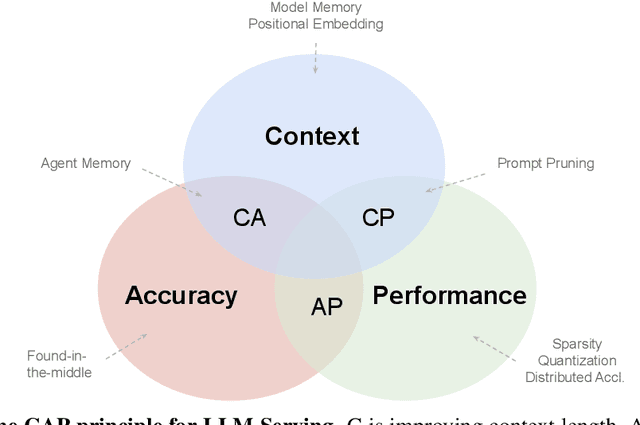
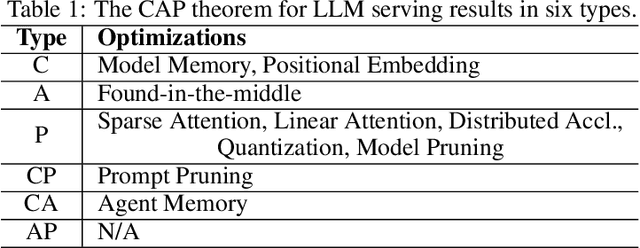
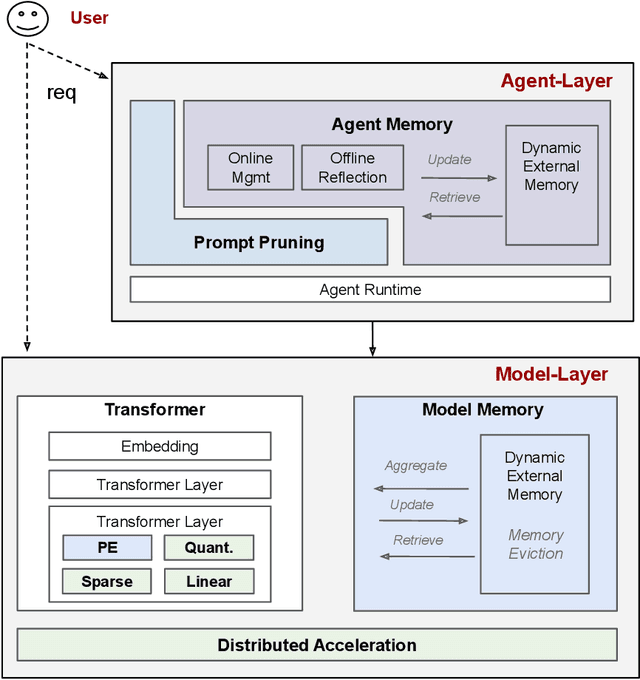
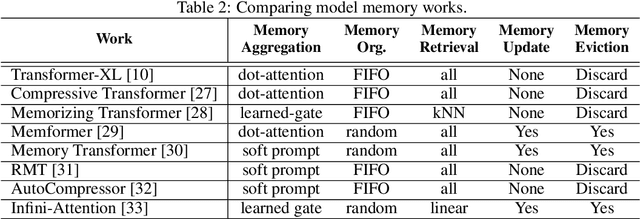
We survey the large language model (LLM) serving area to understand the intricate dynamics between cost-efficiency and accuracy, which is magnified by the growing need for longer contextual understanding when deploying models at a massive scale. Our findings reveal that works in this space optimize along three distinct but conflicting goals: improving serving context length (C), improving serving accuracy (A), and improving serving performance (P). Drawing inspiration from the CAP theorem in databases, we propose a CAP principle for LLM serving, which suggests that any optimization can improve at most two of these three goals simultaneously. Our survey categorizes existing works within this framework. We find the definition and continuity of user-perceived measurement metrics are crucial in determining whether a goal has been met, akin to prior CAP databases in the wild. We recognize the CAP principle for LLM serving as a guiding principle, rather than a formal theorem, to inform designers of the inherent and dynamic trade-offs in serving models. As serving accuracy and performance have been extensively studied, this survey focuses on works that extend serving context length and address the resulting challenges.