 Add to Chrome
 Add to Firefox
 Add to Edge
Kolmogorov Arnold networks (KAN) for aerodynamic prediction: a comparison with MLPs and GNNs
Jun 25, 2026
Kolmogorov Arnold networks (KAN) have recently been introduced as a (deep) neural network architecture whose trainable parameters adapt the activation functions, instead of the coefficients of the affine transformations at the core of traditional architectures such as deep multilayer perceptrons (MLPs). This architecture builds on the Kolmogorov-Arnold theorem, which endows it with universal approximation properties. While the advent of KANs has been received with excitement, there is a current debate about the possible KAN supremacy over deep multilayer perceptrons (MLPs) for classic fields such as symbolic regression, generic-purpose machine learning, natural language processing or computer vision. Here we assess the performance of KANs --and its nuanced comparison against MLPs and graph neural networks (GNNs)-- in the realm of fluid dynamics surrogate modelling. To that aim, we consider the task of predicting the surface pressure distribution over subsonic and transonic airfoils, a canonical task in aerodynamics. Our results show that KAN models show good performance in predicting the whole pressure coefficients and is able to interpolate across Mach numbers and angles of attack, however its performance is comparable --marginally inferior-- to a suitably trained MLP, where best performance is achieved by a GNN at the expense or requiring lengthier training. While the optimal KAN model have typically much lower complexity than MLP and GNN --hence resulting in faster training--, we find that KANs suffer from training instabilities, and their performance is highly dependent on a proper hyperparameter optimisation.

Towards certification: A complete statistical validation pipeline for supervised learning in industry
Nov 04, 2024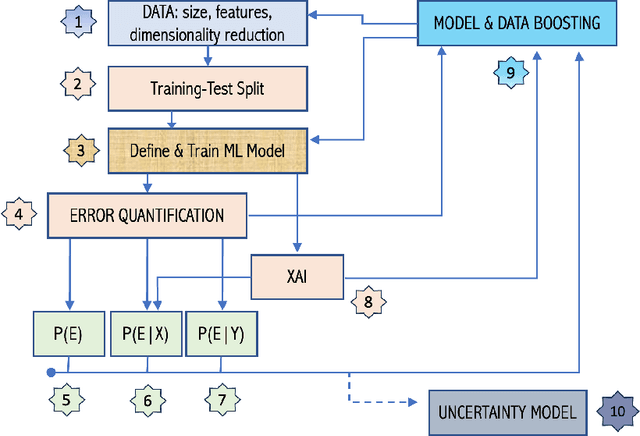
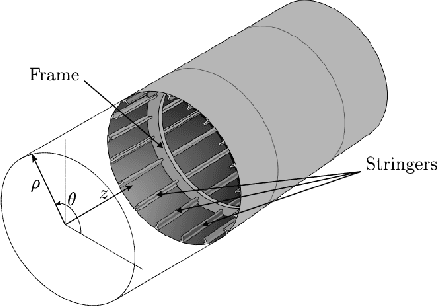
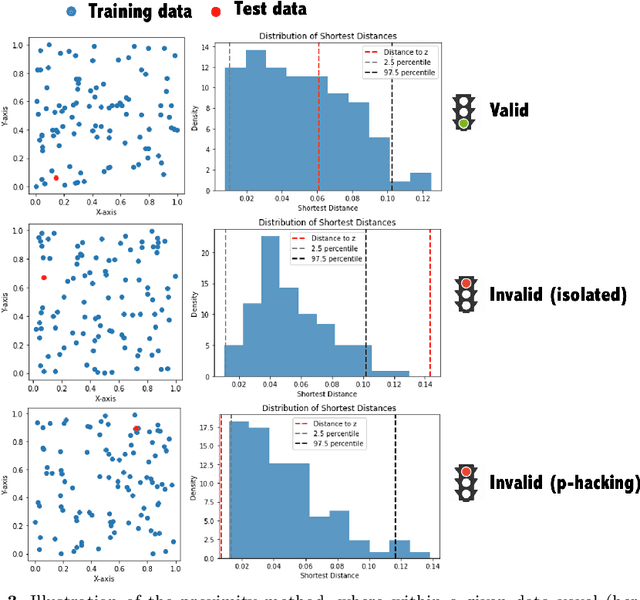
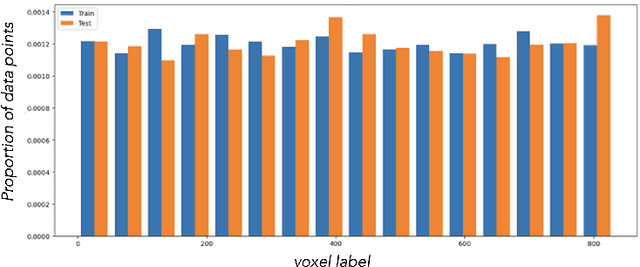
Methods of Machine and Deep Learning are gradually being integrated into industrial operations, albeit at different speeds for different types of industries. The aerospace and aeronautical industries have recently developed a roadmap for concepts of design assurance and integration of neural network-related technologies in the aeronautical sector. This paper aims to contribute to this paradigm of AI-based certification in the context of supervised learning, by outlining a complete validation pipeline that integrates deep learning, optimization and statistical methods. This pipeline is composed by a directed graphical model of ten steps. Each of these steps is addressed by a merging key concepts from different contributing disciplines (from machine learning or optimization to statistics) and adapting them to an industrial scenario, as well as by developing computationally efficient algorithmic solutions. We illustrate the application of this pipeline in a realistic supervised problem arising in aerostructural design: predicting the likelikood of different stress-related failure modes during different airflight maneuvers based on a (large) set of features characterising the aircraft internal loads and geometric parameters.