 Add to Chrome
 Add to Firefox
 Add to Edge
Embodiment-conditioned Generalist Control for Multirotor Aerial Robots
Jun 09, 2026
We present a generalist position control policy capable of controlling arbitrary multirotor configurations of a certain rotor count (e.g., hexarotors or quadrotors) with a single set of network weights. The policy is conditioned on a physics-grounded embodiment descriptor: a mass and inertia-normalized control allocation matrix that captures how mass-normalized motor thrusts generate linear and angular accelerations in the body-frame. To train the policy, we sample from a broad distribution of arbitrary multirotor configurations, including non-planar and asymmetric systems, and optimize a single, compact network using Proximal Policy Optimization. Training requires only five minutes on an RTX 3090 GPU using a custom NVIDIA Warp-based dynamics simulator. Through extensive simulation experiments, we show that embodiment conditioning enables robust generalist control across arbitrary morphologies. We demonstrate zero-shot real-world transfer of this generalist policy on three diverse hexarotor systems, including a planar robot, a partially symmetric non-planar system, and a random asymmetric, non-planar configuration.

Dynamic Activation with Knowledge Distillation for Energy-Efficient Spiking NN Ensembles
Feb 19, 2025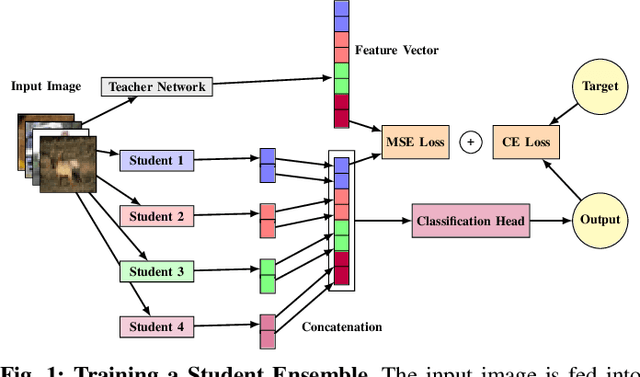
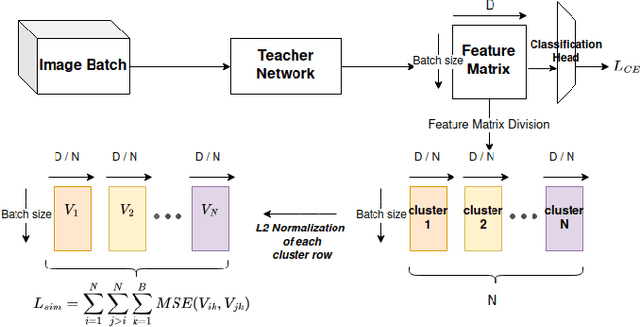
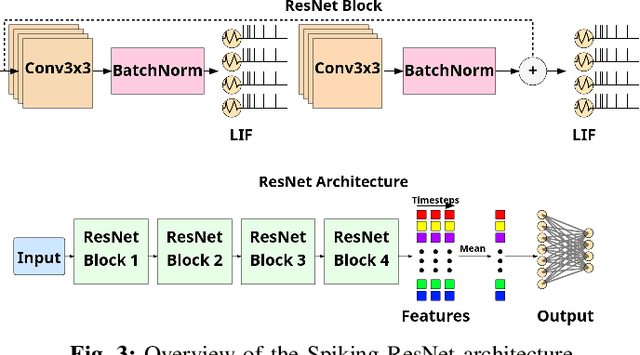
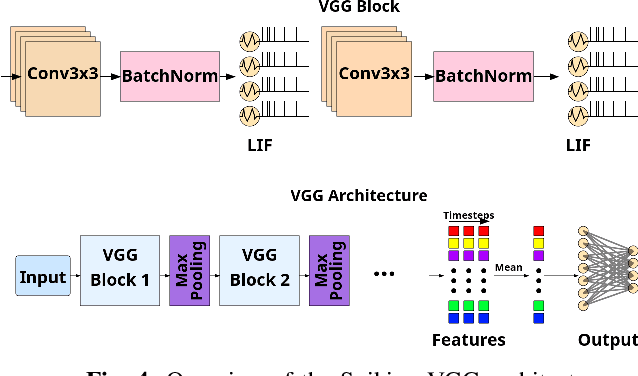
While foundation AI models excel at tasks like classification and decision-making, their high energy consumption makes them unsuitable for energy-constrained applications. Inspired by the brain's efficiency, spiking neural networks (SNNs) have emerged as a viable alternative due to their event-driven nature and compatibility with neuromorphic chips. This work introduces a novel system that combines knowledge distillation and ensemble learning to bridge the performance gap between artificial neural networks (ANNs) and SNNs. A foundation AI model acts as a teacher network, guiding smaller student SNNs organized into an ensemble, called Spiking Neural Ensemble (SNE). SNE enables the disentanglement of the teacher's knowledge, allowing each student to specialize in predicting a distinct aspect of it, while processing the same input. The core innovation of SNE is the adaptive activation of a subset of SNN models of an ensemble, leveraging knowledge-distillation, enhanced with an informed-partitioning (disentanglement) of the teacher's feature space. By dynamically activating only a subset of these student SNNs, the system balances accuracy and energy efficiency, achieving substantial energy savings with minimal accuracy loss. Moreover, SNE is significantly more efficient than the teacher network, reducing computational requirements by up to 20x with only a 2% drop in accuracy on the CIFAR-10 dataset. This disentanglement procedure achieves an accuracy improvement of up to 2.4% on the CIFAR-10 dataset compared to other partitioning schemes. Finally, we comparatively analyze SNE performance under noisy conditions, demonstrating enhanced robustness compared to its ANN teacher. In summary, SNE offers a promising new direction for energy-constrained applications.