 Add to Chrome
 Add to Firefox
 Add to Edge
The Fast Mixing Mechanism for Differential Privacy
May 28, 2026
Randomized sketching is a central tool for compressing large-scale optimization problems while preserving accuracy. In particular, sketches that are based on structured matrices, such as the Hadamard matrix, can be applied efficiently and often yield solutions that approximate those of the original problem at much lower computational cost. In differential privacy (DP), Gaussian sketching has been used to solve DP linear regression, beginning with \citet{sheffet2017differentially, sheffet2019old} and later refined by \citet{lev2025gaussianmix, lev2026near}. However, although these methods achieve strong utility guarantees, they usually do not improve runtime over classical DP approaches. In this work, we introduce a new DP sketching mechanism based on fast transforms, which, in certain cases, matches the runtime of classical fast sketching methods. We prove state-of-the-art privacy guarantees for this mechanism and show that, in favorable regimes, they match those of the Gaussian sketch up to a constant factor. As an application, we combine this mechanism with recent sketch-based methods for DP linear regression to obtain a new algorithm with strong utility and improved runtime. We establish privacy and accuracy guarantees for this algorithm, yielding, to the best of our knowledge, the first fast method for DP ordinary least squares.

Near-Optimal Private Linear Regression via Iterative Hessian Mixing
Jan 12, 2026We study differentially private ordinary least squares (DP-OLS) with bounded data. The dominant approach, adaptive sufficient-statistics perturbation (AdaSSP), adds an adaptively chosen perturbation to the sufficient statistics, namely, the matrix $X^{\top}X$ and the vector $X^{\top}Y$, and is known to achieve near-optimal accuracy and to have strong empirical performance. In contrast, methods that rely on Gaussian-sketching, which ensure differential privacy by pre-multiplying the data with a random Gaussian matrix, are widely used in federated and distributed regression, yet remain relatively uncommon for DP-OLS. In this work, we introduce the iterative Hessian mixing, a novel DP-OLS algorithm that relies on Gaussian sketches and is inspired by the iterative Hessian sketch algorithm. We provide utility analysis for the iterative Hessian mixing as well as a new analysis for the previous methods that rely on Gaussian sketches. Then, we show that our new approach circumvents the intrinsic limitations of the prior methods and provides non-trivial improvements over AdaSSP. We conclude by running an extensive set of experiments across standard benchmarks to demonstrate further that our approach consistently outperforms these prior baselines.
The Gaussian Mixing Mechanism: Renyi Differential Privacy via Gaussian Sketches
May 30, 2025Gaussian sketching, which consists of pre-multiplying the data with a random Gaussian matrix, is a widely used technique for multiple problems in data science and machine learning, with applications spanning computationally efficient optimization, coded computing, and federated learning. This operation also provides differential privacy guarantees due to its inherent randomness. In this work, we revisit this operation through the lens of Renyi Differential Privacy (RDP), providing a refined privacy analysis that yields significantly tighter bounds than prior results. We then demonstrate how this improved analysis leads to performance improvement in different linear regression settings, establishing theoretical utility guarantees. Empirically, our methods improve performance across multiple datasets and, in several cases, reduce runtime.
Faster Machine Unlearning via Natural Gradient Descent
Jul 11, 2024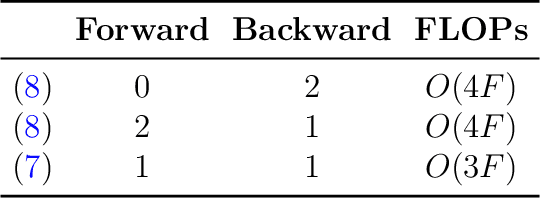
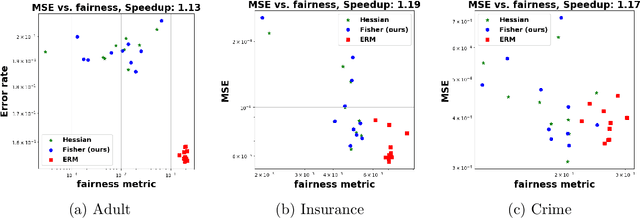
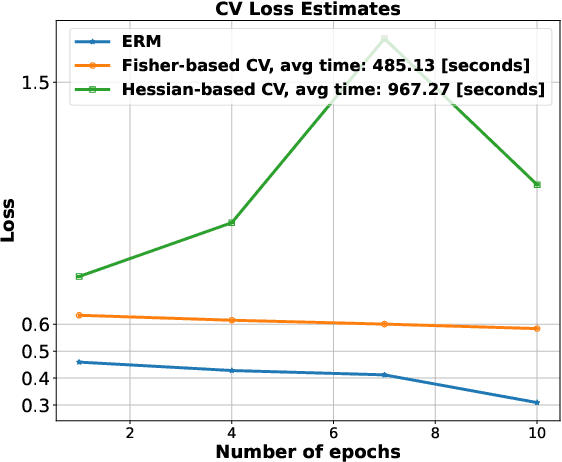
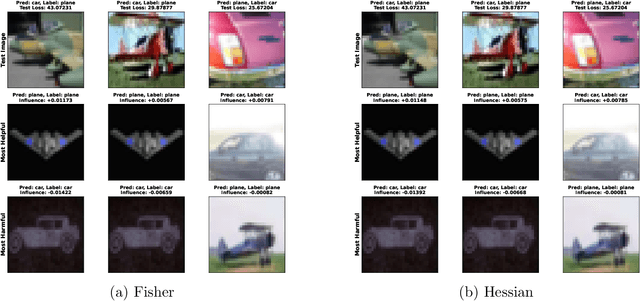
We address the challenge of efficiently and reliably deleting data from machine learning models trained using Empirical Risk Minimization (ERM), a process known as machine unlearning. To avoid retraining models from scratch, we propose a novel algorithm leveraging Natural Gradient Descent (NGD). Our theoretical framework ensures strong privacy guarantees for convex models, while a practical Min/Max optimization algorithm is developed for non-convex models. Comprehensive evaluations show significant improvements in privacy, computational efficiency, and generalization compared to state-of-the-art methods, advancing both the theoretical and practical aspects of machine unlearning.
Energy-limited Joint Source--Channel Coding via Analog Pulse Position Modulation
Sep 02, 2021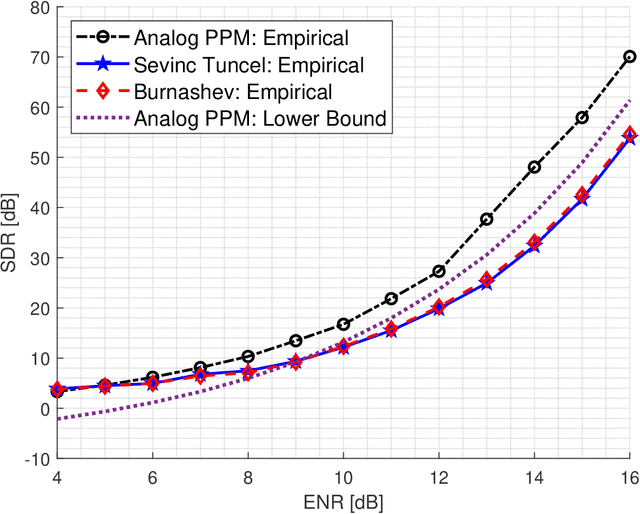
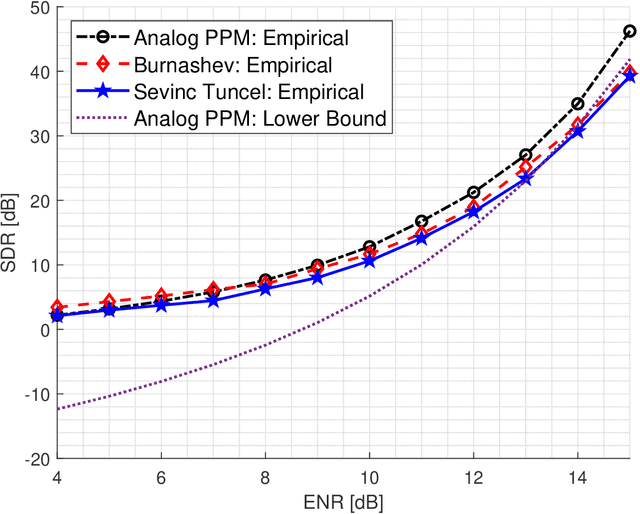

We study the problem of transmitting a source sample with minimum distortion over an infinite-bandwidth additive white Gaussian noise channel under an energy constraint. To that end, we construct a joint source--channel coding scheme using analog pulse position modulation (PPM) and bound its quadratic distortion. We show that this scheme outperforms existing techniques since its quadratic distortion attains both the exponential and polynomial decay orders of Burnashev's outer bound. We supplement our theoretical results with numerical simulations and comparisons to existing schemes.