 Add to Chrome
 Add to Firefox
 Add to Edge
Distributional Approximate Nearest Neighbour Search for Uncertainty-Aware Retrieval
Jun 03, 2026
Approximate Nearest Neighbour search indices form the backbone of real-world recommender systems, enabling real-time candidate retrieval over million-item catalogues. Typically, a single point estimate embedding is learnt for every user and every item. At serving time, the user embedding queries the index for relevant items. Since these representations are learnt from sparse interaction data, they are noisy and might fail to capture all the nuances that contribute to ``relevance'' -- ignoring the fundamental uncertainty that is inherent to them. The result is a retrieval pipeline that is systematically biased toward the small minority of popular head items with well-estimated embeddings, at the expense of the long-tail majority of niche, diverse, and serendipitous content. We propose DINOSAUR (Distributional Approximate Nearest Neighbour Search for Uncertainty-Aware Retrieval): a simple and infrastructure-compatible framework to incorporate embedding uncertainty into candidate generation. Rather than indexing point estimates, DINOSAUR samples $S_i$ embeddings per item and constructs an index on this augmented set. Analogously, at query time, a user embedding is sampled. This two-sided stochastic retrieval process implicitly marginalises over embedding uncertainty, without requiring changes to model architecture or ANN index infrastructure. On the analytical side, we show that DINOSAUR recovers standard point-estimate retrieval as uncertainty vanishes, and we characterise how increased embedding variance expands the regions of latent space in which uncertain items are retrievable. Reproducible empirical observations align with these expectations, showing large coverage gains with small losses in offline recall.

Variance Reduction for Heavy-Tailed Monetization Metrics in Ranking Experiments via Post-Stratification
Jun 02, 2026Online evaluation of ranking and retrieval systems often relies on downstream monetization metrics such as app revenue or creator earnings. These metrics are typically heavy-tailed, with a small fraction of users dominating both mean and variance, leading to low statistical power and unreliable conclusions in A/B experiments -- especially under limited traffic. We present a practical framework for variance reduction in online experiments by combining post-stratification with CUPED. Our approach leverages pre-experiment covariates to improve the sensitivity of monetization experiments without requiring additional traffic. Deployed at ShareChat across ranking-driven monetization experiments, the method substantially reduces variance and improves decision stability, achieving equivalent statistical confidence with ~45\% less traffic than standard metrics. We further discuss practical design choices, guardrails, and limitations, providing guidance on when post-stratification is appropriate for real-world information retrieval and Recommendation systems.
Sustained Impact of Agentic Personalisation in Marketing: A Longitudinal Case Study
Apr 09, 2026In consumer applications, Customer Relationship Management (CRM) has traditionally relied on the manual optimisation of static, rule-based messaging strategies. While adaptive and autonomous learning systems offer the promise of scalable personalisation, it remains unclear to what extent ``human-in-the-loop'' oversight is required to sustain performance uplift over time. This paper presents a longitudinal case study analysing a real-world consumer application that leverages agentic infrastructure to personalise marketing messaging for a large-scale user base over an 11-month period. We compare two distinct periods: an active phase where marketers directly curated content, audiences, and strategies -- followed immediately by a passive phase where agents operated autonomously from a fixed library of components. Our results demonstrate that whilst active human management generates the highest relative lift in engagement metrics, the autonomous agents successfully sustained a positive lift during the passive period. These findings suggest a symbiotic model where human intervention drives strategic initialisation and discovery, yet autonomous agents can ensure the scalable retention and preservation of performance gains.
Unifying On- and Off-Policy Variance Reduction Methods
Mar 09, 2026Continuous and efficient experimentation is key to the practical success of user-facing applications on the web, both through online A/B-tests and off-policy evaluation. Despite their shared objective -- estimating the incremental value of a treatment -- these domains often operate in isolation, utilising distinct terminologies and statistical toolkits. This paper bridges that divide by establishing a formal equivalence between their canonical variance reduction methods. We prove that the standard online Difference-in-Means estimator is mathematically identical to an off-policy Inverse Propensity Scoring estimator equipped with an optimal (variance-minimising) additive control variate. Extending this unification, we demonstrate that widespread regression adjustment methods (such as CUPED, CUPAC, and ML-RATE) are structurally equivalent to Doubly Robust estimation. This unified view extends our understanding of commonly used approaches, and can guide practitioners and researchers working on either class of problems.
Additive Control Variates Dominate Self-Normalisation in Off-Policy Evaluation
Feb 16, 2026Off-policy evaluation (OPE) is essential for assessing ranking and recommendation systems without costly online interventions. Self-Normalised Inverse Propensity Scoring (SNIPS) is a standard tool for variance reduction in OPE, leveraging a multiplicative control variate. Recent advances in off-policy learning suggest that additive control variates (baseline corrections) may offer superior performance, yet theoretical guarantees for evaluation are lacking. This paper provides a definitive answer: we prove that $β^\star$-IPS, an estimator with an optimal additive baseline, asymptotically dominates SNIPS in Mean Squared Error. By analytically decomposing the variance gap, we show that SNIPS is asymptotically equivalent to using a specific -- but generally sub-optimal -- additive baseline. Our results theoretically justify shifting from self-normalisation to optimal baseline corrections for both ranking and recommendation.
Behavioural Effects of Agentic Messaging: A Case Study on a Financial Service Application
Dec 19, 2025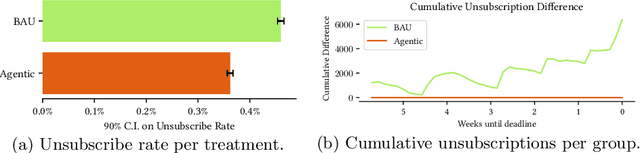
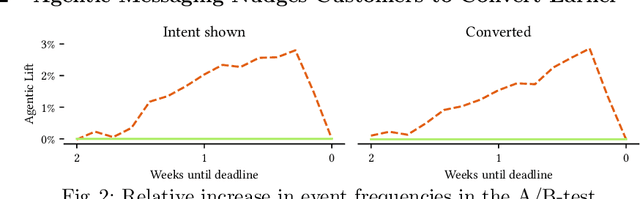
Marketing and product personalisation provide a prominent and visible use-case for the application of Information Retrieval methods across several business domains. Recently, agentic approaches to these problems have been gaining traction. This work evaluates the behavioural and retention effects of agentic personalisation on a financial service application's customer communication system during a 2025 national tax filing period. Through a two month-long randomised controlled trial, we compare an agentic messaging approach against a business-as-usual (BAU) rule-based campaign system, focusing on two primary outcomes: unsubscribe behaviour and conversion timing. Empirical results show that agent-led messaging reduced unsubscribe events by 21\% ($\pm 0.01$) relative to BAU and increased early filing behaviour in the weeks preceding the national deadline. These findings demonstrate how adaptive, user-level decision-making systems can modulate engagement intensity whilst improving long-term retention indicators.
Meta Off-Policy Estimation
Aug 11, 2025Off-policy estimation (OPE) methods enable unbiased offline evaluation of recommender systems, directly estimating the online reward some target policy would have obtained, from offline data and with statistical guarantees. The theoretical elegance of the framework combined with practical successes have led to a surge of interest, with many competing estimators now available to practitioners and researchers. Among these, Doubly Robust methods provide a prominent strategy to combine value- and policy-based estimators. In this work, we take an alternative perspective to combine a set of OPE estimators and their associated confidence intervals into a single, more accurate estimate. Our approach leverages a correlated fixed-effects meta-analysis framework, explicitly accounting for dependencies among estimators that arise due to shared data. This yields a best linear unbiased estimate (BLUE) of the target policy's value, along with an appropriately conservative confidence interval that reflects inter-estimator correlation. We validate our method on both simulated and real-world data, demonstrating improved statistical efficiency over existing individual estimators.
Procedural Memory Is Not All You Need: Bridging Cognitive Gaps in LLM-Based Agents
May 06, 2025Large Language Models (LLMs) represent a landmark achievement in Artificial Intelligence (AI), demonstrating unprecedented proficiency in procedural tasks such as text generation, code completion, and conversational coherence. These capabilities stem from their architecture, which mirrors human procedural memory -- the brain's ability to automate repetitive, pattern-driven tasks through practice. However, as LLMs are increasingly deployed in real-world applications, it becomes impossible to ignore their limitations operating in complex, unpredictable environments. This paper argues that LLMs, while transformative, are fundamentally constrained by their reliance on procedural memory. To create agents capable of navigating ``wicked'' learning environments -- where rules shift, feedback is ambiguous, and novelty is the norm -- we must augment LLMs with semantic memory and associative learning systems. By adopting a modular architecture that decouples these cognitive functions, we can bridge the gap between narrow procedural expertise and the adaptive intelligence required for real-world problem-solving.
$t$-Testing the Waters: Empirically Validating Assumptions for Reliable A/B-Testing
Feb 07, 2025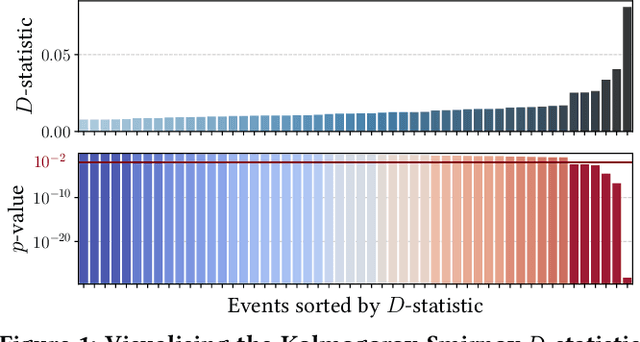
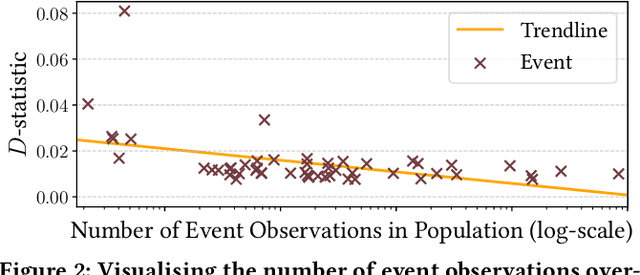
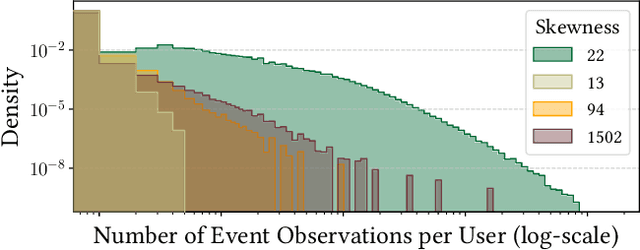
A/B-tests are a cornerstone of experimental design on the web, with wide-ranging applications and use-cases. The statistical $t$-test comparing differences in means is the most commonly used method for assessing treatment effects, often justified through the Central Limit Theorem (CLT). The CLT ascertains that, as the sample size grows, the sampling distribution of the Average Treatment Effect converges to normality, making the $t$-test valid for sufficiently large sample sizes. When outcome measures are skewed or non-normal, quantifying what "sufficiently large" entails is not straightforward. To ensure that confidence intervals maintain proper coverage and that $p$-values accurately reflect the false positive rate, it is critical to validate this normality assumption. We propose a practical method to test this, by analysing repeatedly resampled A/A-tests. When the normality assumption holds, the resulting $p$-value distribution should be uniform, and this property can be tested using the Kolmogorov-Smirnov test. This provides an efficient and effective way to empirically assess whether the $t$-test's assumptions are met, and the A/B-test is valid. We demonstrate our methodology and highlight how it helps to identify scenarios prone to inflated Type-I errors. Our approach provides a practical framework to ensure and improve the reliability and robustness of A/B-testing practices.
Powerful A/B-Testing Metrics and Where to Find Them
Jul 30, 2024Online controlled experiments, colloquially known as A/B-tests, are the bread and butter of real-world recommender system evaluation. Typically, end-users are randomly assigned some system variant, and a plethora of metrics are then tracked, collected, and aggregated throughout the experiment. A North Star metric (e.g. long-term growth or revenue) is used to assess which system variant should be deemed superior. As a result, most collected metrics are supporting in nature, and serve to either (i) provide an understanding of how the experiment impacts user experience, or (ii) allow for confident decision-making when the North Star metric moves insignificantly (i.e. a false negative or type-II error). The latter is not straightforward: suppose a treatment variant leads to fewer but longer sessions, with more views but fewer engagements; should this be considered a positive or negative outcome? The question then becomes: how do we assess a supporting metric's utility when it comes to decision-making using A/B-testing? Online platforms typically run dozens of experiments at any given time. This provides a wealth of information about interventions and treatment effects that can be used to evaluate metrics' utility for online evaluation. We propose to collect this information and leverage it to quantify type-I, type-II, and type-III errors for the metrics of interest, alongside a distribution of measurements of their statistical power (e.g. $z$-scores and $p$-values). We present results and insights from building this pipeline at scale for two large-scale short-video platforms: ShareChat and Moj; leveraging hundreds of past experiments to find online metrics with high statistical power.