 Add to Chrome
 Add to Firefox
 Add to Edge
Towards Reliable Connectivity: Measurement-Driven Assessment of Starlink and OneWeb Non-Terrestrial and 5G Terrestrial Networks
Dec 22, 2025


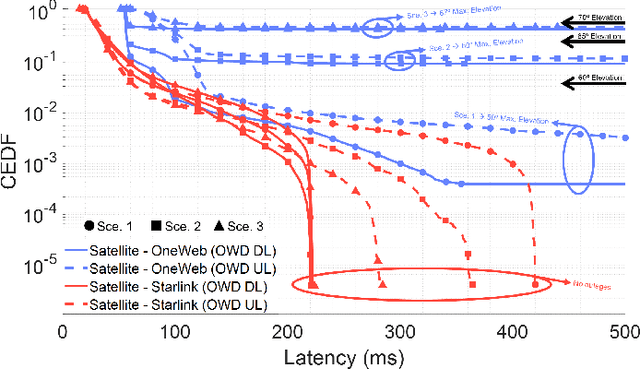

The emergence of commercial satellite communications networks, such as Starlink and OneWeb, has significantly transformed the communications landscape over the last years. As a complement to terrestrial cellular networks, non-terrestrial systems enable coverage extension and reliability enhancement beyond the limits of conventional infrastructure. Currently, the high reliance on terrestrial networks exposes communications to vulnerabilities in the event of terrestrial infrastructure failures, e.g., due to natural disasters. Therefore, this work proposes the joint evaluation of Key Performance Indicators (KPIs) for two non-terrestrial satellite networks (Starlink and OneWeb) and two terrestrial cellular networks to assess the current performance of these technologies across three different environments: (i) urban, (ii) suburban, and (iii) forest scenarios. Additionally, multi-connectivity techniques are explored to determine the benefits in connectivity when two technologies are used simultaneously. For instance, the outage probability of Starlink and OneWeb in urban areas is reduced from approximately 12-21\% to 2\% when both solutions are employed together. Finally, the joint analysis of KPIs in both terrestrial and non-terrestrial networks demonstrates that their integration enhances coverage, improves performance, and increases reliability, highlighting the benefits of combining satellite and terrestrial systems in the analyzed environments.

Measuring and Estimating Key Quality Indicators in Cloud Gaming services
Dec 28, 2022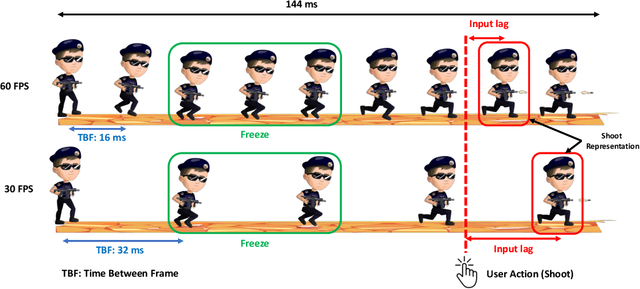
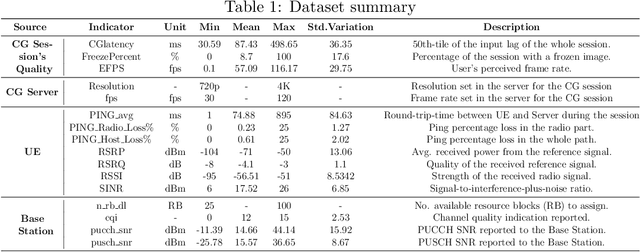

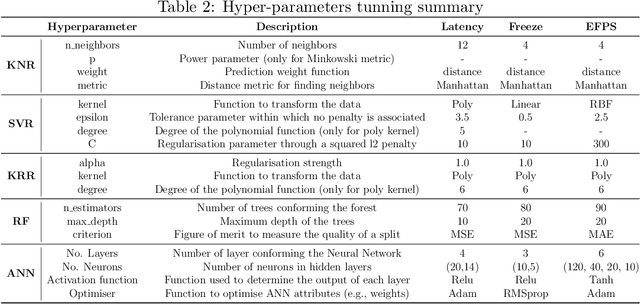
User equipment is one of the main bottlenecks facing the gaming industry nowadays. The extremely realistic games which are currently available trigger high computational requirements of the user devices to run games. As a consequence, the game industry has proposed the concept of Cloud Gaming, a paradigm that improves gaming experience in reduced hardware devices. To this end, games are hosted on remote servers, relegating users' devices to play only the role of a peripheral for interacting with the game. However, this paradigm overloads the communication links connecting the users with the cloud. Therefore, service experience becomes highly dependent on network connectivity. To overcome this, Cloud Gaming will be boosted by the promised performance of 5G and future 6G networks, together with the flexibility provided by mobility in multi-RAT scenarios, such as WiFi. In this scope, the present work proposes a framework for measuring and estimating the main E2E metrics of the Cloud Gaming service, namely KQIs. In addition, different machine learning techniques are assessed for predicting KQIs related to Cloud Gaming user's experience. To this end, the main key quality indicators (KQIs) of the service such as input lag, freeze percent or perceived video frame rate are collected in a real environment. Based on these, results show that machine learning techniques provide a good estimation of these indicators solely from network-based metrics. This is considered a valuable asset to guide the delivery of Cloud Gaming services through cellular communications networks even without access to the user's device, as it is expected for telecom operators.