 Add to Chrome
 Add to Firefox
 Add to Edge
Towards Reliable Connectivity: Measurement-Driven Assessment of Starlink and OneWeb Non-Terrestrial and 5G Terrestrial Networks
Paper and Code
Dec 22, 2025

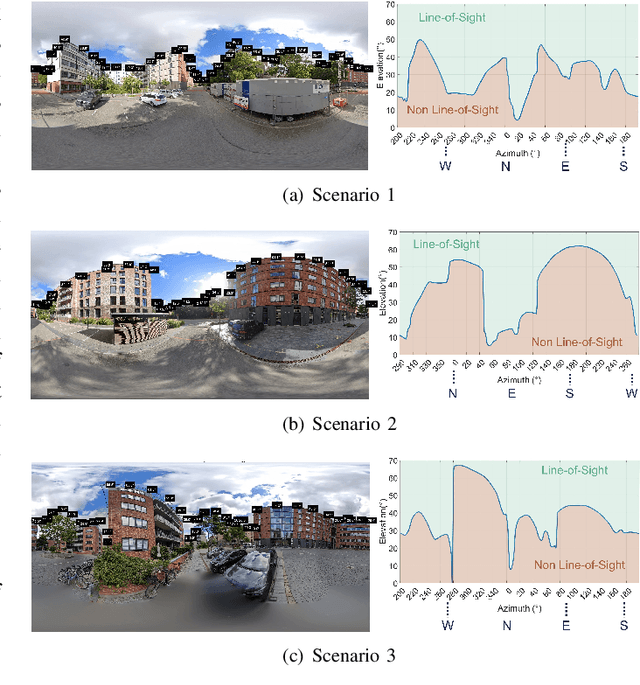
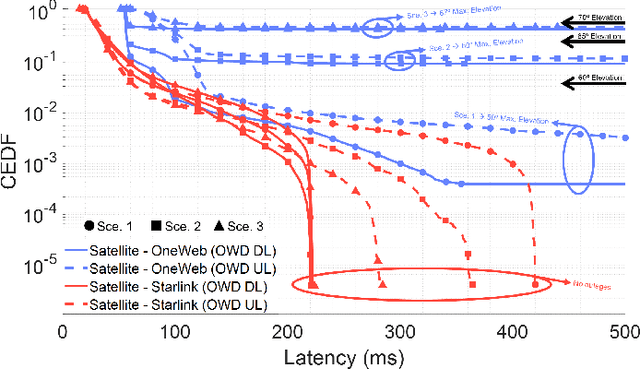
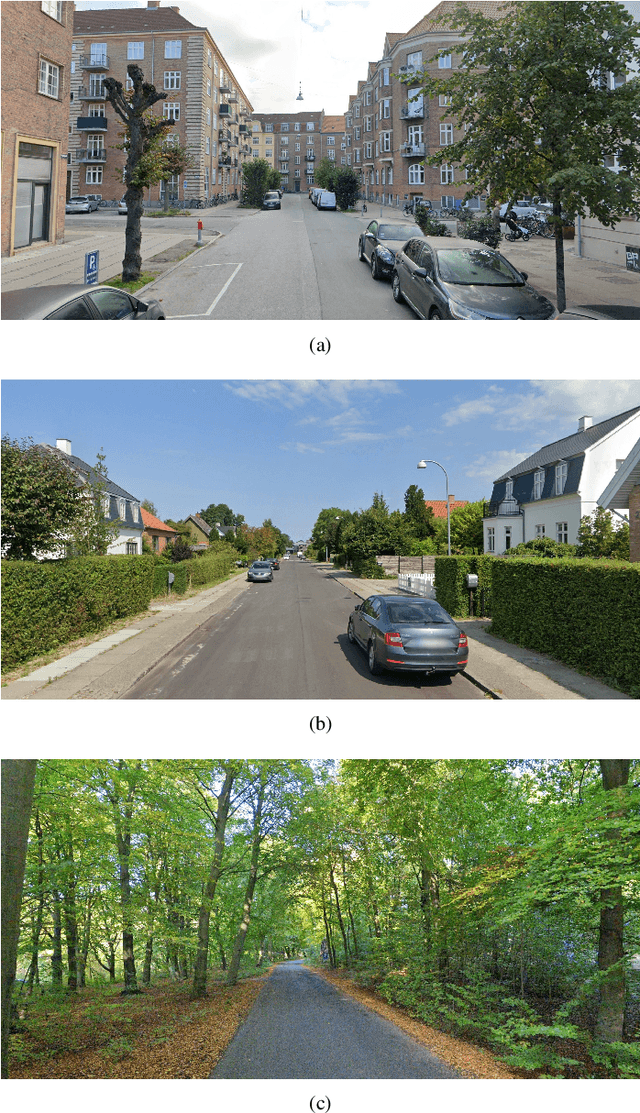
The emergence of commercial satellite communications networks, such as Starlink and OneWeb, has significantly transformed the communications landscape over the last years. As a complement to terrestrial cellular networks, non-terrestrial systems enable coverage extension and reliability enhancement beyond the limits of conventional infrastructure. Currently, the high reliance on terrestrial networks exposes communications to vulnerabilities in the event of terrestrial infrastructure failures, e.g., due to natural disasters. Therefore, this work proposes the joint evaluation of Key Performance Indicators (KPIs) for two non-terrestrial satellite networks (Starlink and OneWeb) and two terrestrial cellular networks to assess the current performance of these technologies across three different environments: (i) urban, (ii) suburban, and (iii) forest scenarios. Additionally, multi-connectivity techniques are explored to determine the benefits in connectivity when two technologies are used simultaneously. For instance, the outage probability of Starlink and OneWeb in urban areas is reduced from approximately 12-21\% to 2\% when both solutions are employed together. Finally, the joint analysis of KPIs in both terrestrial and non-terrestrial networks demonstrates that their integration enhances coverage, improves performance, and increases reliability, highlighting the benefits of combining satellite and terrestrial systems in the analyzed environments.
