 Add to Chrome
 Add to Firefox
 Add to Edge
Zero-Shot Captioning for Cultural Heritage: Automated Image Analysis of Traditional Indonesian Clothing
Jun 11, 2026
This paper presents Custom ZeroCLIP, a retrieval-augmented vision-language framework for zero-shot captioning of Indonesian traditional garments. The dataset contains 3,800 expert-annotated images from all 38 Indonesian provinces. Using a province-level inductive zero-shot protocol, the model is trained on 24 seen provinces, validated on 6 seen provinces, and evaluated on 8 unseen provinces. The framework combines a frozen CLIP ViT-B/32 image encoder, a CLIP text encoder, a BERT text encoder, and an LSTM caption decoder. During inference, unseen-province labels and captions are unavailable, and retrieval uses only captions from training provinces. No unseen-province image, label, or caption is used during training, validation, or retrieval-bank construction. Custom ZeroCLIP achieves a CLIPScore of 0.8536, BLEU-4 of 0.3342, and METEOR of 0.4859, outperforming existing baselines. Ablation results show that retrieval improves cultural vocabulary recovery with a 19.3\% METEOR gain, while human evaluation confirms stronger cultural accuracy and fluency. The results demonstrate the effectiveness of retrieval-augmented domain adaptation for culturally grounded caption generation in low-resource heritage settings. The dataset is publicly available at https://github.com/AnugrahAidinYotolembah/Traditional-Indonesian-Clothing-Captioning-Dataset.

Does Language Shift Break Medical Vision-Language Models? Indonesian Radiology Visual Question Answering Case Study
Jun 02, 2026Medical Vision-Language Models (VLMs) are typically evaluated on English radiology visual question answering benchmarks, leaving their robustness under non-English clinical language largely unexplored. We introduce IndoRad-VQA, an Indonesian adaptation of VQA-RAD, to assess whether medical VLMs retain radiology reasoning ability when questions are asked in Bahasa Indonesia. Radiology question-answer pairs are translated into Indonesian with self-evaluation-based quality control to preserve clinical meaning, terminology consistency, and answer equivalence. We evaluate general-purpose, Southeast Asian multilingual, and medical-specific VLMs under English and Indonesian prompting settings. Beyond accuracy, we quantify the language robustness gap between English and Indonesian inputs. We also conduct an error analysis to identify failure modes of question answering, such as yes/no flips, laterality errors, and output-language mismatches. Our findings show that strong performance on English medical VQA benchmarks does not necessarily translate to robust behavior in Indonesian clinical contexts. We observe a performance gap of 8 to 25 percent between the English and Indonesian settings, depending on the evaluation metric. These results highlight the need for more inclusive multilingual evaluation of medical multimodal foundation models. The dataset is available at https://huggingface.co/datasets/Lab-IS/IndoRad-VQA.
Adaptive Conformal Prediction for Reliable and Explainable Medical Image Classification
May 13, 2026Deep learning models for medical imaging often exhibit overconfidence, creating safety risks in ambiguous diagnostic scenarios. While Conformal Prediction (CP) provides distribution-free statistical guarantees, standard methods such as Regularized Adaptive Prediction Sets (RAPS) optimize for average efficiency and can mask severe failures on difficult inputs. We propose an Adaptive Lambda Criterion for RAPS that minimizes the worst-case coverage violation across prediction set size strata. On OrganAMNIST (58,850 abdominal CT images, 11 classes), standard size-optimized RAPS converges to near-deterministic behavior with stratified undercoverage on uncertain samples, while our method achieves 95.72 percent global coverage with average set size 1.09 and at least 90 percent coverage across all strata. Cross-domain validation on PathMNIST (107,180 pathology images, 9 classes) confirms generalizability. Quantitative Grad-CAM analysis (rho = -0.30, p < 1e-22) shows that multi-label predictions correspond to focused attention on anatomically ambiguous regions. These results demonstrate that the proposed method improves reliability while maintaining efficiency, making it suitable for safety-critical medical AI applications.
Training-Free Disentangled Text-Guided Image Editing via Sparse Latent Constraints
Dec 25, 2025Text-driven image manipulation often suffers from attribute entanglement, where modifying a target attribute (e.g., adding bangs) unintentionally alters other semantic properties such as identity or appearance. The Predict, Prevent, and Evaluate (PPE) framework addresses this issue by leveraging pre-trained vision-language models for disentangled editing. In this work, we analyze the PPE framework, focusing on its architectural components, including BERT-based attribute prediction and StyleGAN2-based image generation on the CelebA-HQ dataset. Through empirical analysis, we identify a limitation in the original regularization strategy, where latent updates remain dense and prone to semantic leakage. To mitigate this issue, we introduce a sparsity-based constraint using L1 regularization on latent space manipulation. Experimental results demonstrate that the proposed approach enforces more focused and controlled edits, effectively reducing unintended changes in non-target attributes while preserving facial identity.
Input-Adaptive Visual Preprocessing for Efficient Fast Vision-Language Model Inference
Dec 23, 2025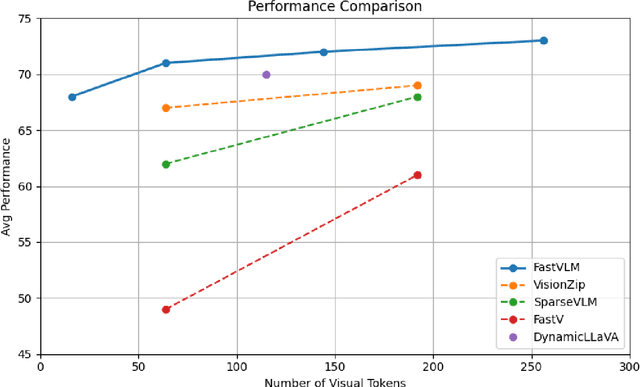
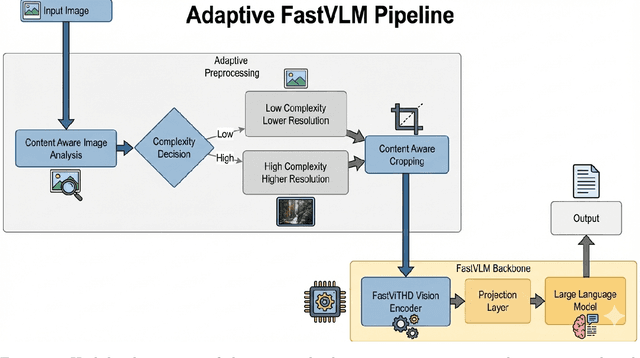
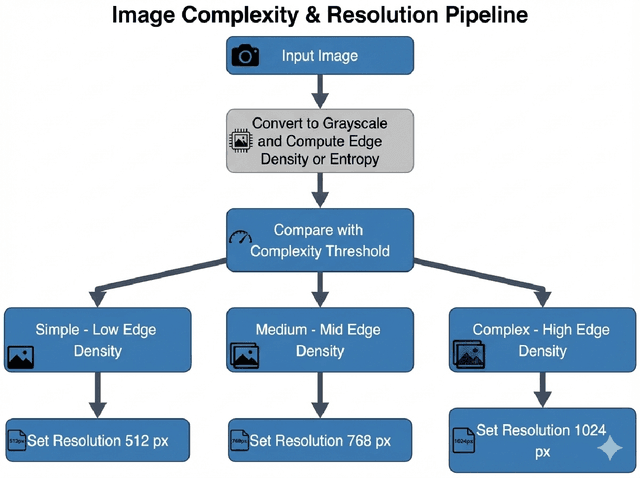
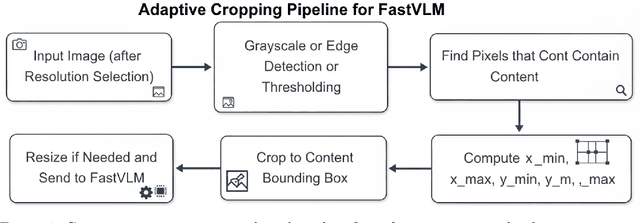
Vision-Language Models (VLMs) have demonstrated strong performance on multimodal reasoning tasks, but their deployment remains challenging due to high inference latency and computational cost, particularly when processing high-resolution visual inputs. While recent architectures such as FastVLM improve efficiency through optimized vision encoders, existing pipelines still rely on static visual preprocessing, leading to redundant computation for visually simple inputs. In this work, we propose an adaptive visual preprocessing method that dynamically adjusts input resolution and spatial coverage based on image content characteristics. The proposed approach combines content-aware image analysis, adaptive resolution selection, and content-aware cropping to reduce visual redundancy prior to vision encoding. Importantly, the method is integrated with FastVLM without modifying its architecture or requiring retraining. We evaluate the proposed method on a subset of the DocVQA dataset in an inference-only setting, focusing on efficiency-oriented metrics. Experimental results show that adaptive preprocessing reduces per-image inference time by over 50\%, lowers mean full generation time, and achieves a consistent reduction of more than 55\% in visual token count compared to the baseline pipeline. These findings demonstrate that input-aware preprocessing is an effective and lightweight strategy for improving deployment-oriented efficiency of vision-language models. To facilitate reproducibility, our implementation is provided as a fork of the FastVLM repository, incorporating the files for the proposed method, and is available at https://github.com/kmdavidds/mlfastlm.
ASVRI-Legal: Fine-Tuning LLMs with Retrieval Augmented Generation for Enhanced Legal Regulation
Nov 05, 2025In this study, we explore the fine-tuning of Large Language Models (LLMs) to better support policymakers in their crucial work of understanding, analyzing, and crafting legal regulations. To equip the model with a deep understanding of legal texts, we curated a supervised dataset tailored to the specific needs of the legal domain. Additionally, we integrated the Retrieval-Augmented Generation (RAG) method, enabling the LLM to access and incorporate up-to-date legal knowledge from external sources. This combination of fine-tuning and RAG-based augmentation results in a tool that not only processes legal information but actively assists policymakers in interpreting regulations and drafting new ones that align with current needs. The results demonstrate that this approach can significantly enhance the effectiveness of legal research and regulation development, offering a valuable resource in the ever-evolving field of law.
Efficient Object Detection of Marine Debris using Pruned YOLO Model
Jan 27, 2025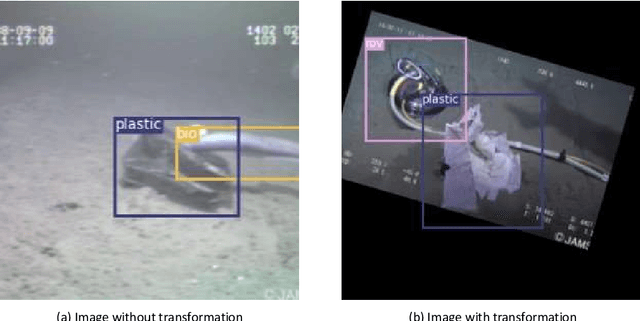
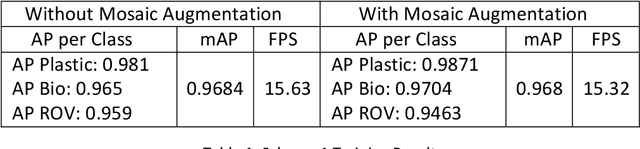
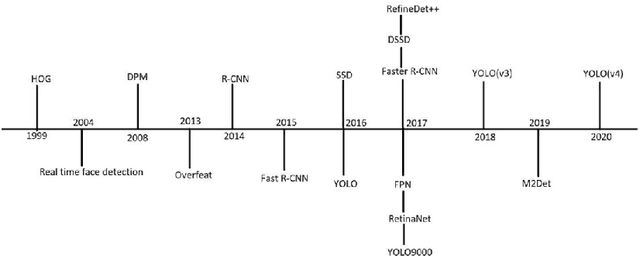
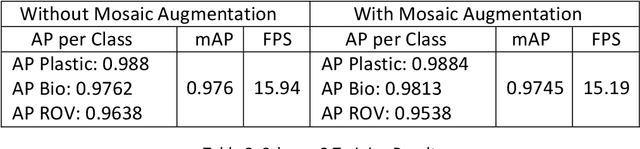
Marine debris poses significant harm to marine life due to substances like microplastics, polychlorinated biphenyls, and pesticides, which damage habitats and poison organisms. Human-based solutions, such as diving, are increasingly ineffective in addressing this issue. Autonomous underwater vehicles (AUVs) are being developed for efficient sea garbage collection, with the choice of object detection architecture being critical. This research employs the YOLOv4 model for real-time detection of marine debris using the Trash-ICRA 19 dataset, consisting of 7683 images at 480x320 pixels. Various modifications-pretrained models, training from scratch, mosaic augmentation, layer freezing, YOLOv4-tiny, and channel pruning-are compared to enhance architecture efficiency. Channel pruning significantly improves detection speed, increasing the base YOLOv4 frame rate from 15.19 FPS to 19.4 FPS, with only a 1.2% drop in mean Average Precision, from 97.6% to 96.4%.
Variational Mode Decomposition and Linear Embeddings are What You Need For Time-Series Forecasting
Sep 04, 2024Time-series forecasting often faces challenges due to data volatility, which can lead to inaccurate predictions. Variational Mode Decomposition (VMD) has emerged as a promising technique to mitigate volatility by decomposing data into distinct modes, thereby enhancing forecast accuracy. In this study, we integrate VMD with linear models to develop a robust forecasting framework. Our approach is evaluated on 13 diverse datasets, including ETTm2, WindTurbine, M4, and 10 air quality datasets from various Southeast Asian cities. The effectiveness of the VMD strategy is assessed by comparing Root Mean Squared Error (RMSE) values from models utilizing VMD against those without it. Additionally, we benchmark linear-based models against well-known neural network architectures such as LSTM, Bidirectional LSTM, and RNN. The results demonstrate a significant reduction in RMSE across nearly all models following VMD application. Notably, the Linear + VMD model achieved the lowest average RMSE in univariate forecasting at 0.619. In multivariate forecasting, the DLinear + VMD model consistently outperformed others, attaining the lowest RMSE across all datasets with an average of 0.019. These findings underscore the effectiveness of combining VMD with linear models for superior time-series forecasting.
Hybrid of DiffStride and Spectral Pooling in Convolutional Neural Networks
Jan 17, 2024Stride determines the distance between adjacent filter positions as the filter moves across the input. A fixed stride causes important information contained in the image can not be captured, so that important information is not classified. Therefore, in previous research, the DiffStride Method was applied, namely the Strided Convolution Method with which it can learn its own stride value. Severe Quantization and a constraining lower bound on preserved information are arises with Max Pooling Downsampling Method. Spectral Pooling reduce the constraint lower bound on preserved information by cutting off the representation in the frequency domain. In this research a CNN Model is proposed with the Downsampling Learnable Stride Technique performed by Backpropagation combined with the Spectral Pooling Technique. Diffstride and Spectral Pooling techniques are expected to maintain most of the information contained in the image. In this study, we compare the Hybrid Method, which is a combined implementation of Spectral Pooling and DiffStride against the Baseline Method, which is the DiffStride implementation on ResNet 18. The accuracy result of the DiffStride combination with Spectral Pooling improves over DiffStride which is baseline method by 0.0094. This shows that the Hybrid Method can maintain most of the information by cutting of the representation in the frequency domain and determine the stride of the learning result through Backpropagation.
Learning-Augmented K-Means Clustering Using Dimensional Reduction
Jan 06, 2024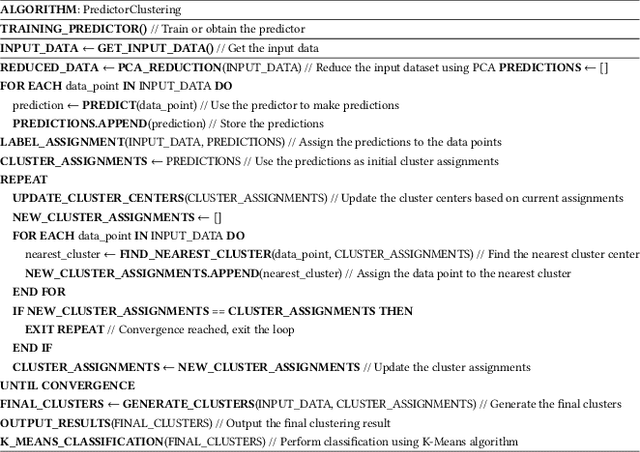
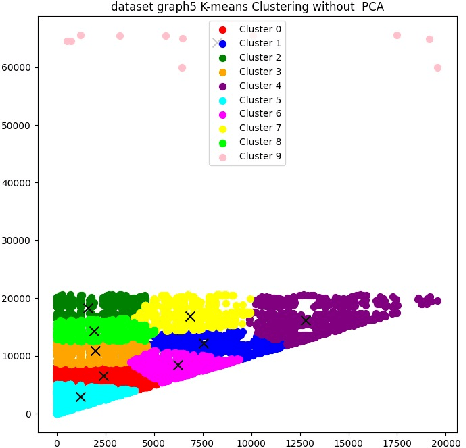
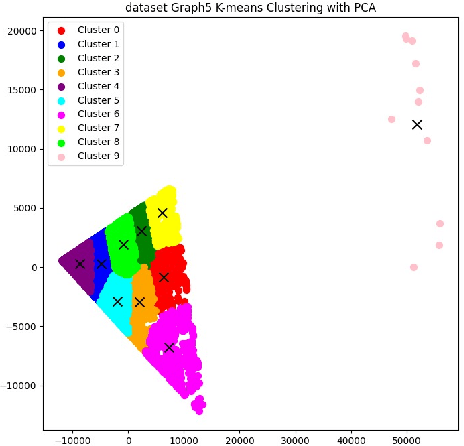
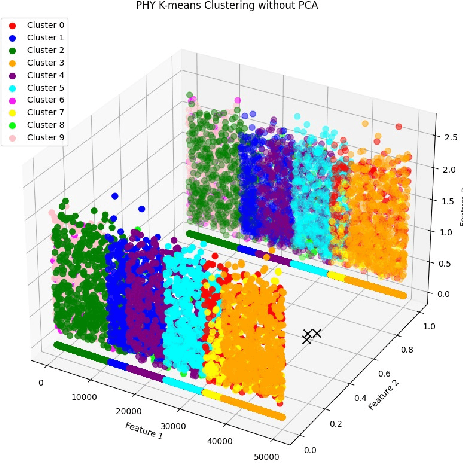
Learning augmented is a machine learning concept built to improve the performance of a method or model, such as enhancing its ability to predict and generalize data or features, or testing the reliability of the method by introducing noise and other factors. On the other hand, clustering is a fundamental aspect of data analysis and has long been used to understand the structure of large datasets. Despite its long history, the k-means algorithm still faces challenges. One approach, as suggested by Ergun et al,is to use a predictor to minimize the sum of squared distances between each data point and a specified centroid. However, it is known that the computational cost of this algorithm increases with the value of k, and it often gets stuck in local minima. In response to these challenges, we propose a solution to reduce the dimensionality of the dataset using Principal Component Analysis (PCA). It is worth noting that when using k values of 10 and 25, the proposed algorithm yields lower cost results compared to running it without PCA. "Principal component analysis (PCA) is the problem of fitting a low-dimensional affine subspace to a set of data points in a high-dimensional space. PCA is well-established in the literature and has become one of the most useful tools for data modeling, compression, and visualization."
* acmart-LaTeX2e v1.84 17 pages with 12 figures