 Add to Chrome
 Add to Firefox
 Add to Edge
Kunnafonidilaw ka Cadeau: an ASR dataset of present-day Bambara
Dec 22, 2025
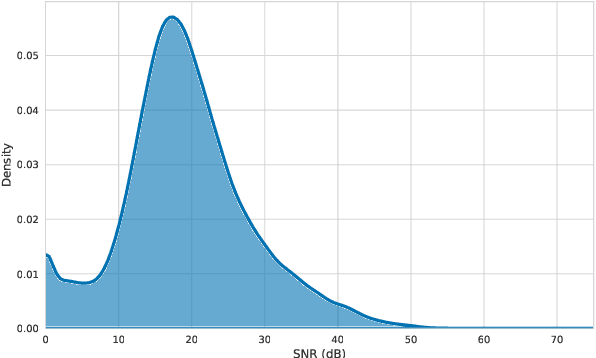
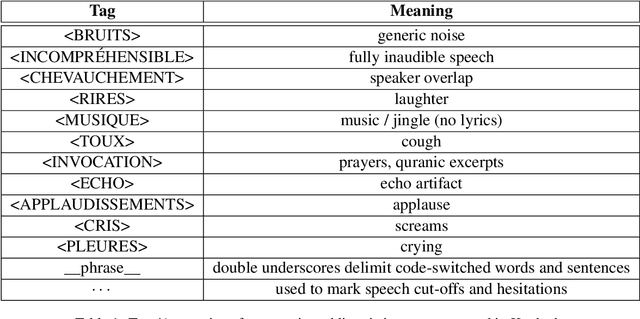
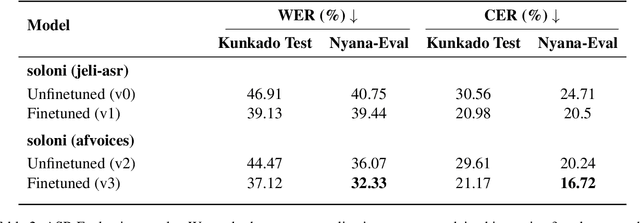
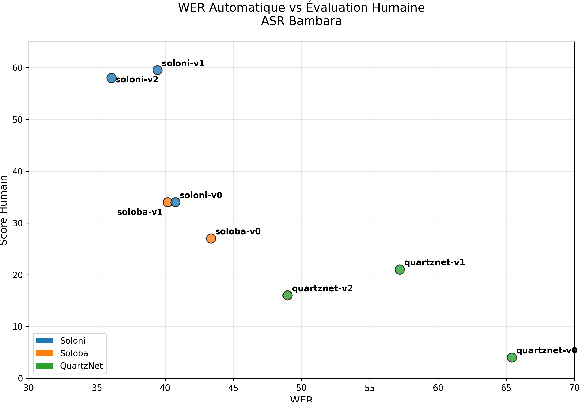
We present Kunkado, a 160-hour Bambara ASR dataset compiled from Malian radio archives to capture present-day spontaneous speech across a wide range of topics. It includes code-switching, disfluencies, background noise, and overlapping speakers that practical ASR systems encounter in real-world use. We finetuned Parakeet-based models on a 33.47-hour human-reviewed subset and apply pragmatic transcript normalization to reduce variability in number formatting, tags, and code-switching annotations. Evaluated on two real-world test sets, finetuning with Kunkado reduces WER from 44.47\% to 37.12\% on one and from 36.07\% to 32.33\% on the other. In human evaluation, the resulting model also outperforms a comparable system with the same architecture trained on 98 hours of cleaner, less realistic speech. We release the data and models to support robust ASR for predominantly oral languages.

Cost Analysis of Human-corrected Transcription for Predominately Oral Languages
Oct 14, 2025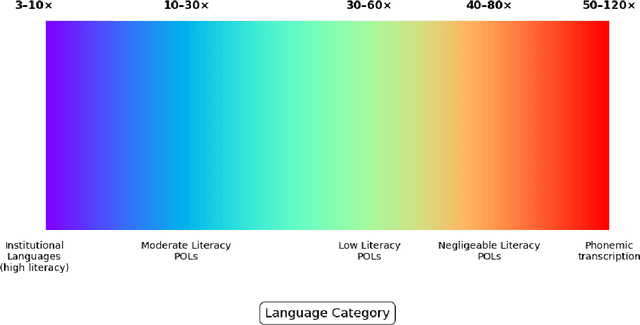
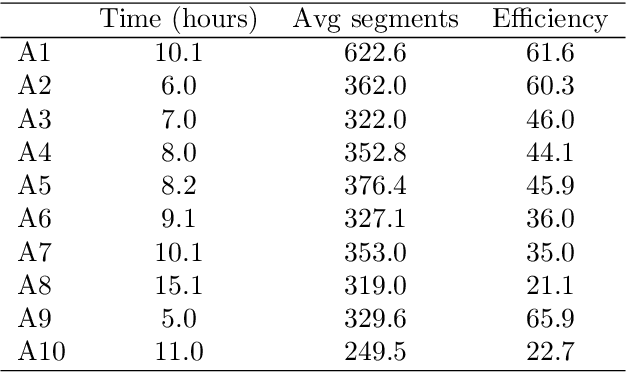
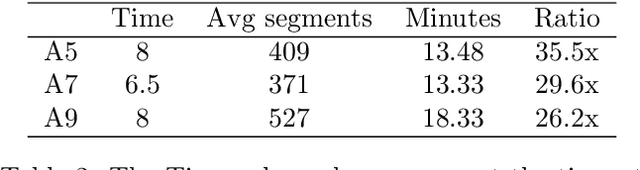
Creating speech datasets for low-resource languages is a critical yet poorly understood challenge, particularly regarding the actual cost in human labor. This paper investigates the time and complexity required to produce high-quality annotated speech data for a subset of low-resource languages, low literacy Predominately Oral Languages, focusing on Bambara, a Manding language of Mali. Through a one-month field study involving ten transcribers with native proficiency, we analyze the correction of ASR-generated transcriptions of 53 hours of Bambara voice data. We report that it takes, on average, 30 hours of human labor to accurately transcribe one hour of speech data under laboratory conditions and 36 hours under field conditions. The study provides a baseline and practical insights for a large class of languages with comparable profiles undertaking the creation of NLP resources.
The Serendipity of Claude AI: Case of the 13 Low-Resource National Languages of Mali
Mar 05, 2025Recent advances in artificial intelligence (AI) and natural language processing (NLP) have improved the representation of underrepresented languages. However, most languages, including Mali's 13 official national languages, continue to be poorly supported or unsupported by automatic translation and generative AI. This situation appears to have slightly improved with certain recent LLM releases. The study evaluated Claude AI's translation performance on each of the 13 national languages of Mali. In addition to ChrF2 and BLEU scores, human evaluators assessed translation accuracy, contextual consistency, robustness to dialect variations, management of linguistic bias, adaptation to a limited corpus, and ease of understanding. The study found that Claude AI performs robustly for languages with very modest language resources and, while unable to produce understandable and coherent texts for Malian languages with minimal resources, still manages to produce results which demonstrate the ability to mimic some elements of the language.