 Add to Chrome
 Add to Firefox
 Add to Edge
ML-for-ML
Aug 06, 2026
AI training workloads are growing rapidly, making their time, energy, and infrastructure costs increasingly important. In shared cloud clusters, training and fine-tuning jobs compete with co-running workloads for network resources, while network mechanisms and ML training choices are typically optimized separately: networking controls how bytes move, whereas ML systems control when and how much communication occurs. We argue that this separation leaves end-to-end performance on the table. We present ML-for-ML, a cross-layer perspective in which network-side and ML-side knobs are selected jointly under a shared time-to-target-loss objective. Our preliminary prototype shows that by co-optimizing the ML and network parameters, we reach the target loss up to 42% faster.

Online Safety Assurance for Deep Reinforcement Learning
Oct 07, 2020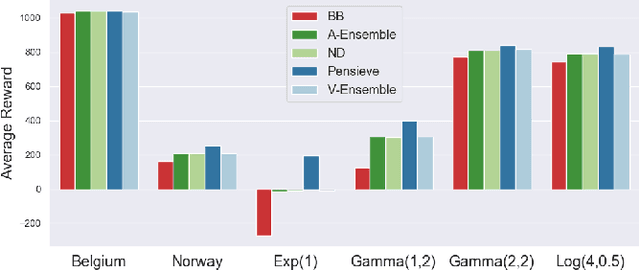
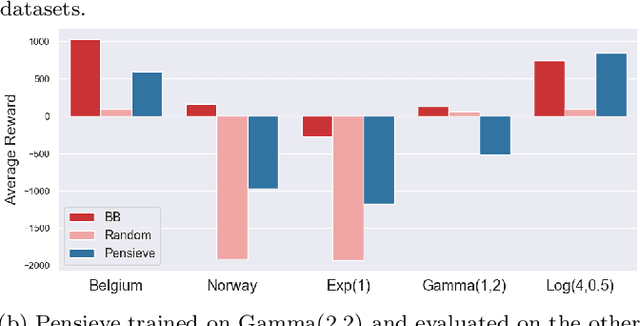
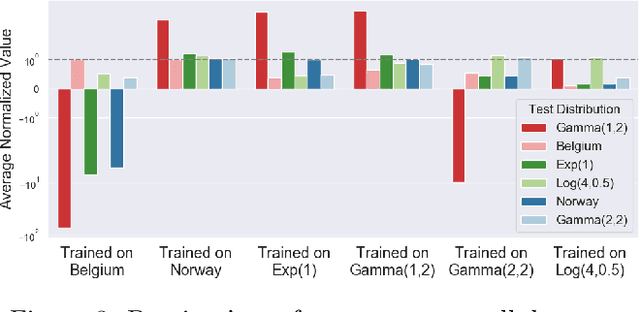
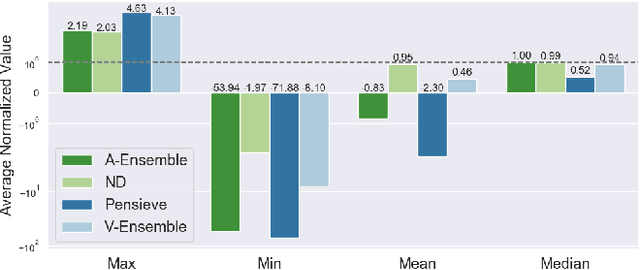
Recently, deep learning has been successfully applied to a variety of networking problems. A fundamental challenge is that when the operational environment for a learning-augmented system differs from its training environment, such systems often make badly informed decisions, leading to bad performance. We argue that safely deploying learning-driven systems requires being able to determine, in real time, whether system behavior is coherent, for the purpose of defaulting to a reasonable heuristic when this is not so. We term this the online safety assurance problem (OSAP). We present three approaches to quantifying decision uncertainty that differ in terms of the signal used to infer uncertainty. We illustrate the usefulness of online safety assurance in the context of the proposed deep reinforcement learning (RL) approach to video streaming. While deep RL for video streaming bests other approaches when the operational and training environments match, it is dominated by simple heuristics when the two differ. Our preliminary findings suggest that transitioning to a default policy when decision uncertainty is detected is key to enjoying the performance benefits afforded by leveraging ML without compromising on safety.