 Add to Chrome
 Add to Firefox
 Add to Edge
Unequal Verdicts: Investigating Gender Bias in LLM-Based Fake News Detection
Aug 04, 2026
Large Language Models (LLMs) are increasingly used for automated fact-checking, yet their susceptibility to gender bias in this context remains underexplored. This study presents the first systematic investigation of gender bias in LLM-based fake news detection using real-world data. We augment the LIAR benchmark with three gender variants of speaker job titles (Neutral, Male, Female) for each statement to test whether veracity judgments vary solely based on gender presentation. Six state-of-the-art LLMs are evaluated across multiple bias and fairness metrics. All models exhibit gender sensitivity: 9.79%-35.13% of statements receive inconsistent labels across the three variants, with Male-Female comparisons showing 6.5%-23.6% flip rates. Two primary bias manifestations are identified: instability (inconsistent judgments) and directionality (systematic favoritism). Five models show statistically significant directional effects, with the strongest effects displaying male-skeptic patterns. These findings demonstrate that gender bias undermines both reliability and fairness in LLM-based fake news detection, highlighting the need for bias-aware evaluation and mitigation strategies. The augmented dataset is publicly released to support future research.

PTEI: Integrating Personality Traits to Enhance Emotional Intelligence in Large Language Models
Jul 11, 2026Despite advances in Emotional Intelligence (EI), Large Language Models (LLMs) still significantly underperform humans in complex emotional reasoning. This gap originates partly from the limited incorporation of individual differences, particularly personality traits, which are fundamental to human emotional inference. To address this, we propose PTEI, a novel framework for integrating Personality Traits into Emotional Intelligence tasks using LLMs. In PTEI, MBTI and OCEAN personality traits are first extracted directly from the given emotional scenarios and then utilized as contextual knowledge within personality-aware prompts, guiding LLMs to accurately infer emotions and their underlying causes. To ensure optimal contextual grounding, we employ Contrastive Learning to construct an optimized retrieval system that surfaces emotionally and personally aligned scenarios, enhancing reasoning quality. Extensive experiments on established EI benchmarks show that PTEI enhances the Emotional Understanding (EU) capabilities of various LLMs, with the strongest improvement observed in GPT models. Combining PTEI with Chain-of-Thought (CoT) reasoning yields an additional 4 percent increase in accuracy. These findings underscore PTEI's contribution toward advancing AI systems with more sophisticated social and psychological grounding.
Med-StepBench: A Hierarchical Reasoning Framework for Evaluating Hallucinations in Medical Vision-Language Models
May 11, 2026Large vision-language models (VLMs) demonstrate strong performance in medical image understanding, but frequently generate clinically plausible yet incorrect statements, raising significant safety concerns. Existing medical hallucination benchmarks primarily focus on 2D imaging with one-shot diagnostic questions, offering limited insight into whether predictions are grounded in correct localization and abnormality identification, allowing critical reasoning errors to remain hidden behind seemingly correct diagnoses. We introduce Med-StepBench, the first large-scale benchmark for step-wise hallucination detection in 3D oncological PET/CT, comprising over 12,000 images and more than 1,000,000 image-statement pairs across volumetric and multi-view 2D data, which decomposes clinical reasoning into four expert-designed diagnostic stages. Using clinician-verified annotations, we perform the first step-level evaluation of general-purpose and medical VLMs, revealing systematic failure modes obscured by aggregate accuracy metrics. Furthermore, we show that current VLMs are highly susceptible to adversarial yet clinically plausible intermediate explanations, which significantly amplify hallucinations despite contradictory visual evidence. Together, our findings highlight fundamental limitations in grounding multi-step clinical reasoning and establish Med-StepBench as a rigorous benchmark for developing safer and more reliable medical VLMs.
Region-Grounded Report Generation for 3D Medical Imaging: A Fine-Grained Dataset and Graph-Enhanced Framework
Apr 20, 2026Automated medical report generation for 3D PET/CT imaging is fundamentally challenged by the high-dimensional nature of volumetric data and a critical scarcity of annotated datasets, particularly for low-resource languages. Current black-box methods map whole volumes to reports, ignoring the clinical workflow of analyzing localized Regions of Interest (RoIs) to derive diagnostic conclusions. In this paper, we bridge this gap by introducing VietPET-RoI, the first large-scale 3D PET/CT dataset with fine-grained RoI annotation for a low-resource language, comprising 600 PET/CT samples and 1,960 manually annotated RoIs, paired with corresponding clinical reports. Furthermore, to demonstrate the utility of this dataset, we propose HiRRA, a novel framework that mimics the professional radiologist diagnostic workflow by employing graph-based relational modules to capture dependencies between RoI attributes. This approach shifts from global pattern matching toward localized clinical findings. Additionally, we introduce new clinical evaluation metrics, namely RoI Coverage and RoI Quality Index, that measure both RoI localization accuracy and attribute description fidelity using LLM-based extraction. Extensive evaluation demonstrates that our framework achieves SOTA performance, surpassing existing models by 19.7% in BLEU and 4.7% in ROUGE-L, while achieving a remarkable 45.8% improvement in clinical metrics, indicating enhanced clinical reliability and reduced hallucination. Our code and dataset are available on GitHub.
Few-Shot Contrastive Adaptation for Audio Abuse Detection in Low-Resource Indic Languages
Apr 10, 2026Abusive speech detection is becoming increasingly important as social media shifts towards voice-based interaction, particularly in multilingual and low-resource settings. Most current systems rely on automatic speech recognition (ASR) followed by text-based hate speech classification, but this pipeline is vulnerable to transcription errors and discards prosodic information carried in speech. We investigate whether Contrastive Language-Audio Pre-training (CLAP) can support abusive speech detection directly from audio. Using the ADIMA dataset, we evaluate CLAP-based representations under few-shot supervised contrastive adaptation in cross-lingual and leave-one-language-out settings, with zero-shot prompting included as an auxiliary analysis. Our results show that CLAP yields strong cross-lingual audio representations across ten Indic languages, and that lightweight projection-only adaptation achieves competitive performance with respect to fully supervised systems trained on complete training data. However, the benefits of few-shot adaptation are language-dependent and not monotonic with shot size. These findings suggest that contrastive audio-text models provide a promising basis for cross-lingual audio abuse detection in low-resource settings, while also indicating that transfer remains incomplete and language-specific in important ways.
Dual Mind World Model Inspired Network Digital Twin for Access Scheduling
Feb 04, 2026Emerging networked systems such as industrial IoT and real-time cyber-physical infrastructures demand intelligent scheduling strategies capable of adapting to dynamic traffic, deadlines, and interference constraints. In this work, we present a novel Digital Twin-enabled scheduling framework inspired by Dual Mind World Model (DMWM) architecture, for learning-informed and imagination-driven network control. Unlike conventional rule-based or purely data-driven policies, the proposed DMWM combines short-horizon predictive planning with symbolic model-based rollout, enabling the scheduler to anticipate future network states and adjust transmission decisions accordingly. We implement the framework in a configurable simulation testbed and benchmark its performance against traditional heuristics and reinforcement learning baselines under varied traffic conditions. Our results show that DMWM achieves superior performance in bursty, interference-limited, and deadline-sensitive environments, while maintaining interpretability and sample efficiency. The proposed design bridges the gap between network-level reasoning and low-overhead learning, marking a step toward scalable and adaptive NDT-based network optimization.
Redefining Toxicity: An Objective and Context-Aware Approach for Stress-Level-Based Detection
Mar 20, 2025
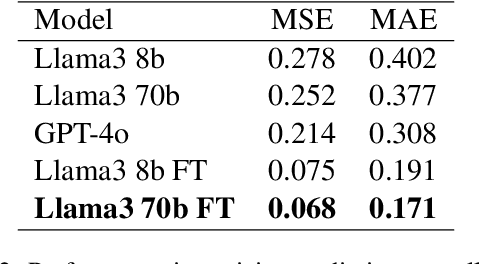
The fundamental problem of toxicity detection lies in the fact that the term "toxicity" is ill-defined. Such uncertainty causes researchers to rely on subjective and vague data during model training, which leads to non-robust and inaccurate results, following the 'garbage in - garbage out' paradigm. This study introduces a novel, objective, and context-aware framework for toxicity detection, leveraging stress levels as a key determinant of toxicity. We propose new definition, metric and training approach as a parts of our framework and demonstrate it's effectiveness using a dataset we collected.
Aligning Sentence Simplification with ESL Learner's Proficiency for Language Acquisition
Feb 17, 2025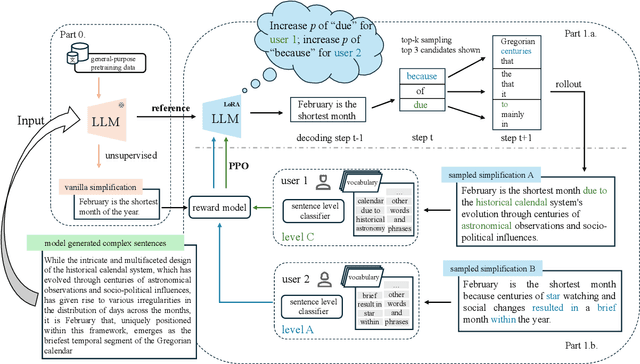
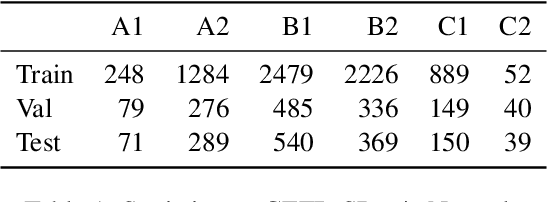
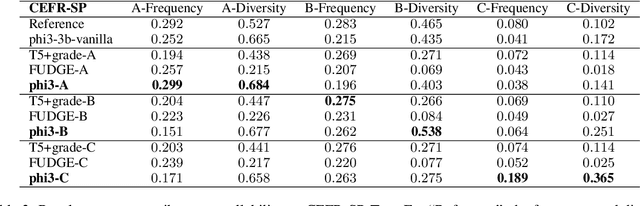
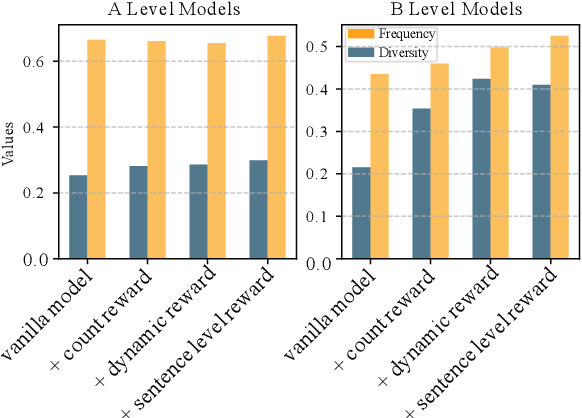
Text simplification is crucial for improving accessibility and comprehension for English as a Second Language (ESL) learners. This study goes a step further and aims to facilitate ESL learners' language acquisition by simplification. Specifically, we propose simplifying complex sentences to appropriate levels for learners while also increasing vocabulary coverage of the target level in the simplifications. We achieve this without a parallel corpus by conducting reinforcement learning on a large language model. Our method employs token-level and sentence-level rewards, and iteratively trains the model on its self-generated outputs to guide the model to search for simplification hypotheses that satisfy the target attributes. Experiment results on CEFR-SP and TurkCorpus datasets show that the proposed method can effectively increase the frequency and diversity of vocabulary of the target level by more than $20\%$ compared to baseline models, while maintaining high simplification quality.
Data-driven Modality Fusion: An AI-enabled Framework for Large-Scale Sensor Network Management
Feb 07, 2025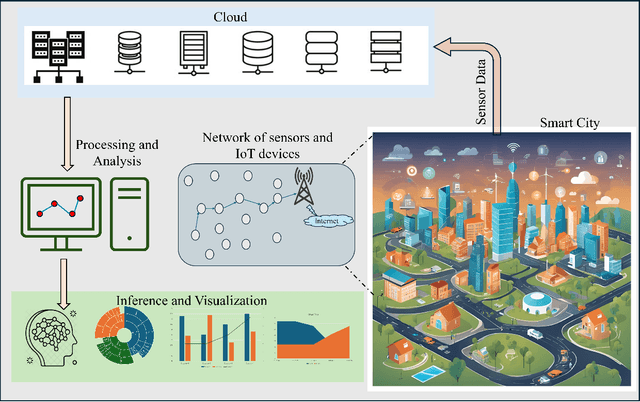
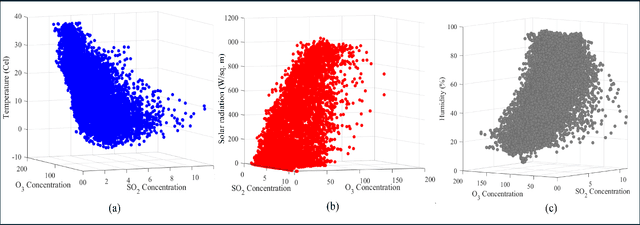
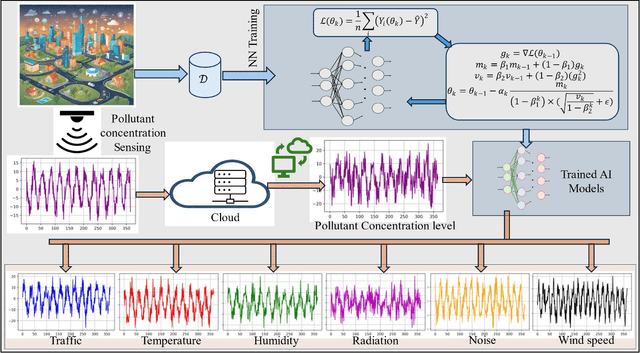
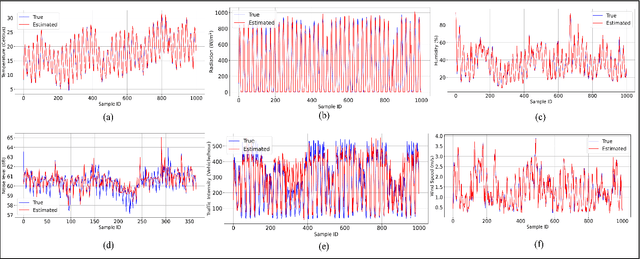
The development and operation of smart cities relyheavily on large-scale Internet-of-Things (IoT) networks and sensor infrastructures that continuously monitor various aspects of urban environments. These networks generate vast amounts of data, posing challenges related to bandwidth usage, energy consumption, and system scalability. This paper introduces a novel sensing paradigm called Data-driven Modality Fusion (DMF), designed to enhance the efficiency of smart city IoT network management. By leveraging correlations between timeseries data from different sensing modalities, the proposed DMF approach reduces the number of physical sensors required for monitoring, thereby minimizing energy expenditure, communication bandwidth, and overall deployment costs. The framework relocates computational complexity from the edge devices to the core, ensuring that resource-constrained IoT devices are not burdened with intensive processing tasks. DMF is validated using data from a real-world IoT deployment in Madrid, demonstrating the effectiveness of the proposed system in accurately estimating traffic, environmental, and pollution metrics from a reduced set of sensors. The proposed solution offers a scalable, efficient mechanism for managing urban IoT networks, while addressing issues of sensor failure and privacy concerns.
The TIP of the Iceberg: Revealing a Hidden Class of Task-In-Prompt Adversarial Attacks on LLMs
Jan 27, 2025We present a novel class of jailbreak adversarial attacks on LLMs, termed Task-in-Prompt (TIP) attacks. Our approach embeds sequence-to-sequence tasks (e.g., cipher decoding, riddles, code execution) into the model's prompt to indirectly generate prohibited inputs. To systematically assess the effectiveness of these attacks, we introduce the PHRYGE benchmark. We demonstrate that our techniques successfully circumvent safeguards in six state-of-the-art language models, including GPT-4o and LLaMA 3.2. Our findings highlight critical weaknesses in current LLM safety alignments and underscore the urgent need for more sophisticated defence strategies. Warning: this paper contains examples of unethical inquiries used solely for research purposes.