 Add to Chrome
 Add to Firefox
 Add to Edge
Reliability-Aware CT-MRI Registration: A Quality Engineering Framework with Stability Analysis and Risk Classification
Jul 01, 2026
Multimodal CT-MRI registration is central to image-guided radiotherapy, surgical navigation, and diagnostic workflows, but most pipelines report only aggregate quality metrics without per-case reliability signals. We propose a reliability-aware framework that converts registration quality into Green/Yellow/Red risk categories using data-learned thresholds. CT images were registered to T1-weighted MRI using rigid and affine transformations on 90 paired slices from 18 patients across brain, abdominal, and neck anatomies. Reliability was assessed using Delta NMI, Delta SSIM, Dice overlap, registration stability, and inverse consistency error, combined into a single score R. Thresholds learned from training patients were applied unchanged to held-out test patients. Affine registration outperformed rigid registration on NMI and SSIM, yielding 44% Green classifications versus 33% for rigid. Reliability-filtered registrations improved the average alignment profile compared with unfiltered methods. Per-anatomy analysis showed substantial variation, with stronger reliability for abdominal registrations than brain registrations. Weight sensitivity analysis identified Dice overlap as the dominant reliability component. The proposed framework provides an interpretable quality-control layer for multimodal registration, while risk thresholds reflect statistical rather than clinical validation.

A Leakage-Aware Comparative Benchmark of Machine Learning, Deep Learning, and Transformer Models for Reliable Leukemia Detection
Jun 23, 2026Automated classification of acute lymphoblastic leukemia (ALL) from peripheral blood smear images has often reported near-perfect performance on the C-NMC 2019 dataset. We show that such results can be inflated by patient-level data leakage caused by random image-level partitioning, where cells from the same subject may appear in both training and test folds. We establish a leakage-aware benchmark under a strict subject-disjoint protocol, comparing LightGBM, RBF-SVM, EfficientNet-B0, EfficientNet-B1, and ViT-Tiny. Models are developed using three subject-disjoint folds from 73 subjects and evaluated on an external preliminary-phase test set of 1,867 images from 28 unseen subjects with zero patient overlap. Beyond discrimination, we assess calibration using expected calibration error, Brier score, and temperature scaling. Under honest evaluation, EfficientNet-B1 achieves the best performance, with AUROC 0.913, sensitivity 0.87, specificity 0.80, and calibrated ECE 0.024. Frozen-feature classifiers and ViT-Tiny show high sensitivity but poor specificity, indicating a tendency to over-predict the malignant class. A random-versus-subject-disjoint ablation shows that random splitting inflates AUROC by about 0.04 even in the conservative frozen-feature setting. These findings caution against image-level evaluation on C-NMC 2019 and provide a reproducible, calibration-aware benchmark for future work.
Segmentation and Classification of Pap Smear Images for Cervical Cancer Detection Using Deep Learning
Aug 25, 2025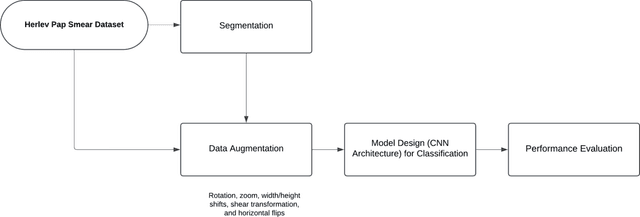
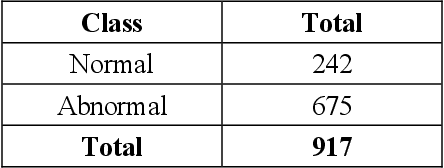
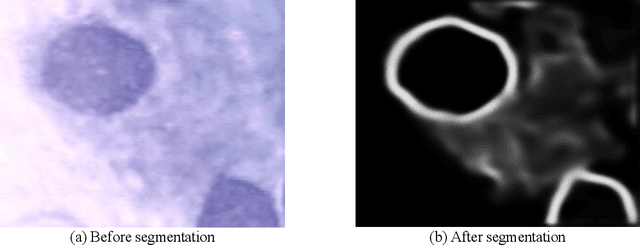
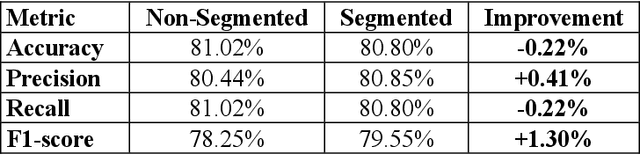
Cervical cancer remains a significant global health concern and a leading cause of cancer-related deaths among women. Early detection through Pap smear tests is essential to reduce mortality rates; however, the manual examination is time consuming and prone to human error. This study proposes a deep learning framework that integrates U-Net for segmentation and a classification model to enhance diagnostic performance. The Herlev Pap Smear Dataset, a publicly available cervical cell dataset, was utilized for training and evaluation. The impact of segmentation on classification performance was evaluated by comparing the model trained on segmented images and another trained on non-segmented images. Experimental results showed that the use of segmented images marginally improved the model performance on precision (about 0.41 percent higher) and F1-score (about 1.30 percent higher), which suggests a slightly more balanced classification performance. While segmentation helps in feature extraction, the results showed that its impact on classification performance appears to be limited. The proposed framework offers a supplemental tool for clinical applications, which may aid pathologists in early diagnosis.