 Add to Chrome
 Add to Firefox
 Add to Edge
Vertical Standardisation for High-Risk AI Systems under the EU AI Act: A Domain-Specific Framework for Algorithmic Hiring
Jul 14, 2026
According to the recent European legislation, high-risk AI systems will have to adapt in order to comply with requirements related to specific areas, like risk management, data quality and governance, logging and traceability, technical documentation, transparency, human oversight, and accuracy, as outlined in the European Artificial Intelligence (AI) Act. As the standardisation process for AI is expected to remain iterative and, so far, there are no European standards on AI fully covering the challenges of algorithmic hiring, we propose specific standardisation-oriented recommendations related to the relevant AI areas specified by the European Commission. For each of these areas, we set the context by describing the requirements that AI systems in high-risk domains, and especially in recruitment, should fulfil, as well as the activities that should be carried out to ensure their appropriate use and desired performance, in line with the requirements deriving from the AI Act. Unlike existing horizontal approaches to AI governance and standardisation, this paper contributes a vertical, domain-specific framework for algorithmic hiring, and especially ranking-based recruitment systems, by mapping the requirements of the AI Act to concrete standardisation recommendations, focusing on lifecycle discrimination risks, fairness-aware data governance, explainability, human oversight, and post-deployment monitoring in recruitment systems. Even though our recommendations were informed by the outcomes of the European project FINDHR, they are not tied to the project's technical artefacts and could be implemented using alternative methods, tools, or governance mechanisms.

Fairness and Bias in Algorithmic Hiring
Sep 25, 2023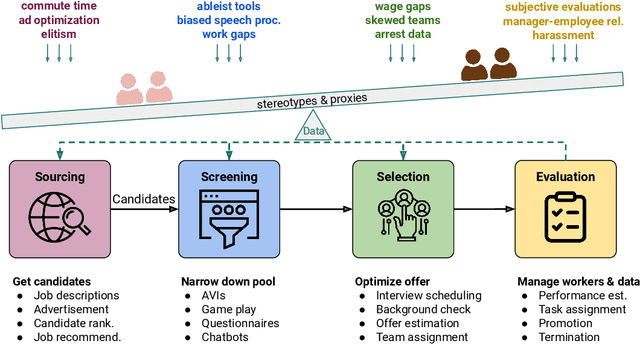
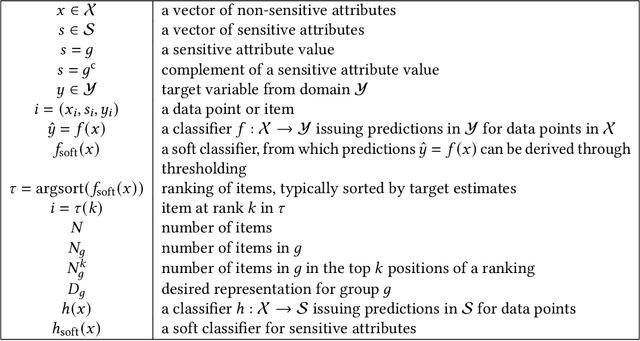
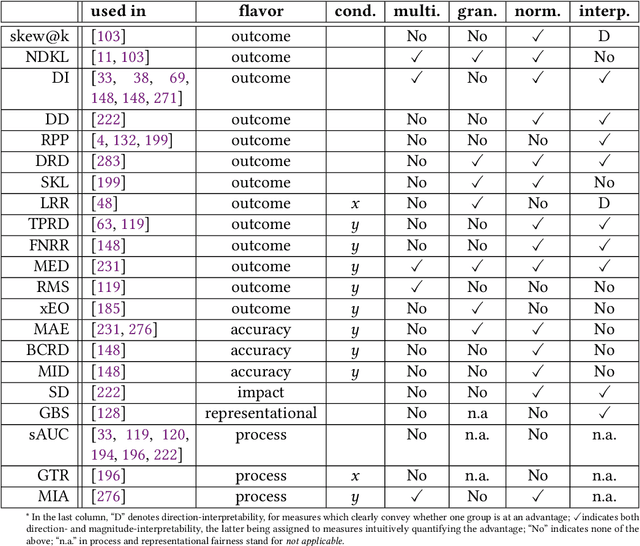
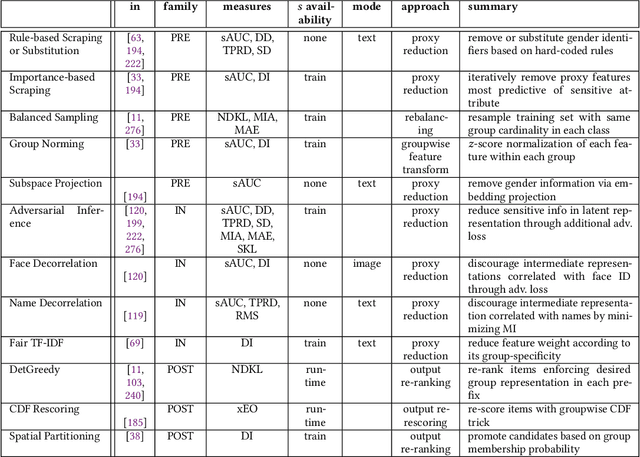
Employers are adopting algorithmic hiring technology throughout the recruitment pipeline. Algorithmic fairness is especially applicable in this domain due to its high stakes and structural inequalities. Unfortunately, most work in this space provides partial treatment, often constrained by two competing narratives, optimistically focused on replacing biased recruiter decisions or pessimistically pointing to the automation of discrimination. Whether, and more importantly what types of, algorithmic hiring can be less biased and more beneficial to society than low-tech alternatives currently remains unanswered, to the detriment of trustworthiness. This multidisciplinary survey caters to practitioners and researchers with a balanced and integrated coverage of systems, biases, measures, mitigation strategies, datasets, and legal aspects of algorithmic hiring and fairness. Our work supports a contextualized understanding and governance of this technology by highlighting current opportunities and limitations, providing recommendations for future work to ensure shared benefits for all stakeholders.