 Add to Chrome
 Add to Firefox
 Add to Edge
Proactive Systems in HCI and AI: Concepts, Challenges, and Opportunities
Jun 23, 2026
The last few years have seen a significant rise in interest in highly autonomous and proactive systems, fueled by advances in AI. Systems that anticipate user needs, take initiative, and act without explicit user input. Such systems span a wide range of applications, from smart lighting that adapts to user activity to assistive robots that plan actions in advance to intelligent thermostats that learn routines and adjust environments proactively. Despite this breadth, the concept of proactivity remains loosely defined and inconsistently applied across research and practice. Current usage of the term often conflates fundamentally different system behaviors. For instance, simple reminders or recommendation systems are frequently labeled as proactive, even though underlying mechanisms and intentions differ significantly. This conceptual ambiguity limits our ability to systematically design, compare, and evaluate proactive systems. Moreover, existing methodologies for design and evaluation are largely rooted in reactive interaction paradigms, failing to address the unique challenges posed by proactive behavior, including timing, appropriateness, user control, transparency, and trust. This multidisciplinary workshop aims to establish a clearer and more rigorous foundation for understanding proactive systems. We bring together researchers and practitioners from Human-Computer Interaction, AI, and related fields to (1) develop a shared conceptualization of proactivity, (2) identify gaps and limitations in current design and evaluation approaches, and (3) co-create human-centered guidelines and research directions for future systems. Through interactive discussions and collaborative activities, the workshop seeks to map key challenges and opportunities, ultimately advancing robust and consistent frameworks for designing and evaluating proactive technologies.

Personas Evolved: Designing Ethical LLM-Based Conversational Agent Personalities
Feb 27, 2025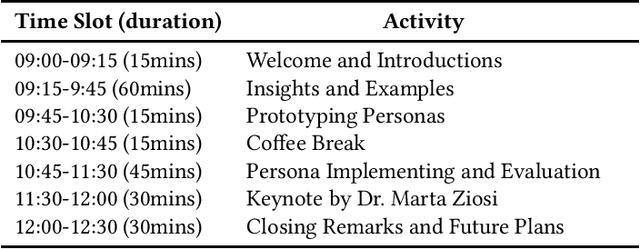
The emergence of Large Language Models (LLMs) has revolutionized Conversational User Interfaces (CUIs), enabling more dynamic, context-aware, and human-like interactions across diverse domains, from social sciences to healthcare. However, the rapid adoption of LLM-based personas raises critical ethical and practical concerns, including bias, manipulation, and unforeseen social consequences. Unlike traditional CUIs, where personas are carefully designed with clear intent, LLM-based personas generate responses dynamically from vast datasets, making their behavior less predictable and harder to govern. This workshop aims to bridge the gap between CUI and broader AI communities by fostering a cross-disciplinary dialogue on the responsible design and evaluation of LLM-based personas. Bringing together researchers, designers, and practitioners, we will explore best practices, develop ethical guidelines, and promote frameworks that ensure transparency, inclusivity, and user-centered interactions. By addressing these challenges collaboratively, we seek to shape the future of LLM-driven CUIs in ways that align with societal values and expectations.
Designing AI Personalities: Enhancing Human-Agent Interaction Through Thoughtful Persona Design
Oct 30, 2024In the rapidly evolving field of artificial intelligence (AI) agents, designing the agent's characteristics is crucial for shaping user experience. This workshop aims to establish a research community focused on AI agent persona design for various contexts, such as in-car assistants, educational tools, and smart home environments. We will explore critical aspects of persona design, such as voice, embodiment, and demographics, and their impact on user satisfaction and engagement. Through discussions and hands-on activities, we aim to propose practices and standards that enhance the ecological validity of agent personas. Topics include the design of conversational interfaces, the influence of agent personas on user experience, and approaches for creating contextually appropriate AI agents. This workshop will provide a platform for building a community dedicated to developing AI agent personas that better fit diverse, everyday interactions.