 Add to Chrome
 Add to Firefox
 Add to Edge
Training Set Synthesis for Bioacoustic Denoising: A Case Study With Mice
Aug 10, 2026
Bioacoustic recordings are often degraded by ambient noise, which complicates the analysis of weak or noise-overlapped vocalizations. Convolutional neural networks, particularly U-Net architectures, have shown a strong denoising performance in speech and music processing. However, their direct application to bioacoustic signals is limited by the scarcity of clean training data. To address this issue, we propose a training set synthesis approach and develop a supervised denoising model that predicts a complex ratio mask in the time-frequency domain. The model leverages ridges, or frequency contours, that represent the fundamental frequency together with one or more harmonic partial components of vocalizations. These ridges are used both for the synthesis of training sets and to design a loss function that assigns higher weights to the ridge regions (ridge-guided loss function). This weighting step helps the network better preserve vocalization details during denoising. As a case study, we evaluate our approach using ultrasonic vocalizations (USVs) recordings of house mice, which are widely studied in behavioral biology and neuroscience. In actual field recordings, the proposed method enhances fundamental and harmonic partial ridge tracking compared to our previous signal-processing approach. In addition, a classifier trained on denoised data improves USV classification on out-of-sample, noisy recordings from wild and domesticated mice compared to classifiers trained on noisy recordings. Our proposed method also substantially improves the scale-invariant signal-to-distortion ratio on synthetic testing data across a wide range of input signal-to-noise ratios. Although we focus on USVs, the proposed approach should be broadly applicable to other bioacoustic signals with trackable ridges, and thus enables ridgebased training set synthesis and denoising.
* 15 pages, 5 figures

SELEBI: Percussion-aware Time Stretching via Selective Magnitude Spectrogram Compression by Nonstationary Gabor Transform
Feb 18, 2026Phase vocoder-based time-stretching is a widely used technique for the time-scale modification of audio signals. However, conventional implementations suffer from ``percussion smearing,'' a well-known artifact that significantly degrades the quality of percussive components. We attribute this artifact to a fundamental time-scale mismatch between the temporally smeared magnitude spectrogram and the localized, newly generated phase. To address this, we propose SELEBI, a signal-adaptive phase vocoder algorithm that significantly reduces percussion smearing while preserving stability and the perfect reconstruction property. Unlike conventional methods that rely on heuristic processing or component separation, our approach leverages the nonstationary Gabor transform. By dynamically adapting analysis window lengths to assign short windows to intervals containing significant energy associated with percussive components, we directly compute a temporally localized magnitude spectrogram from the time-domain signal. This approach ensures greater consistency between the temporal structures of the magnitude and phase. Furthermore, the perfect reconstruction property of the nonstationary Gabor transform guarantees stable, high-fidelity signal synthesis, in contrast to previous heuristic approaches. Experimental results demonstrate that the proposed method effectively mitigates percussion smearing and yields natural sound quality.
Aliasing in Convnets: A Frame-Theoretic Perspective
Jul 08, 2025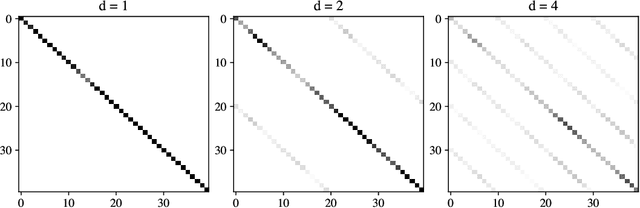
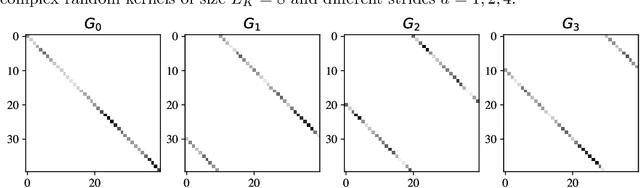
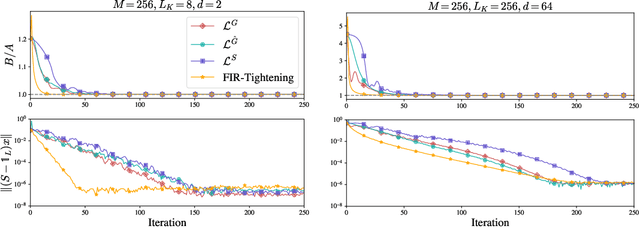
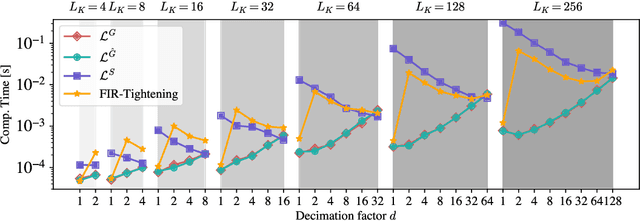
Using a stride in a convolutional layer inherently introduces aliasing, which has implications for numerical stability and statistical generalization. While techniques such as the parametrizations via paraunitary systems have been used to promote orthogonal convolution and thus ensure Parseval stability, a general analysis of aliasing and its effects on the stability has not been done in this context. In this article, we adapt a frame-theoretic approach to describe aliasing in convolutional layers with 1D kernels, leading to practical estimates for stability bounds and characterizations of Parseval stability, that are tailored to take short kernel sizes into account. From this, we derive two computationally very efficient optimization objectives that promote Parseval stability via systematically suppressing aliasing. Finally, for layers with random kernels, we derive closed-form expressions for the expected value and variance of the terms that describe the aliasing effects, revealing fundamental insights into the aliasing behavior at initialization.
ISAC: An Invertible and Stable Auditory Filter Bank with Customizable Kernels for ML Integration
May 12, 2025This paper introduces ISAC, an invertible and stable, perceptually-motivated filter bank that is specifically designed to be integrated into machine learning paradigms. More precisely, the center frequencies and bandwidths of the filters are chosen to follow a non-linear, auditory frequency scale, the filter kernels have user-defined maximum temporal support and may serve as learnable convolutional kernels, and there exists a corresponding filter bank such that both form a perfect reconstruction pair. ISAC provides a powerful and user-friendly audio front-end suitable for any application, including analysis-synthesis schemes.
Grid-Based Decimation for Wavelet Transforms with Stably Invertible Implementation
Jan 04, 2023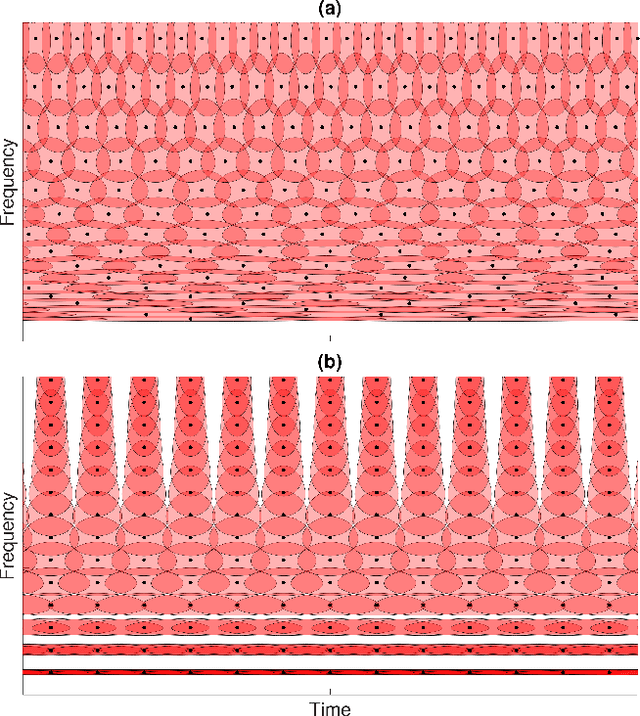
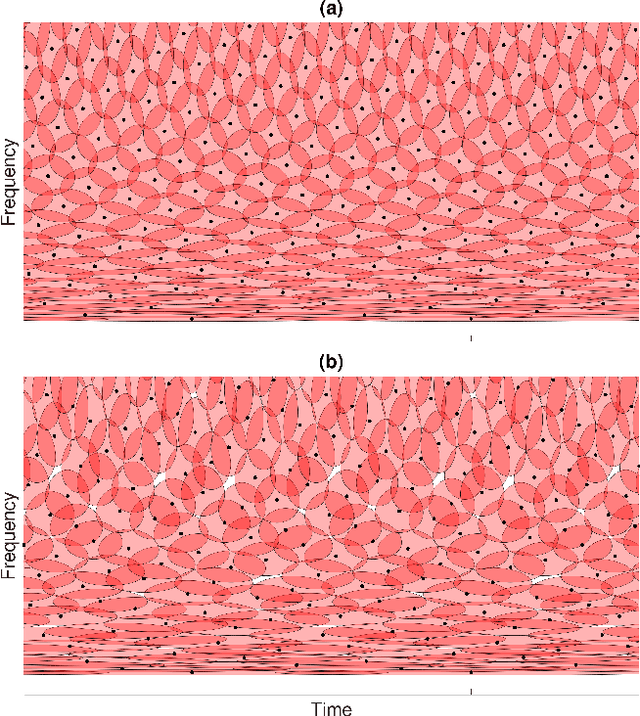
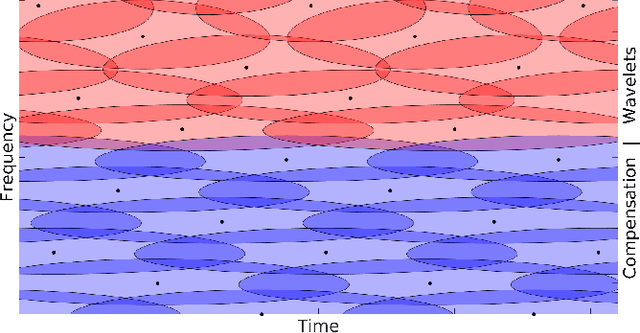
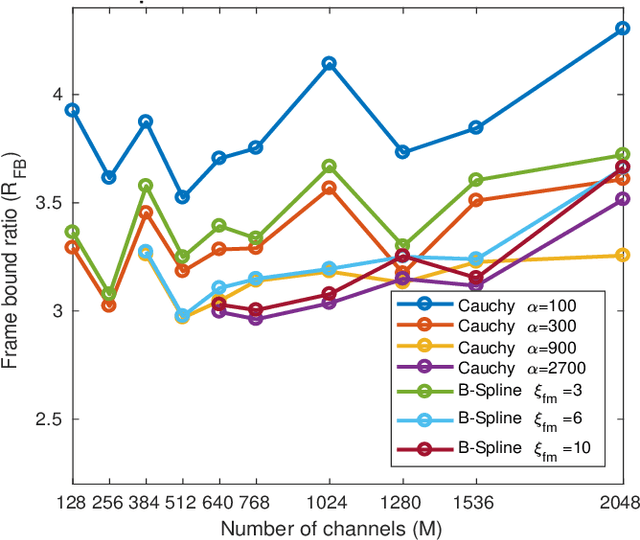
The constant center frequency to bandwidth ratio (Q-factor) of wavelet transforms provides a very natural representation for audio data. However, invertible wavelet transforms have either required non-uniform decimation -- leading to irregular data structures that are cumbersome to work with -- or require excessively high oversampling with unacceptable computational overhead. Here, we present a novel decimation strategy for wavelet transforms that leads to stable representations with oversampling rates close to one and uniform decimation. Specifically, we show that finite implementations of the resulting representation are energy-preserving in the sense of frame theory. The obtained wavelet coefficients can be stored in a timefrequency matrix with a natural interpretation of columns as time frames and rows as frequency channels. This matrix structure immediately grants access to a large number of algorithms that are successfully used in time-frequency audio processing, but could not previously be used jointly with wavelet transforms. We demonstrate the application of our method in processing based on nonnegative matrix factorization, in onset detection, and in phaseless reconstruction.
Fast Matching Pursuit with Multi-Gabor Dictionaries
Feb 16, 2022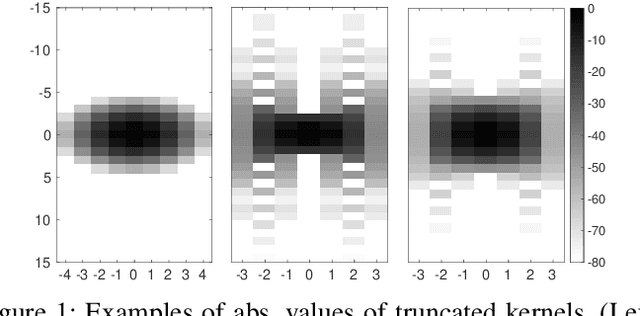
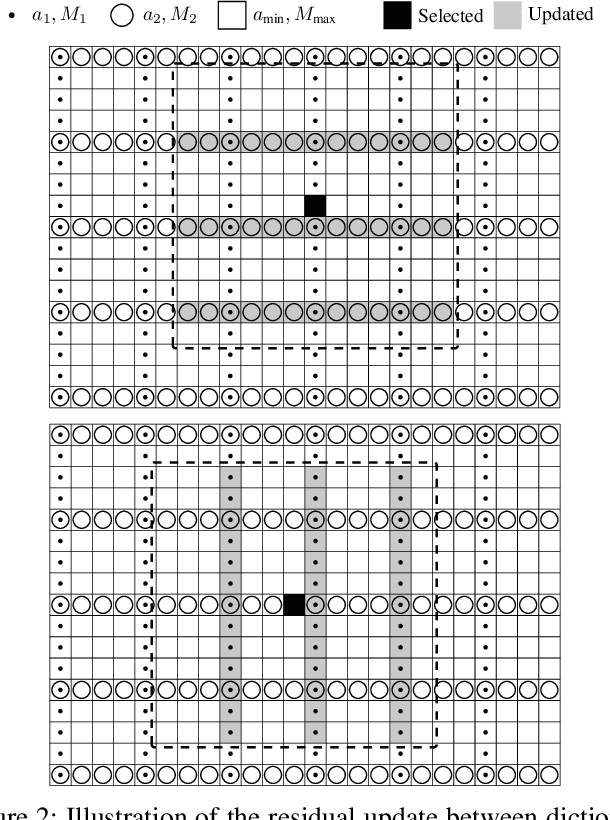
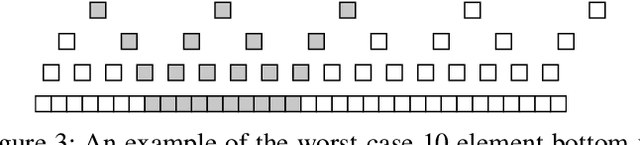
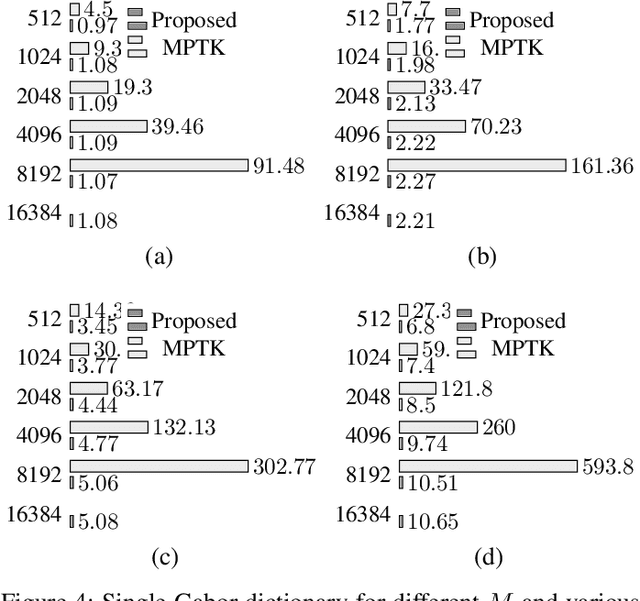
Finding the best K-sparse approximation of a signal in a redundant dictionary is an NP-hard problem. Suboptimal greedy matching pursuit (MP) algorithms are generally used for this task. In this work, we present an acceleration technique and an implementation of the matching pursuit algorithm acting on a multi-Gabor dictionary, i.e., a concatenation of several Gabor-type time-frequency dictionaries, each of which consisting of translations and modulations of a possibly different window and time and frequency shift parameters. The technique is based on pre-computing and thresholding inner products between atoms and on updating the residual directly in the coefficient domain, i.e., without the round-trip to the signal domain. Since the proposed acceleration technique involves an approximate update step, we provide theoretical and experimental results illustrating the convergence of the resulting algorithm. The implementation is written in C (compatible with C99 and C++11) and we also provide Matlab and GNU Octave interfaces. For some settings, the implementation is up to 70 times faster than the standard Matching Pursuit Toolkit (MPTK).
Non-iterative Filter Bank Phase (Re)Construction
Feb 15, 2022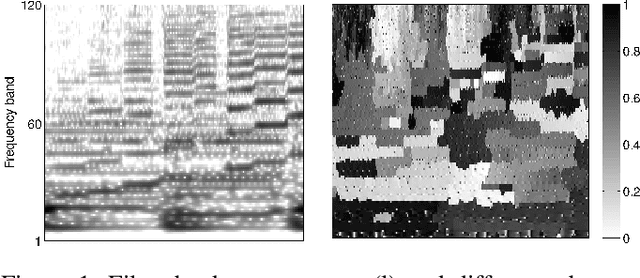
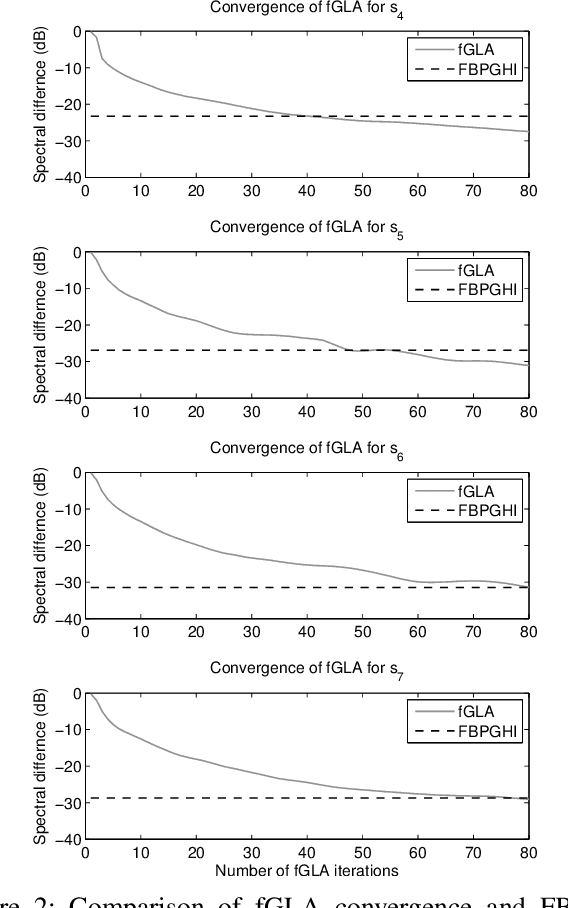
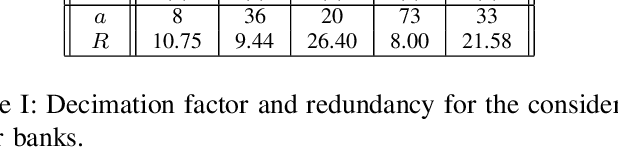
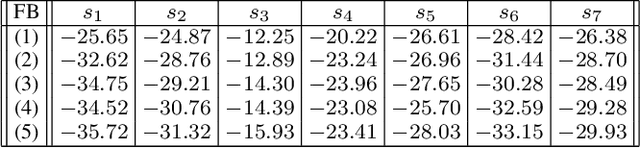
Signal reconstruction from magnitude-only measurements presents a long-standing problem in signal processing. In this contribution, we propose a phase (re)construction method for filter banks with uniform decimation and controlled frequency variation. The suggested procedure extends the recently introduced phase-gradient heap integration and relies on a phase-magnitude relationship for filter bank coefficients obtained from Gaussian filters. Admissible filter banks are modeled as the discretization of certain generalized translation-invariant systems, for which we derive the phase-magnitude relationship explicitly. The implementation for discrete signals is described and the performance of the algorithm is evaluated on a range of real and synthetic signals.
Phase-Based Signal Representations for Scattering
Feb 15, 2022The scattering transform is a non-linear signal representation method based on cascaded wavelet transform magnitudes. In this paper we introduce phase scattering, a novel approach where we use phase derivatives in a scattering procedure. We first revisit phase-related concepts for representing time-frequency information of audio signals, in particular, the partial derivatives of the phase in the time-frequency domain. By putting analytical and numerical results in a new light, we set the basis to extend the phase-based representations to higher orders by means of a scattering transform, which leads to well localized signal representations of large-scale structures. All the ideas are introduced in a general way and then applied using the STFT.
Audio Inpainting via $\ell_1$-Minimization and Dictionary Learning
Feb 15, 2022Audio inpainting refers to signal processing techniques that aim at restoring missing or corrupted consecutive samples in audio signals. Prior works have shown that $\ell_1$- minimization with appropriate weighting is capable of solving audio inpainting problems, both for the analysis and the synthesis models. These models assume that audio signals are sparse with respect to some redundant dictionary and exploit that sparsity for inpainting purposes. Remaining within the sparsity framework, we utilize dictionary learning to further increase the sparsity and combine it with weighted $\ell_1$-minimization adapted for audio inpainting to compensate for the loss of energy within the gap after restoration. Our experiments demonstrate that our approach is superior in terms of signal-to-distortion ratio (SDR) and objective difference grade (ODG) compared with its original counterpart.
Phase Vocoder Done Right
Feb 15, 2022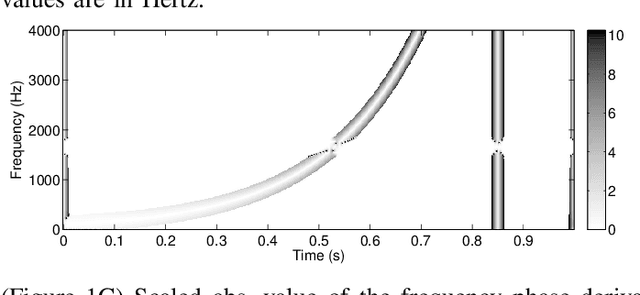
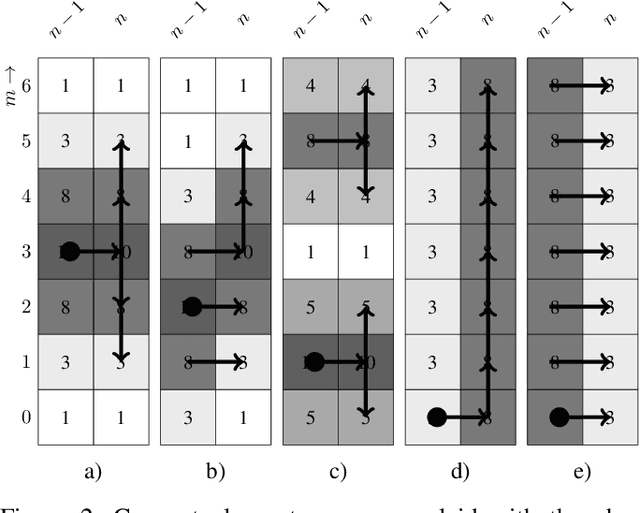
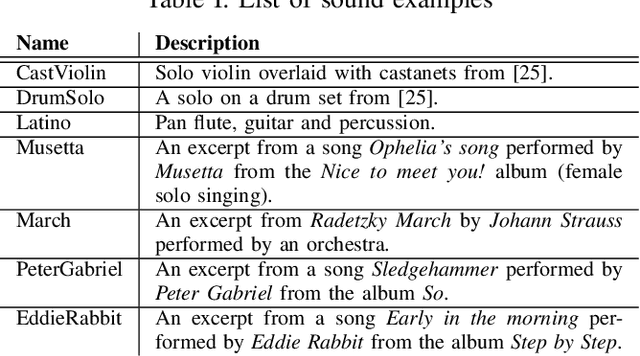
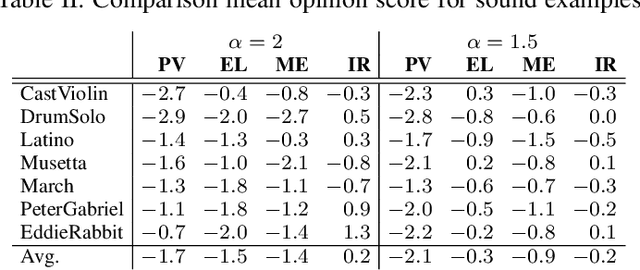
The phase vocoder (PV) is a widely spread technique for processing audio signals. It employs a short-time Fourier transform (STFT) analysis-modify-synthesis loop and is typically used for time-scaling of signals by means of using different time steps for STFT analysis and synthesis. The main challenge of PV used for that purpose is the correction of the STFT phase. In this paper, we introduce a novel method for phase correction based on phase gradient estimation and its integration. The method does not require explicit peak picking and tracking nor does it require detection of transients and their separate treatment. Yet, the method does not suffer from the typical phase vocoder artifacts even for extreme time stretching factors.