 Add to Chrome
 Add to Firefox
 Add to Edge
Ask or Assume? Uncertainty-Aware Clarification-Seeking in Coding Agents
Mar 27, 2026
As Large Language Model (LLM) agents are increasingly deployed in open-ended domains like software engineering, they frequently encounter underspecified instructions that lack crucial context. While human developers naturally resolve underspecification by asking clarifying questions, current agents are largely optimized for autonomous execution. In this work, we systematically evaluate the clarification-seeking abilities of LLM agents on an underspecified variant of SWE-bench Verified. We propose an uncertainty-aware multi-agent scaffold that explicitly decouples underspecification detection from code execution. Our results demonstrate that this multi-agent system using OpenHands + Claude Sonnet 4.5 achieves a 69.40% task resolve rate, significantly outperforming a standard single-agent setup (61.20%) and closing the performance gap with agents operating on fully specified instructions. Furthermore, we find that the multi-agent system exhibits well-calibrated uncertainty, conserving queries on simple tasks while proactively seeking information on more complex issues. These findings indicate that current models can be turned into proactive collaborators, where agents independently recognize when to ask questions to elicit missing information in real-world, underspecified tasks.

Anaphoric Structure Emerges Between Neural Networks
Aug 15, 2023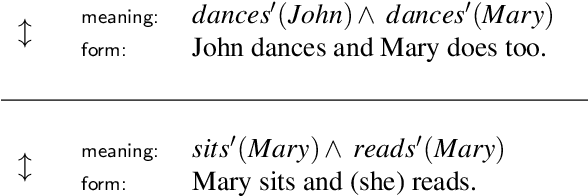


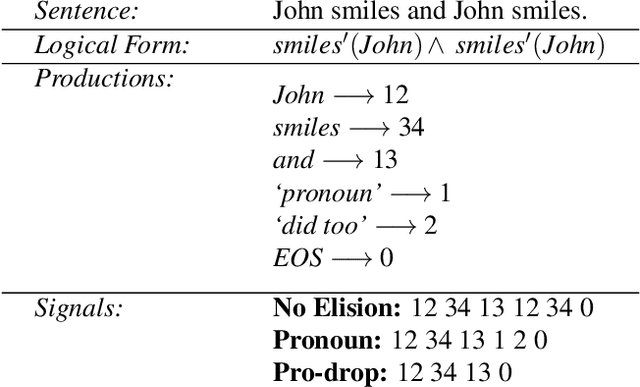
Pragmatics is core to natural language, enabling speakers to communicate efficiently with structures like ellipsis and anaphora that can shorten utterances without loss of meaning. These structures require a listener to interpret an ambiguous form - like a pronoun - and infer the speaker's intended meaning - who that pronoun refers to. Despite potential to introduce ambiguity, anaphora is ubiquitous across human language. In an effort to better understand the origins of anaphoric structure in natural language, we look to see if analogous structures can emerge between artificial neural networks trained to solve a communicative task. We show that: first, despite the potential for increased ambiguity, languages with anaphoric structures are learnable by neural models. Second, anaphoric structures emerge between models 'naturally' without need for additional constraints. Finally, introducing an explicit efficiency pressure on the speaker increases the prevalence of these structures. We conclude that certain pragmatic structures straightforwardly emerge between neural networks, without explicit efficiency pressures, but that the competing needs of speakers and listeners conditions the degree and nature of their emergence.