 Add to Chrome
 Add to Firefox
 Add to Edge
VIB-AVSR: Variational Information Bottleneck for Noise-Robust LLM-Based Audio-Visual Speech Recognition
Jun 28, 2026
Audio-Visual Speech Recognition takes two input modalities, acoustic and visual streams, where visual information from lip movements aids recognition when audio is noisy. Recently, LLM-based AVSR models have emerged as a promising paradigm by connecting pre-trained audio-visual encoders to an LLM, achieving strong results in clean conditions. However, these models are predominantly optimized for clean acoustic conditions, with limited attention to making the LLM backbone robust to noise. No explicit mechanism is employed to produce stable representations under corrupted audio, leading to performance degradation in noisy environments. To address this, we propose VIB-AVSR, which integrates Variational Information Bottleneck layers at targeted positions within the LLM backbone to regularize representations. VIB-AVSR reduces degradation under noisy conditions across multiple SNR levels and noise types, without requiring architectural modifications or additional training data.

UniPreCIS : A data pre-processing solution for collocated services on shared IoT
Aug 01, 2022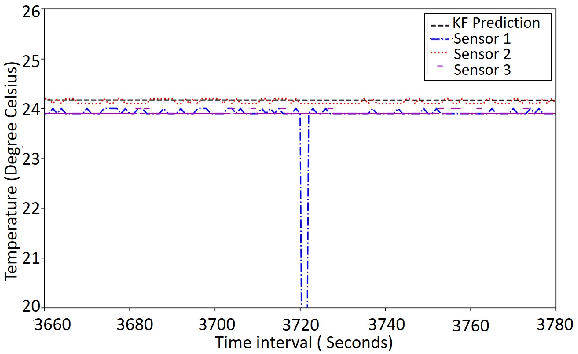
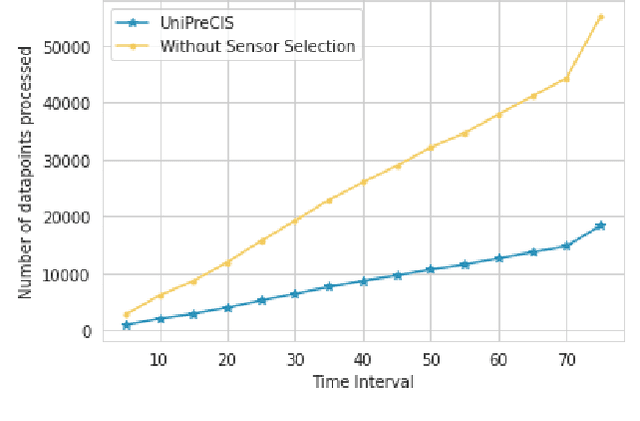
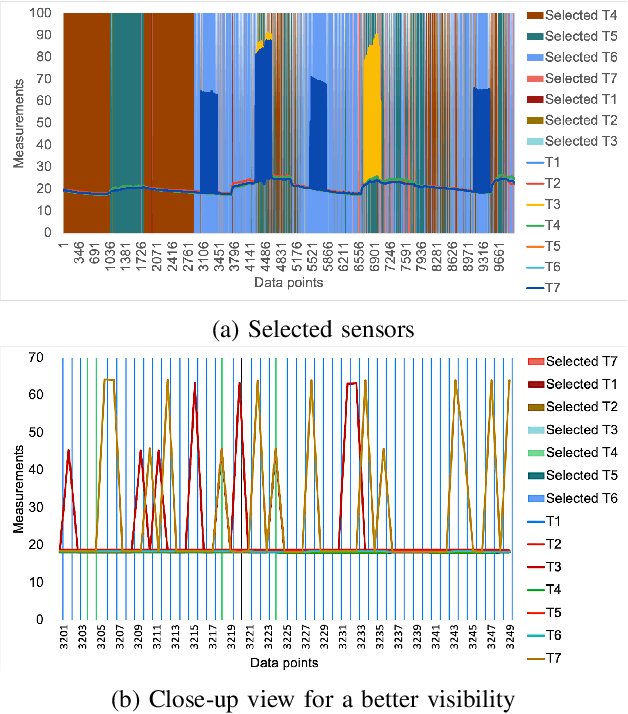
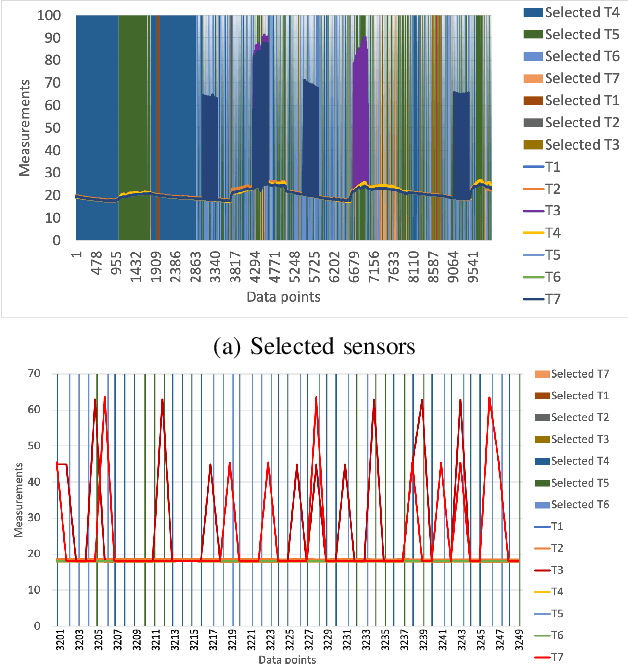
Next-generation smart city applications, attributed by the power of Internet of Things (IoT) and Cyber-Physical Systems (CPS), significantly rely on the quality of sensing data. With an exponential increase in intelligent applications for urban development and enterprises offering sensing-as-aservice these days, it is imperative to provision for a shared sensing infrastructure for better utilization of resources. However, a shared sensing infrastructure that leverages low-cost sensing devices for a cost effective solution, still remains an unexplored territory. A significant research effort is still needed to make edge based data shaping solutions, more reliable, feature-rich and costeffective while addressing the associated challenges in sharing the sensing infrastructure among multiple collocated services with diverse Quality of Service (QoS) requirements. Towards this, we propose a novel edge based data pre-processing solution, named UniPreCIS that accounts for the inherent characteristics of lowcost ambient sensors and the exhibited measurement dynamics with respect to application-specific QoS. UniPreCIS aims to identify and select quality data sources by performing sensor ranking and selection followed by multimodal data pre-processing in order to meet heterogeneous application QoS and at the same time reducing the resource consumption footprint for the resource constrained network edge. As observed, the processing time and memory utilization has been reduced in the proposed approach while achieving upto 90% accuracy which is arguably significant as compared to state-of-the-art techniques for sensing. The effectiveness of UniPreCIS has been evaluated on a testbed for a specific use case of indoor occupancy estimation that proves its effectiveness.