 Add to Chrome
 Add to Firefox
 Add to Edge
Understanding How Humans Inject Knowledge into Machine Learning Workflows through Visual Analytics
Jul 01, 2026
Visual analytics (VA) plays an increasingly important role in supporting machine learning (ML) workflows. In the field of visualization, such approaches and techniques are referred to as VIS4ML. While ML models are mostly learned automatically, the corresponding ML workflows receive a variety of human inputs, such as data labelling, feature engineering, model architecture designing, hyper-parameter tuning, and so on. In this work, we surveyed over 200 VIS4ML papers to gain an understanding of how humans inject their knowledge into ML workflows through interactive visualization. We collected a corpus of VIS4ML papers from the IEEE VIS conferences in the past decade. We developed a coding scheme to facilitate the literature research from four perspectives: characteristics of ML, visualization, interaction, and actions. The analysis of the coded dataset allows us to observe different pathways that transfer human knowledge to ML workflows via interactive visualization. Building on the analysis, we explain the phenomena of VIS4ML using the conceptual model that views VA as model building and the information-theoretic cost-benefit analysis that reasons VA as for optimizing ML workflows. This work provides unequivocal evidence showing the merits of using VA in ML workflows. The full list of surveyed papers, along with all analysis results and figures, is available at https://vis4ml4hd.github.io/ml-knowledge-inject-va/.

From Idea to Prototype in an Afternoon: Scaffolded, AI-Assisted Rapid VA Prototyping
Jun 30, 2026Testing a new visual-analytics idea usually takes months: one needs to find a realistic data set, clean it, and implement an interactive prototype. We describe a case where a workflow language and an AI assistant reduced this effort to one afternoon. The idea under test: relax the Pareto frontier with a tolerance and group the surviving options into recurring types -- ``constellations'' on a ``soft sky''. Using the Artifact--Transform Workflow Language (ATWL) as a scaffold, we obtained a consistent workflow in minutes and a running prototype in a few hours. We derive three lessons. The scaffold matters: without ATWL the assistant produced a naive workflow. The scaffold alone is not enough: the first implementation was only average, and expert knowledge injection was needed to reach state-of-the-art quality. Finally, the way the scaffold is used matters: controlled experiments show that a language definition and a library of examples support different aspects of the task, that providing both at once reduces quality because template following displaces creative content, and that scaffolds work best when introduced after an initial unconstrained design pass. We argue that the field needs a typology of human knowledge injection, in a form that is both human-editable and machine-accessible.
SmartIterator: Visual Analytics Workflows for Supervising Unsupervised Data Grouping
May 27, 2026Unsupervised learning methods -- topic modeling, partition-based and density-based clustering -- produce data groupings without human guidance, yet choosing and evaluating those groupings should not itself be unsupervised. We present \emph{SmartIterator}~(SI), a visual analytics approach that treats the full sequence of grouping results across a parameter sweep as a first-class analytical object. For each method family, SI provides a structured six-phase workflow that guides the analyst through systematic exploration of grouping results -- from quality-metric overview through transition-stability assessment, membership-confidence evaluation, content and context inspection, and recurrent-archetype verification to an informed decision -- building cumulative understanding of data structure along the way. The workflows are operationalized through \emph{IteraScope}~(IS), a coordinated visual display combining quality-metric charts with semantic color encoding, a 1D group embedding with Sankey-style transition flows and violin plots of membership confidence, a 2D group embedding with HDBSCAN-detected recurrent archetypes that highlights iterations capturing all persistent patterns, and domain-specific linked views for contextualized interpretation. We demonstrate the three workflows on: (1)~simulated social-media messages from the VAST Challenge 2011 (density-based clustering, validated against ground truth), (2)~EU population statistics across ${\sim}1\,500$ NUTS-3 regions (partition-based clustering), and (3)~30 years of IEEE VIS papers (NMF topic modeling). The workflows constitute the main contribution: they provide actionable, method-specific guidance for navigating parameter spaces, studying how data structure evolves across configurations, and grounding analytical understanding in domain context -- yielding knowledge about the data that no single ``best'' result can provide.
ATWL: A Formal Language for Representing, Comparing, and Reusing Visual Analytics Workflows
May 25, 2026Visual analytics (VA) workflows are inherently complex, involving data transformation, feature engineering, visual representation, and human interpretation. They are typically described in unstructured prose, hindering systematic comparison, reuse of proven strategies, and training of novices. We present Artifact-Transform Workflow Language (ATWL), a domain-agnostic, declarative language that formally represents VA workflows by capturing their structure and underlying analytical intent. ATWL is built upon a modular ontology of eight artifact types (entities, features, arrangements, visualisations, patterns, models, knowledge, specifications) and transforms characterised by standardised intents (e.g., define-unit, characterise, contextualise, abstract). To show that formalisation effort need not impede adoption, we extract workflows from research papers through supervised interaction with LLM agents, reducing the human role to review and refinement. Using this process, we constructed a library of seventeen ATWL workflows from published VA papers. Cross-workflow analysis reveals structural regularities -- a recurrent meta-structure, recurring motifs, reusable building blocks, diverse iterative strategies, and cross-domain equivalences -- that remain invisible in prose. We further evaluate practical utility through a controlled experiment in which the same LLM addressed two analytical problems with the library supplied either as original papers or as ATWL representations. Both forms enabled useful recommendations, but the formal representation systematically added explicit iteration structure, typed data flow, fragment-level adaptation provenance, and compactness supporting scaling beyond what prose libraries can fit in an LLM's context. ATWL enables a transition from narrative descriptions to formally represented, comparable, and reusable analytical knowledge.
Resolving Congestions in the Air Traffic Management Domain via Multiagent Reinforcement Learning Methods
Dec 14, 2019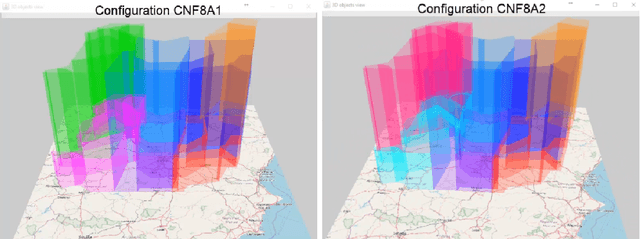
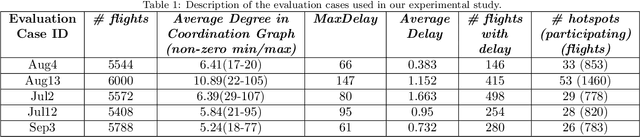
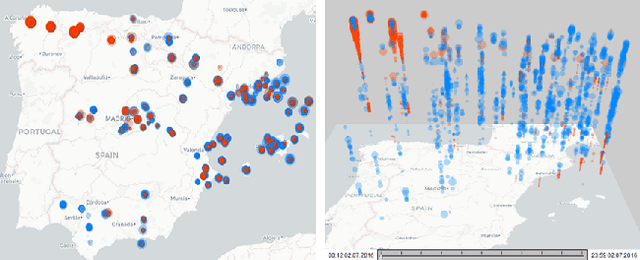
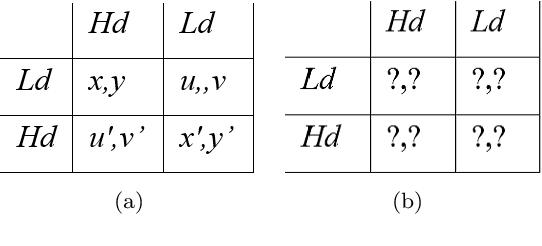
In this article, we report on the efficiency and effectiveness of multiagent reinforcement learning methods (MARL) for the computation of flight delays to resolve congestion problems in the Air Traffic Management (ATM) domain. Specifically, we aim to resolve cases where demand of airspace use exceeds capacity (demand-capacity problems), via imposing ground delays to flights at the pre-tactical stage of operations (i.e. few days to few hours before operation). Casting this into the multiagent domain, agents, representing flights, need to decide on own delays w.r.t. own preferences, having no information about others' payoffs, preferences and constraints, while they plan to execute their trajectories jointly with others, adhering to operational constraints. Specifically, we formalize the problem as a multiagent Markov Decision Process (MA-MDP) and we show that it can be considered as a Markov game in which interacting agents need to reach an equilibrium: What makes the problem more interesting is the dynamic setting in which agents operate, which is also due to the unforeseen, emergent effects of their decisions in the whole system. We propose collaborative multiagent reinforcement learning methods to resolve demand-capacity imbalances: Extensive experimental study on real-world cases, shows the potential of the proposed approaches in resolving problems, while advanced visualizations provide detailed views towards understanding the quality of solutions provided.
Applications of Trajectory Data from the Perspective of a Road Transportation Agency: Literature Review and Maryland Case Study
May 30, 2018


Transportation agencies have an opportunity to leverage increasingly-available trajectory datasets to improve their analyses and decision-making processes. However, this data is typically purchased from vendors, which means agencies must understand its potential benefits beforehand in order to properly assess its value relative to the cost of acquisition. While the literature concerned with trajectory data is rich, it is naturally fragmented and focused on technical contributions in niche areas, which makes it difficult for government agencies to assess its value across different transportation domains. To overcome this issue, the current paper explores trajectory data from the perspective of a road transportation agency interested in acquiring trajectories to enhance its analyses. The paper provides a literature review illustrating applications of trajectory data in six areas of road transportation systems analysis: demand estimation, modeling human behavior, designing public transit, traffic performance measurement and prediction, environment and safety. In addition, it visually explores 20 million GPS traces in Maryland, illustrating existing and suggesting new applications of trajectory data.