 Add to Chrome
 Add to Firefox
 Add to Edge
Time-Frequency Weighted Losses for Phoneme Reconstruction in DNN-Based Speech Enhancement
Jun 19, 2026
Conventional training losses for speech enhancement based on the signal-to-distortion ratio (SDR) treat all time-frequency (TF) regions uniformly, overlooking the fine-grained spectral cues that are relevant to specific phoneme intelligibility. We propose a TF weighting framework that modulates the SDR objective based on local speech presence, speech-to-interference ratio (SIR), and spectral flux. By integrating these factors into a differentiable objective, the framework emphasizes TF bins with high speech-noise competition while also accounting for transient cues such as consonant bursts. Experimental results show that our approach improves objective frequency-weighted enhancement metrics, as well as phoneme recognition accuracy, particularly for consonants. Spectral analysis shows better reconstruction of mid-frequency structures at less adverse SIR.

DATASHI: A Parallel English-Tashlhiyt Corpus for Orthography Normalization and Low-Resource Language Processing
Mar 23, 2026DATASHI is a new parallel English-Tashlhiyt corpus that fills a critical gap in computational resources for Amazigh languages. It contains 5,000 sentence pairs, including a 1,500-sentence subset with expert-standardized and non-standard user-generated versions, enabling systematic study of orthographic diversity and normalization. This dual design supports text-based NLP tasks - such as tokenization, translation, and normalization - and also serves as a foundation for read-speech data collection and multimodal alignment. Comprehensive evaluations with state-of-the-art Large Language Models (GPT-5, Claude-Sonnet-4.5, Gemini-2.5-Pro, Mistral, Qwen3-Max) show clear improvements from zero-shot to few-shot prompting, with Gemini-2.5-Pro achieving the lowest word and character-level error rates and exhibiting robust cross-lingual generalization. A fine-grained analysis of edit operations - deletions, substitutions, and insertions - across phonological classes (geminates, emphatics, uvulars, and pharyngeals) further highlights model-specific sensitivities to marked Tashlhiyt features and provides new diagnostic insights for low-resource Amazigh orthography normalization.
A Phoneme-Scale Assessment of Multichannel Speech Enhancement Algorithms
Jan 24, 2024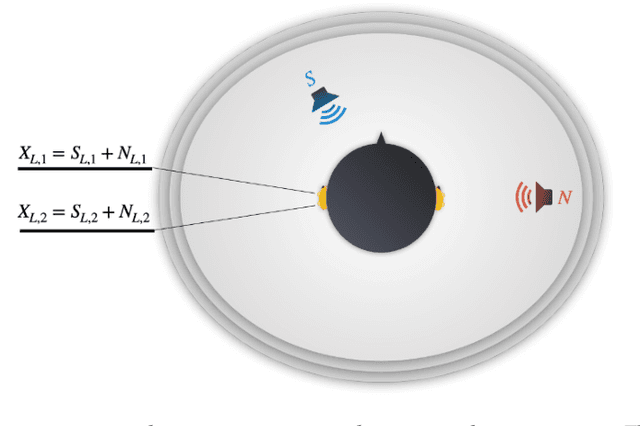
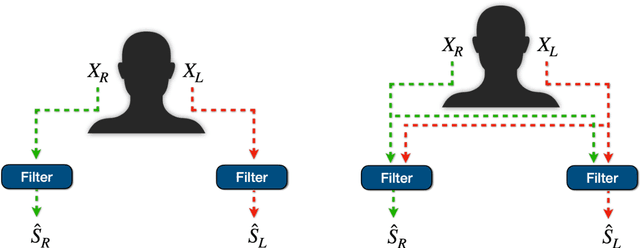

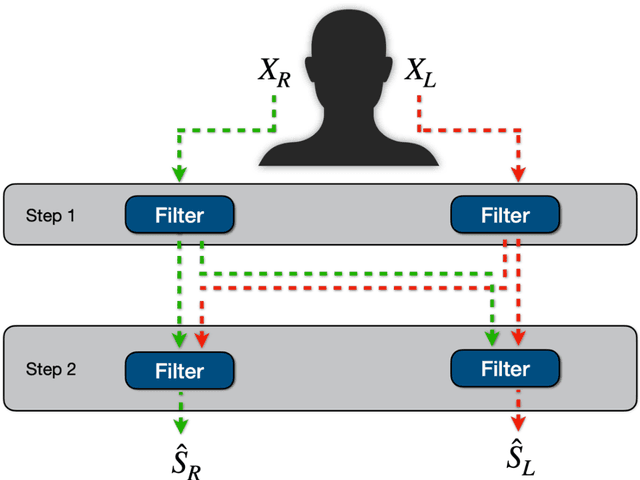
In the intricate acoustic landscapes where speech intelligibility is challenged by noise and reverberation, multichannel speech enhancement emerges as a promising solution for individuals with hearing loss. Such algorithms are commonly evaluated at the utterance level. However, this approach overlooks the granular acoustic nuances revealed by phoneme-specific analysis, potentially obscuring key insights into their performance. This paper presents an in-depth phoneme-scale evaluation of 3 state-of-the-art multichannel speech enhancement algorithms. These algorithms -- FasNet, MVDR, and Tango -- are extensively evaluated across different noise conditions and spatial setups, employing realistic acoustic simulations with measured room impulse responses, and leveraging diversity offered by multiple microphones in a binaural hearing setup. The study emphasizes the fine-grained phoneme-level analysis, revealing that while some phonemes like plosives are heavily impacted by environmental acoustics and challenging to deal with by the algorithms, others like nasals and sibilants see substantial improvements after enhancement. These investigations demonstrate important improvements in phoneme clarity in noisy conditions, with insights that could drive the development of more personalized and phoneme-aware hearing aid technologies.