 Add to Chrome
 Add to Firefox
 Add to Edge
LLM For Loop Invariant Generation and Fixing: How Far Are We?
Nov 09, 2025
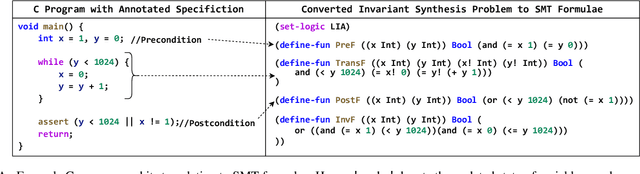
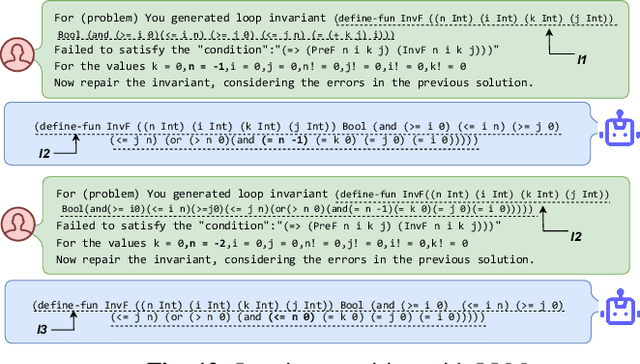
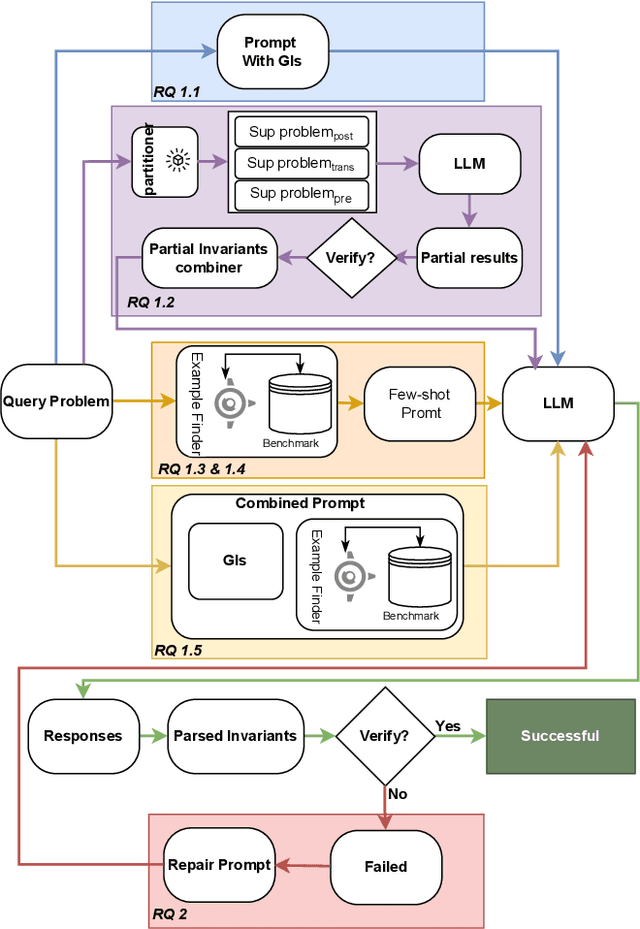
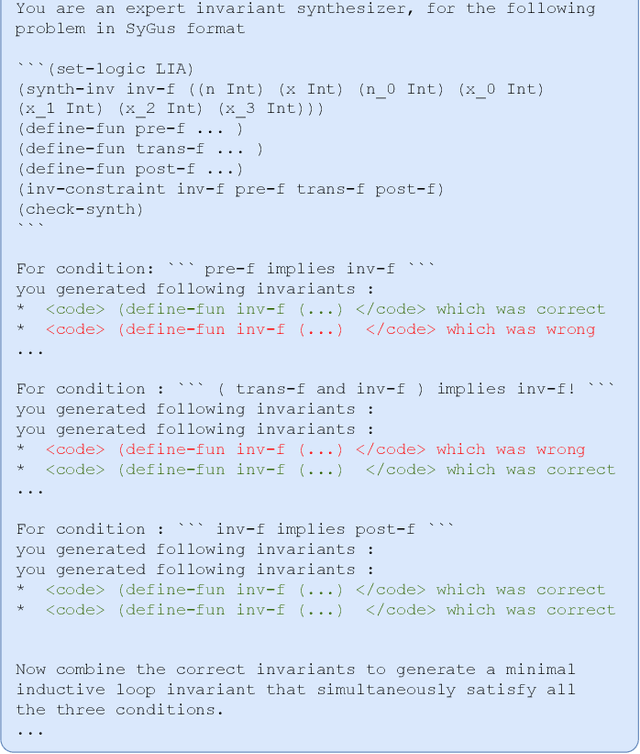
A loop invariant is a property of a loop that remains true before and after each execution of the loop. The identification of loop invariants is a critical step to support automated program safety assessment. Recent advancements in Large Language Models (LLMs) have demonstrated potential in diverse software engineering (SE) and formal verification tasks. However, we are not aware of the performance of LLMs to infer loop invariants. We report an empirical study of both open-source and closed-source LLMs of varying sizes to assess their proficiency in inferring inductive loop invariants for programs and in fixing incorrect invariants. Our findings reveal that while LLMs exhibit some utility in inferring and repairing loop invariants, their performance is substantially enhanced when supplemented with auxiliary information such as domain knowledge and illustrative examples. LLMs achieve a maximum success rate of 78\% in generating, but are limited to 16\% in repairing the invariant.

A Systematic Study and Analysis of Bengali Folklore with Natural Language Processing Systems
Mar 13, 2022


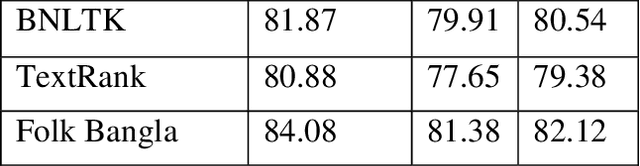
Folklore, a solid branch of folk literature, is the hallmark of any nation or any society. Such as oral tradition; as proverbs or jokes, it also includes material culture as well as traditional folk beliefs, and various customs. Bengali folklore is as rich in-depth as it is amazing. Nevertheless, in the womb of time, it is determined to sustain its existence. Therefore, our aim in this study is to make our rich folklore more comprehensible to everyone in a more sophisticated computational way. Some studies concluded various aspects of the Bengali language with NLP. Our proposed model is to be specific for Bengali folklore. Technically, it will be the first step towards Bengali natural language processing for studying and analyzing the folklore of Bengal.