 Add to Chrome
 Add to Firefox
 Add to Edge
Preference Tree Optimization: Enhancing Goal-Oriented Dialogue with Look-Ahead Simulations
Aug 12, 2026
Developing dialogue systems capable of engaging in multi-turn, goal-oriented conversations remains a significant challenge, especially in specialized domains with limited data. This research proposes a novel framework called Preference Tree Optimization (PTO), designed to iteratively improve agent models in such dialogue systems, by generating preference data using a method called Preference Tree with Look-Ahead. Focusing on Motivational Interviewing (MI) -- a counseling technique aimed at facilitating behavioral change -- we leverage virtual patients and an oracle evaluator to simulate conversations and generate rich preference datasets. By combining this method with Direct Preference Optimization (DPO), we aim to enhance the agent's decision-making capabilities over iterative training cycles. The proposed framework addresses data scarcity and advances the development of more nuanced and effective dialogue systems in goal-oriented domains. Experimental evaluations demonstrate that the PTO framework enhances dialogue agents' performance in goal-oriented conversations within the domain of Motivational Interviewing (MI). Models trained with PTO consistently outperformed the baseline in key metrics such as session satisfaction and working alliance. Additionally, incorporating look-ahead simulations led to improved long-term planning and more effective conversational strategies, with deeper look-ahead configurations yielding the most stable and high-scoring results.

Tighter Bounds on the Information Bottleneck with Application to Deep Learning
Feb 12, 2024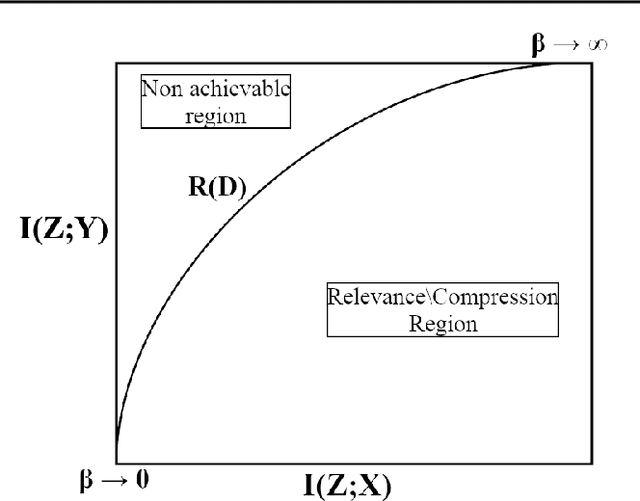
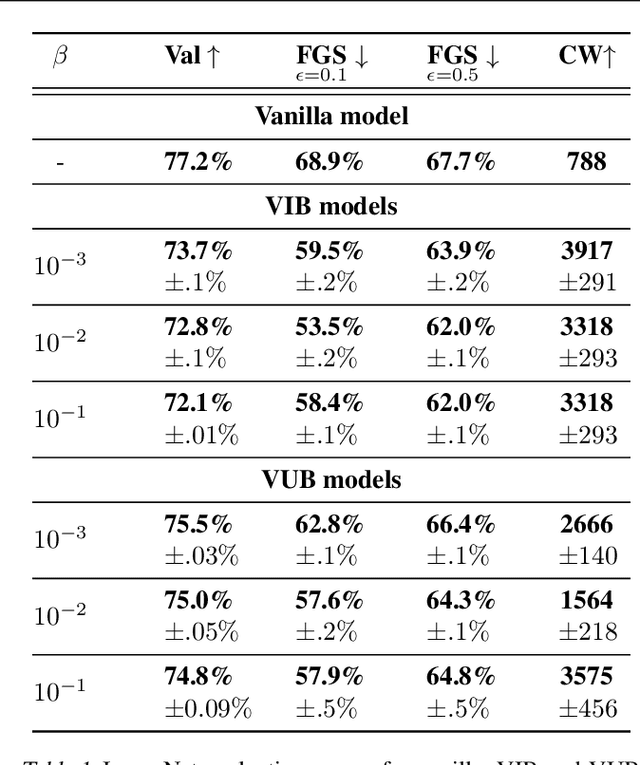
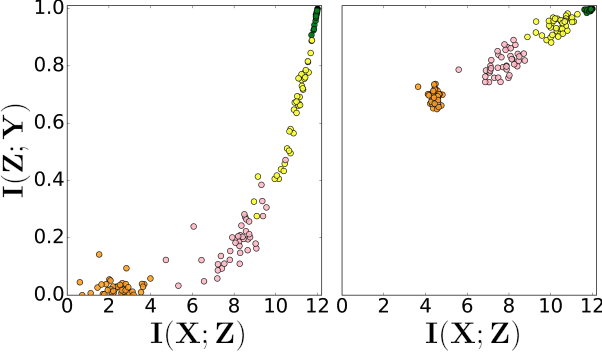
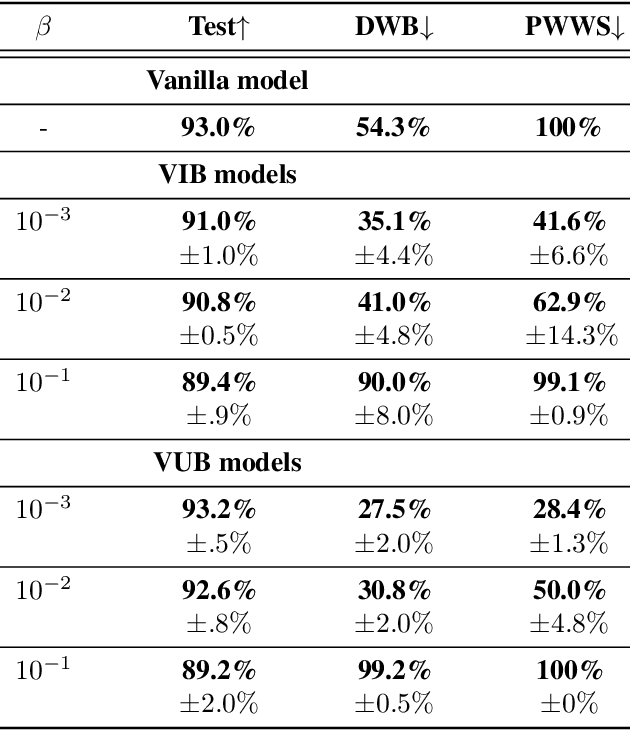
Deep Neural Nets (DNNs) learn latent representations induced by their downstream task, objective function, and other parameters. The quality of the learned representations impacts the DNN's generalization ability and the coherence of the emerging latent space. The Information Bottleneck (IB) provides a hypothetically optimal framework for data modeling, yet it is often intractable. Recent efforts combined DNNs with the IB by applying VAE-inspired variational methods to approximate bounds on mutual information, resulting in improved robustness to adversarial attacks. This work introduces a new and tighter variational bound for the IB, improving performance of previous IB-inspired DNNs. These advancements strengthen the case for the IB and its variational approximations as a data modeling framework, and provide a simple method to significantly enhance the adversarial robustness of classifier DNNs.