 Add to Chrome
 Add to Firefox
 Add to Edge
Knowledge Graph Extraction from Biomedical Literature for Alkaptonuria Rare Disease
Mar 16, 2026
Alkaptonuria (AKU) is an ultra-rare autosomal recessive metabolic disorder caused by mutations in the HGD (Homogentisate 1,2-Dioxygenase) gene, leading to a pathological accumulation of homogentisic acid (HGA) in body fluids and tissues. This leads to systemic manifestations, including premature spondyloarthropathy, renal and prostatic stones, and cardiovascular complications. Being ultra-rare, the amount of data related to the disease is limited, both in terms of clinical data and literature. Knowledge graphs (KGs) can help connect the limited knowledge about the disease (basic mechanisms, manifestations and existing therapies) with other knowledge; however, AKU is frequently underrepresented or entirely absent in existing biomedical KGs. In this work, we apply a text-mining methodology based on PubTator3 for large-scale extraction of biomedical relations. We construct two KGs of different sizes, validate them using existing biochemical knowledge and use them to extract genes, diseases and therapies possibly related to AKU. This computational framework reveals the systemic interactions of the disease, its comorbidities, and potential therapeutic targets, demonstrating the efficacy of our approach in analyzing rare metabolic disorders.

Enhancing Embedding Representations of Biomedical Data using Logic Knowledge
Mar 23, 2023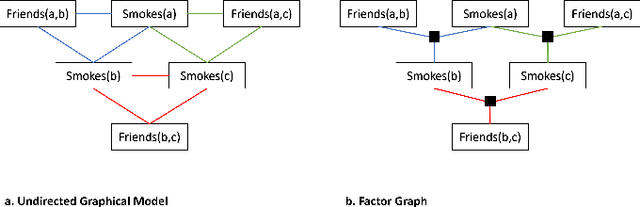
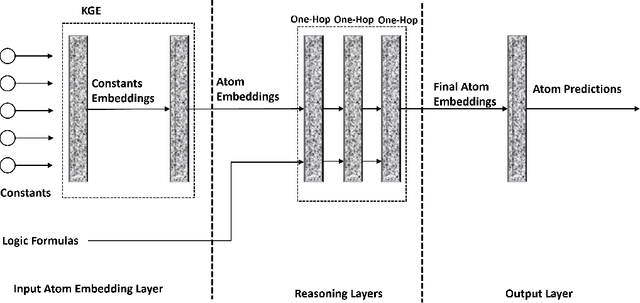
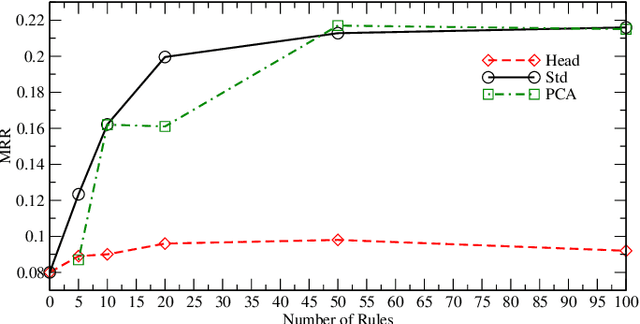
Knowledge Graph Embeddings (KGE) have become a quite popular class of models specifically devised to deal with ontologies and graph structure data, as they can implicitly encode statistical dependencies between entities and relations in a latent space. KGE techniques are particularly effective for the biomedical domain, where it is quite common to deal with large knowledge graphs underlying complex interactions between biological and chemical objects. Recently in the literature, the PharmKG dataset has been proposed as one of the most challenging knowledge graph biomedical benchmark, with hundreds of thousands of relational facts between genes, diseases and chemicals. Despite KGEs can scale to very large relational domains, they generally fail at representing more complex relational dependencies between facts, like logic rules, which may be fundamental in complex experimental settings. In this paper, we exploit logic rules to enhance the embedding representations of KGEs on the PharmKG dataset. To this end, we adopt Relational Reasoning Network (R2N), a recently proposed neural-symbolic approach showing promising results on knowledge graph completion tasks. An R2N uses the available logic rules to build a neural architecture that reasons over KGE latent representations. In the experiments, we show that our approach is able to significantly improve the current state-of-the-art on the PharmKG dataset. Finally, we provide an ablation study to experimentally compare the effect of alternative sets of rules according to different selection criteria and varying the number of considered rules.