 Add to Chrome
 Add to Firefox
 Add to Edge
Adversarial Vulnerability Under Temporal Concept Drift: A Longitudinal Study of Android Malware Detection
May 22, 2026
We present a longitudinal, drift-aware evaluation of adversarial robustness across more than a decade of Android applications using static and dynamic feature representations extracted from emulator and real-device executions. The dataset is organized into yearly slices and evaluated under three deployment protocols that emulate realistic learning scenarios: (1) same-year training and testing, (2) cross-year deployment without model updates, and (3) expanding-window retraining with cumulative historical data. Across multiple classifier families, adversarial examples are generated using FGSM and SPSA under feasibility constraints. We measure clean performance, Adversarial Accuracy (AA), Attack Success Rate (ASR), and introduce temporal linkage metrics -- RobustDrop, $Δ$ASR, and Adversarial Amplification Factor (AAF) -- to quantify the relationship between distribution shift and robustness degradation.nResults show that temporal separation is associated with reduced adversarial robustness under the evaluated transfer-based feature-space setting. As the train-test gap increases, clean accuracy and adversarial accuracy decline, while attack success exhibits configuration-dependent increases, particularly under FGSM perturbations and static features. Expanding-window retraining mitigates, but does not eliminate, robustness loss under continued distributional evolution. These findings indicate that temporal drift should be considered when assessing the long-term robustness of intelligent detection systems under evolving data distributions and highlight the need for drift-aware robustness assessment frameworks in long-lived adversarial environments.

An Empirical Evaluation of LLM-Generated Code Security Across Prompting Methods
May 22, 2026The growing use of Large Language Models (LLMs) for automated code generation has enhanced software development efficiency, but often at the cost of security. Generated code frequently overlooks critical concerns, leaving it vulnerable to issues such as weak encryption and improper input validation. To investigate this problem, we present a comprehensive empirical evaluation of the security quality of LLM-generated code across five LLMs and four programming languages (Java, C++, C, and Python), examining the impact of multiple prompt engineering methods. We introduce a weaknesses-aware zero-shot chain-of-thought (WA-0CoT) prompting strategy that enriches prompts with security context using CWE mappings to guide model reasoning. Our empirical analysis, supported by chi-square tests, finds no statistically significant reductions in vulnerability frequency or density across prompt methods. However, prompting strategies, including WA-0CoT, systematically influence the compositional distribution of CWE categories, with effects varying by programming language. These findings suggest that while security-aware prompting alters the structure of generated weaknesses, prompt engineering alone is insufficient to reliably reduce overall vulnerability levels. The results highlight the importance of language-aware and model-aware prompt design when evaluating the security properties of LLM-generated code.
A Quasi-Experimental Developer Study of Security Training in LLM-Assisted Web Application Development
Apr 20, 2026This paper presents a controlled quasi-experimental developer study examining whether a layer-based security training package is associated with improved security quality in LLM-assisted implementation of an identity-centric Java Spring Boot backend. The study uses a mixed design with a within-subject pre-training versus post-training comparison and an exploratory between-subject expertise factor. Twelve developers completed matched runs under a common interface, fixed model configuration, counterbalanced task sets, and a shared starter project. Security outcomes were assessed via independent manual validation of submitted repositories by the first and second authors. The primary participant-level endpoint was a severity-weighted validated-weakness score. The post-training condition showed a significant paired reduction under an exact Wilcoxon signed-rank test ($p = 0.0059$). In aggregate, validated weaknesses decreased from 162 to 111 (31.5\%), the severity-weighted burden decreased from 432 to 267 (38.2\%), and critical findings decreased from 24 to 5 (79.2\%). The largest reductions were in authorization and object access (53.3\%) and in authentication, credential policy, and recovery weaknesses (44.7\%). Session and browser trust-boundary issues showed minimal change, while sensitive-data and cryptographic weaknesses showed only marginal improvement. These results suggest that, under the tested conditions, post-training runs reduce validated security burden in LLM-assisted backend development without modifying the model. They do not support replacing secure defaults, static analysis, expert review, or operational hardening.
Security and Quality in LLM-Generated Code: A Multi-Language, Multi-Model Analysis
Feb 03, 2025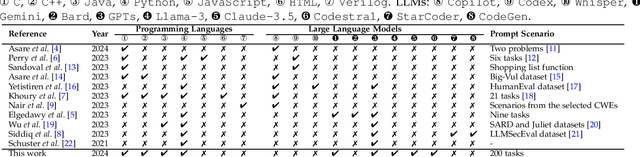
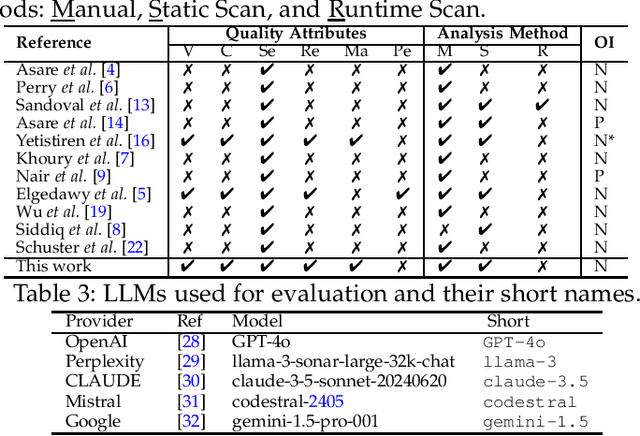
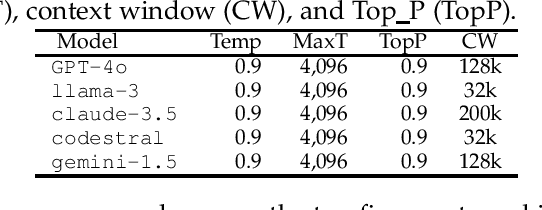
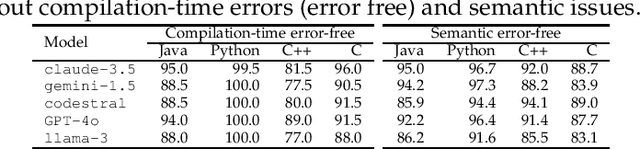
Artificial Intelligence (AI)-driven code generation tools are increasingly used throughout the software development lifecycle to accelerate coding tasks. However, the security of AI-generated code using Large Language Models (LLMs) remains underexplored, with studies revealing various risks and weaknesses. This paper analyzes the security of code generated by LLMs across different programming languages. We introduce a dataset of 200 tasks grouped into six categories to evaluate the performance of LLMs in generating secure and maintainable code. Our research shows that while LLMs can automate code creation, their security effectiveness varies by language. Many models fail to utilize modern security features in recent compiler and toolkit updates, such as Java 17. Moreover, outdated methods are still commonly used, particularly in C++. This highlights the need for advancing LLMs to enhance security and quality while incorporating emerging best practices in programming languages.