 Add to Chrome
 Add to Firefox
 Add to Edge
Symphony of Bias: Exploring Gender Associations with Musical Instruments in Multimodal LLMs
Jul 29, 2026
Large language models (LLMs) are increasingly embedded in everyday life and widely used for information seeking, raising concerns about their potential to perpetuate social biases and reinforce stereotypes. In this study, we investigate gender bias in LLMs through the lens of their associations with musical instruments. Building on social-science research on the cultural gender-typing of instruments, we introduce Symphony-Bias, a parallel multimodal dataset spanning text, vision, and audio. We evaluate ten multimodal models with diverse architectures and scales across 22 musical instruments, analyzing how they associate each instrument with three gender categories: {male, female, non-binary}, across three modalities: {text, vision, audio}. Our results show that 92\% of instrument-level outcomes align with prior social-science findings, with the harp and drums showing particularly consistent gendered associations across all evaluated models and modalities. We further find that alignment with social stereotypes is weakest in audio, stronger in vision, and strongest in text, suggesting that modality-specific representations can differentially amplify gendered associations with musical instruments.\footnote{The Symphony-Bias dataset will be publicly released upon acceptance of the paper.}

RFBES at SemEval-2024 Task 8: Investigating Syntactic and Semantic Features for Distinguishing AI-Generated and Human-Written Texts
Feb 19, 2024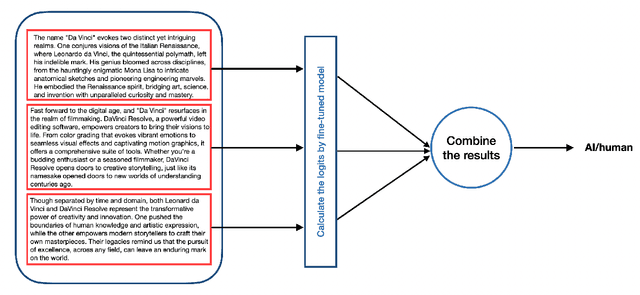
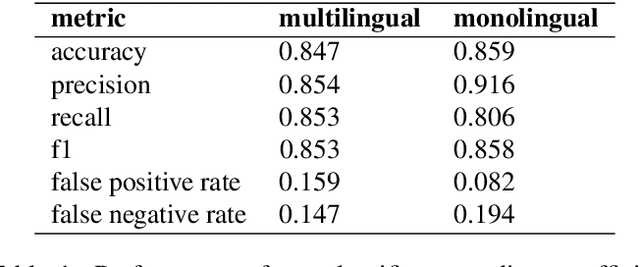
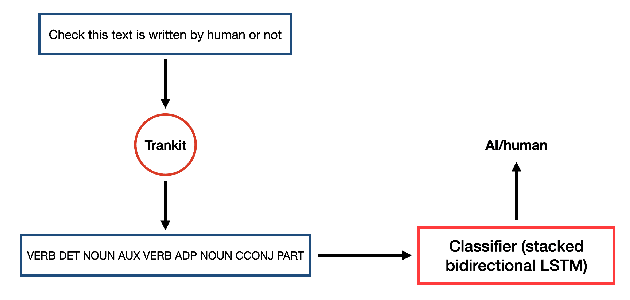
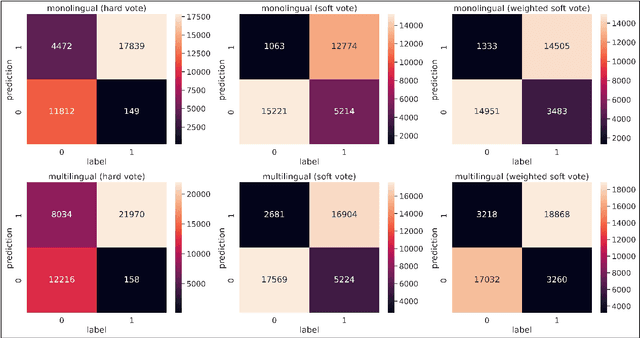
Nowadays, the usage of Large Language Models (LLMs) has increased, and LLMs have been used to generate texts in different languages and for different tasks. Additionally, due to the participation of remarkable companies such as Google and OpenAI, LLMs are now more accessible, and people can easily use them. However, an important issue is how we can detect AI-generated texts from human-written ones. In this article, we have investigated the problem of AI-generated text detection from two different aspects: semantics and syntax. Finally, we presented an AI model that can distinguish AI-generated texts from human-written ones with high accuracy on both multilingual and monolingual tasks using the M4 dataset. According to our results, using a semantic approach would be more helpful for detection. However, there is a lot of room for improvement in the syntactic approach, and it would be a good approach for future work.