 Add to Chrome
 Add to Firefox
 Add to Edge
A Low-Power Wearable Respiratory Sensor for Non-Invasive Stress Monitoring
Aug 06, 2026
Respiration provides a continuously available window into physiological state and behavior. However, monitoring it outside controlled settings remains challenging because a wearable system must capture small body deformations while remaining comfortable, low power, and robust to changes in posture and motion. We present a compact non-invasive respiratory sensing system based on a force-sensitive resistor (FSR) embedded in an abdominal belt and integrated with a custom Bluetooth Low Energy acquisition board. The system combines a simple piezoresistive readout with a mechanical holder designed to transfer abdominal expansion to the sensor without analog amplification. We evaluate the complete sensing pipeline across multiple breathing patterns and body positions. In stationary settings, the recorded signals exhibit consistent amplitude changes and recurring peak-to-peak timing across breathing maneuvers; under light movement, these variations remain visible despite motion-induced baseline shifts. We further design a five-phase stress-induction protocol and collect respiratory recordings from 12 participants. Using interpretable time-domain features and standard classifiers, we examine whether the acquired signals distinguish relaxation from stress-induction phases. In this preliminary experiment, the best-performing model achieves 88.0% test accuracy, indicating that the extracted respiratory features distinguish stress-induced phases from relaxation phases in this dataset. Overall, our results show that the proposed platform enables real-time respiratory monitoring across diverse daily-life scenarios and captures respiratory changes that distinguish stress-induction from relaxation phases, supporting its potential for affective-computing applications.

A Broadband and Compact Millimeter-Wave Imaging System based on Synthetic Aperture Radar
May 29, 2022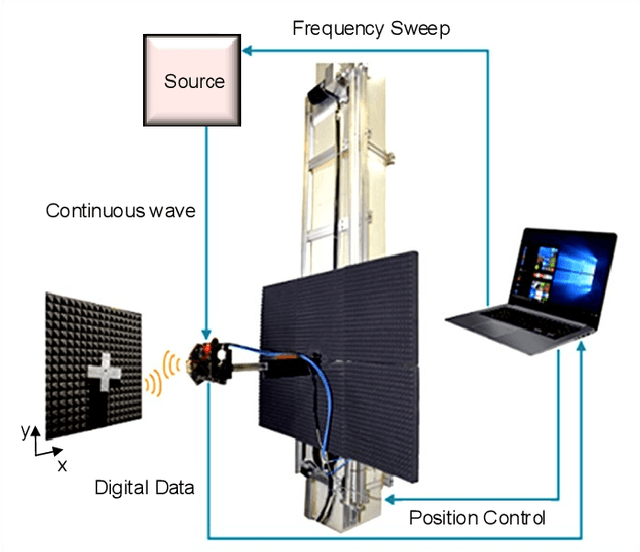
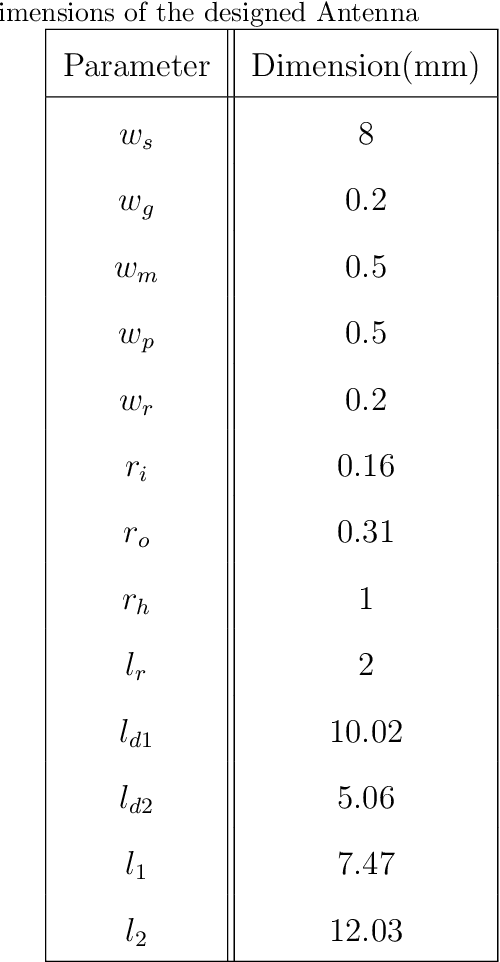
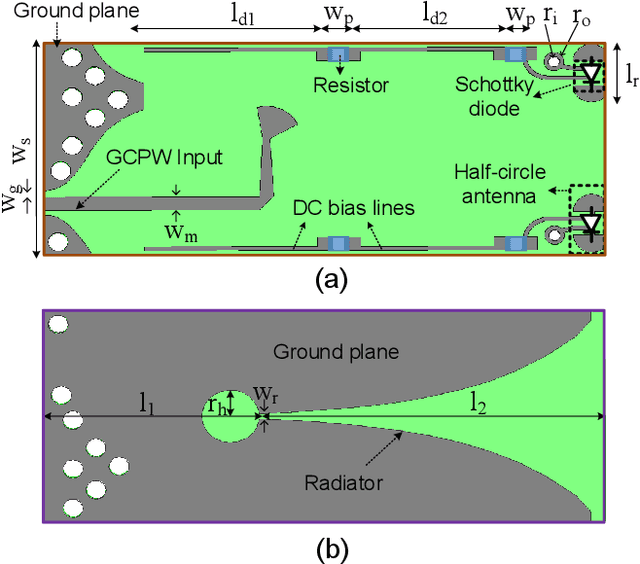
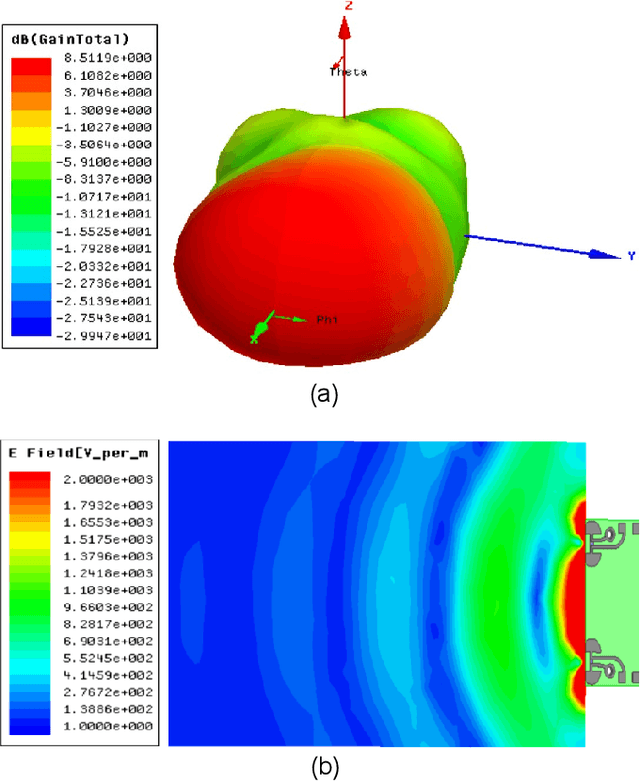
In this paper, the design, realization, and demonstration of a broadband millimeter-wave imaging system based on the synthetic aperture radar technique (SAR) are discussed. The proposed system, operating within the frequency range of 25.3-30.8 GHz, consists of a tapered slot antenna as the transmitter and two half-circle antennas as the receivers. The size of the antenna is 19.5 * 8 mm with a maximum gain of 8.5 dB. The transmitter and the receiver antennas are printed on the same board. This feature leads to a highly compact and flexible configuration, enabling the applicability of the proposed imaging system in the handheld devices. Furthermore, it significantly reduces the fabrication cost of the system. The proposed broadband imaging system, being capable of performing 3D real-time imaging with high resolutions, can be easily calibrated for each frequency within the desired range. By performing 3D imaging from metallic objects with different shapes, we experimentally demonstrate the high performance of the proposed system, which offers great potentialities for a broad range of applications such as security, medical diagnostic, concealed object detection, to name a few.