 Add to Chrome
 Add to Firefox
 Add to Edge
Energy-Mamba: A Physics-Constrained State-Space Model for Medical Image Classification
Aug 20, 2026
State-Space Models (SSMs), particularly Mamba, offer linear-time complexity for long-range dependencies, making them attractive for medical imaging with limited annotated data. However, adapting these sequential models to 2D images through unconstrained state evolution causes representational drift, the dynamic hidden state progressively loses fidelity to local image features. We introduce Energy-Mamba, integrating SSM dynamics with physics-informed constraints via a learnable potential energy function that quantifies compatibility between evolving states and static local features. Our Energy-Mamba Block introduces a gradient-based forcing term, computed dynamically via automatic differentiation, that pulls states toward low-energy configurations maintaining local visual fidelity. This formulation mirrors Hamiltonian dynamics: kinetic energy (SSM scan) plus potential energy (our constraint function) govern state trajectories. This architectural prior enables learning implicit constraints for robust, faithful representations, crucial in medical imaging where fine-grained local detail drives accurate diagnosis. Evaluated on four datasets (retinal OCT, chest X-ray, microscopy, abdominal CT), Energy-Mamba achieves state-of-the-art classification performance with significantly fewer parameters, demonstrating that physics-informed grounding can enhance both efficiency and representational quality in medical vision tasks.

BreastMammo and DenseMammo: Benchmarks for Mammography Domain Generalization
Aug 10, 2026Breast density classification is a critical component of breast cancer risk assessment, yet AI models often struggle to generalize across clinical sites due to vendor-specific acquisition styles. In this work, we introduce two new datasets, BreastMammo and DenseMammo, to facilitate robust multi-view mammography research. We propose a domain generalization framework that utilizes a foreground-only histogram matching protocol to resolve the domain shift issue arising from disparate clinical sources. Internal evaluation using a 5-fold cross-validation protocol demonstrates the efficacy of our approach, with the Swin Transformer backbone achieving a peak AUC of 98.32% for density classification. External evaluation on the TNMammo and LUMINA datasets demonstrates that the proposed approach consistently reduces domain shift, significantly outperforming prominent domain generalization paradigms, including MixStyle and Discrete-Fourier-Transform-based frameworks.
The Non-Optimality of Scientific Knowledge: Path Dependence, Lock-In, and The Local Minimum Trap
Apr 11, 2026Science is widely regarded as humanity's most reliable method for uncovering truths about the natural world. Yet the \emph{trajectory} of scientific discovery is rarely examined as an optimization problem in its own right. This paper argues that the body of scientific knowledge, at any given historical moment, represents a \emph{local optimum} rather than a global one--that the frameworks, formalisms, and paradigms through which we understand nature are substantially shaped by historical contingency, cognitive path dependence, and institutional lock-in. Drawing an analogy to gradient descent in machine learning, we propose that science follows the steepest local gradient of tractability, empirical accessibility, and institutional reward, and in doing so may bypass fundamentally superior descriptions of nature. We develop this thesis through detailed case studies spanning mathematics, physics, chemistry, biology, neuroscience, and statistical methodology. We identify three interlocking mechanisms of lock-in--cognitive, formal, and institutional--and argue that recognizing these mechanisms is a prerequisite for designing meta-scientific strategies capable of escaping local optima. We conclude by proposing concrete interventions and discussing the epistemological implications of our thesis for the philosophy of science.
A Hybrid CNN-VSSM model for Multi-View, Multi-Task Mammography Analysis: Robust Diagnosis with Attention-Based Fusion
Jul 22, 2025Early and accurate interpretation of screening mammograms is essential for effective breast cancer detection, yet it remains a complex challenge due to subtle imaging findings and diagnostic ambiguity. Many existing AI approaches fall short by focusing on single view inputs or single-task outputs, limiting their clinical utility. To address these limitations, we propose a novel multi-view, multitask hybrid deep learning framework that processes all four standard mammography views and jointly predicts diagnostic labels and BI-RADS scores for each breast. Our architecture integrates a hybrid CNN VSSM backbone, combining convolutional encoders for rich local feature extraction with Visual State Space Models (VSSMs) to capture global contextual dependencies. To improve robustness and interpretability, we incorporate a gated attention-based fusion module that dynamically weights information across views, effectively handling cases with missing data. We conduct extensive experiments across diagnostic tasks of varying complexity, benchmarking our proposed hybrid models against baseline CNN architectures and VSSM models in both single task and multi task learning settings. Across all tasks, the hybrid models consistently outperform the baselines. In the binary BI-RADS 1 vs. 5 classification task, the shared hybrid model achieves an AUC of 0.9967 and an F1 score of 0.9830. For the more challenging ternary classification, it attains an F1 score of 0.7790, while in the five-class BI-RADS task, the best F1 score reaches 0.4904. These results highlight the effectiveness of the proposed hybrid framework and underscore both the potential and limitations of multitask learning for improving diagnostic performance and enabling clinically meaningful mammography analysis.
Neuro-TransUNet: Segmentation of stroke lesion in MRI using transformers
Jun 10, 2024Accurate segmentation of the stroke lesions using magnetic resonance imaging (MRI) is associated with difficulties due to the complicated anatomy of the brain and the different properties of the lesions. This study introduces the Neuro-TransUNet framework, which synergizes the U-Net's spatial feature extraction with SwinUNETR's global contextual processing ability, further enhanced by advanced feature fusion and segmentation synthesis techniques. The comprehensive data pre-processing pipeline improves the framework's efficiency, which involves resampling, bias correction, and data standardization, enhancing data quality and consistency. Ablation studies confirm the significant impact of the advanced integration of U-Net with SwinUNETR and data pre-processing pipelines on performance and demonstrate the model's effectiveness. The proposed Neuro-TransUNet model, trained with the ATLAS v2.0 \emph{training} dataset, outperforms existing deep learning algorithms and establishes a new benchmark in stroke lesion segmentation.
Transformers-based architectures for stroke segmentation: A review
Mar 27, 2024Stroke remains a significant global health concern, necessitating precise and efficient diagnostic tools for timely intervention and improved patient outcomes. The emergence of deep learning methodologies has transformed the landscape of medical image analysis. Recently, Transformers, initially designed for natural language processing, have exhibited remarkable capabilities in various computer vision applications, including medical image analysis. This comprehensive review aims to provide an in-depth exploration of the cutting-edge Transformer-based architectures applied in the context of stroke segmentation. It commences with an exploration of stroke pathology, imaging modalities, and the challenges associated with accurate diagnosis and segmentation. Subsequently, the review delves into the fundamental ideas of Transformers, offering detailed insights into their architectural intricacies and the underlying mechanisms that empower them to effectively capture complex spatial information within medical images. The existing literature is systematically categorized and analyzed, discussing various approaches that leverage Transformers for stroke segmentation. A critical assessment is provided, highlighting the strengths and limitations of these methods, including considerations of performance and computational efficiency. Additionally, this review explores potential avenues for future research and development
Brain Stroke Segmentation Using Deep Learning Models: A Comparative Study
Mar 25, 2024
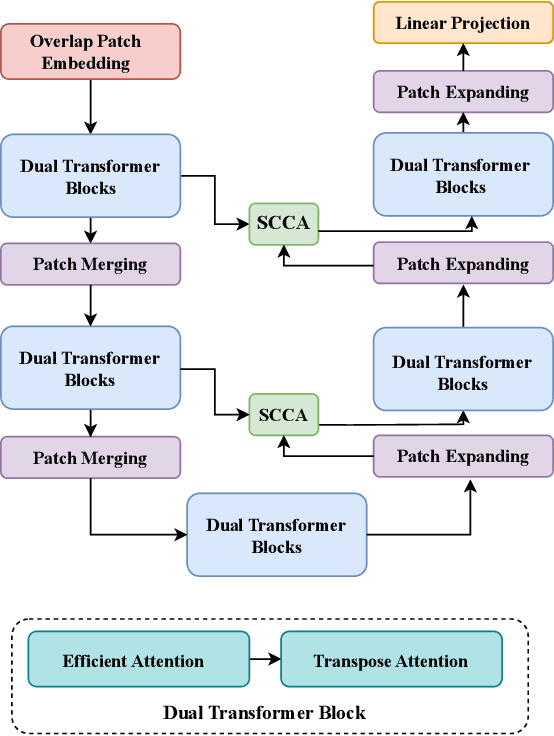
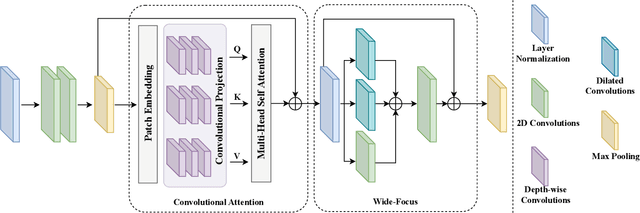
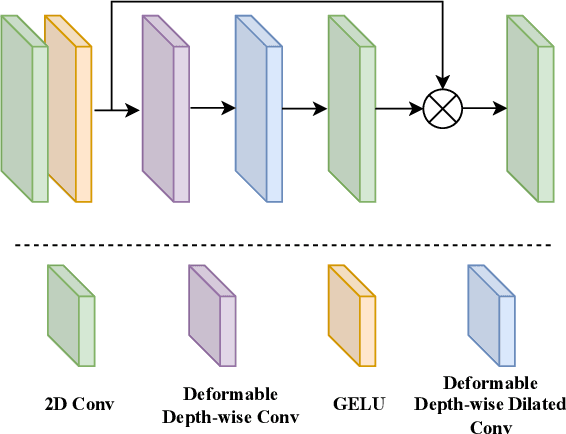
Stroke segmentation plays a crucial role in the diagnosis and treatment of stroke patients by providing spatial information about affected brain regions and the extent of damage. Segmenting stroke lesions accurately is a challenging task, given that conventional manual techniques are time consuming and prone to errors. Recently, advanced deep models have been introduced for general medical image segmentation, demonstrating promising results that surpass many state of the art networks when evaluated on specific datasets. With the advent of the vision Transformers, several models have been introduced based on them, while others have aimed to design better modules based on traditional convolutional layers to extract long-range dependencies like Transformers. The question of whether such high-level designs are necessary for all segmentation cases to achieve the best results remains unanswered. In this study, we selected four types of deep models that were recently proposed and evaluated their performance for stroke segmentation: a pure Transformer-based architecture (DAE-Former), two advanced CNN-based models (LKA and DLKA) with attention mechanisms in their design, an advanced hybrid model that incorporates CNNs with Transformers (FCT), and the well-known self-adaptive nnUNet framework with its configuration based on given data. We examined their performance on two publicly available datasets, and found that the nnUNet achieved the best results with the simplest design among all. Revealing the robustness issue of Transformers to such variabilities serves as a potential reason for their weaker performance. Furthermore, nnUNet's success underscores the significant impact of preprocessing and postprocessing techniques in enhancing segmentation results, surpassing the focus solely on architectural designs