 Add to Chrome
 Add to Firefox
 Add to Edge
Intelligent Optimization of Multi-Parameter Micromixers Using a Scientific Machine Learning Framework
Nov 10, 2025
Multidimensional optimization has consistently been a critical challenge in engineering. However, traditional simulation-based optimization methods have long been plagued by significant limitations: they are typically capable of optimizing only a single problem at a time and require substantial computational time for meshing and numerical simulation. This paper introduces a novel framework leveraging cutting-edge Scientific Machine Learning (Sci-ML) methodologies to overcome these inherent drawbacks of conventional approaches. The proposed method provides instantaneous solutions to a spectrum of complex, multidimensional optimization problems. A micromixer case study is employed to demonstrate this methodology. An agent, operating on a Deep Reinforcement Learning (DRL) architecture, serves as the optimizer to explore the relationships between key problem parameters. This optimizer interacts with an environment constituted by a parametric Physics-Informed Neural Network (PINN), which responds to the agent's actions at a significantly higher speed than traditional numerical methods. The agent's objective, conditioned on the Schmidt number is to discover the optimal geometric and physical parameters that maximize the micromixer's efficiency. After training the agent across a wide range of Schmidt numbers, we analyzed the resulting optimal designs. Across this entire spectrum, the achieved efficiency was consistently greater than the baseline, normalized value. The maximum efficiency occurred at a Schmidt number of 13.3, demonstrating an improvement of approximately 32%. Finally, a comparative analysis with a Genetic Algorithm was conducted under equivalent conditions to underscore the advantages of the proposed method.

Novel Magnetic Actuation Strategies for Precise Ferrofluid Marble Manipulation in Magnetic Digital Microfluidics: Position Control and Applications
Dec 03, 2024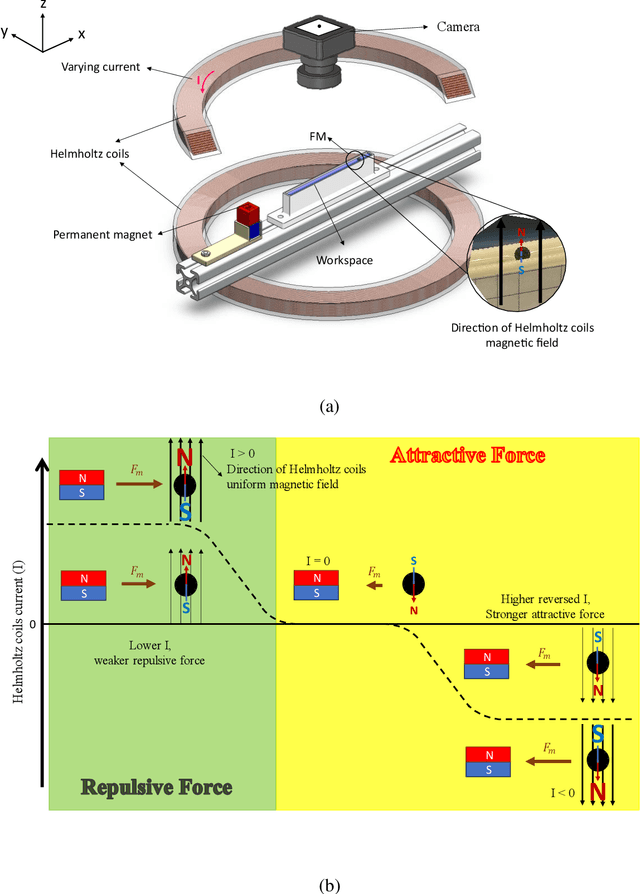
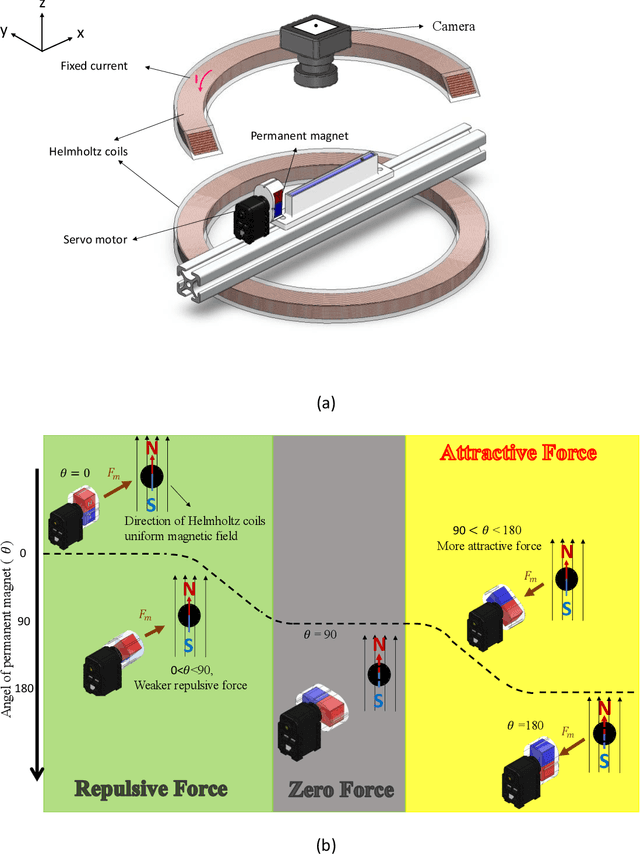
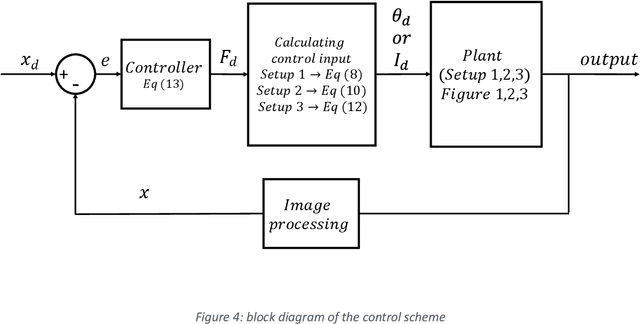
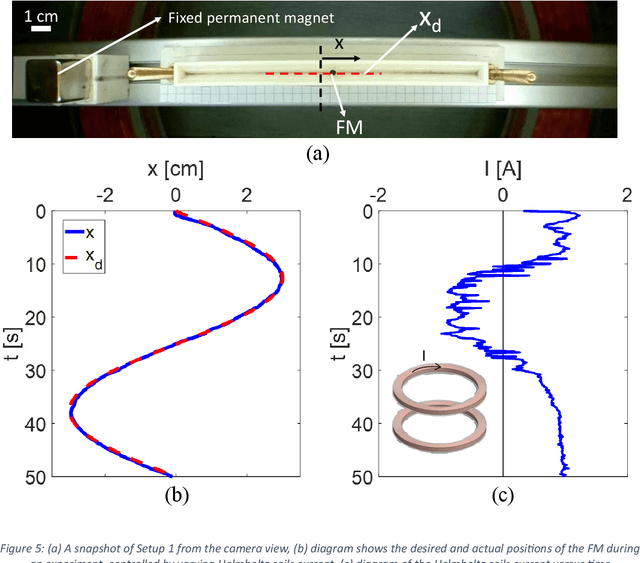
Precise manipulation of liquid marbles has significant potential in various applications such as lab-on-a-chip systems, drug delivery, and biotechnology and has been a challenge for researchers. Ferrofluid marble (FM) is a marble with a ferrofluid core that can easily be manipulated by a magnetic field. Although FMs have great potential for accurate positioning and manipulation, these marbles have not been precisely controlled in magnetic digital microfluidics, so far. In this study for the first time, a novel method of magnetic actuation is proposed using a pair of Helmholtz coils and permanent magnets. The governing equations for controlling the FM position are investigated, and it is shown that there are three different strategies for adjusting the applied magnetic force. Then, experiments are conducted to demonstrate the capability of the proposed method. To this aim, different magnetic setups are proposed for manipulating FMs. These setups are compared in terms of energy consumption and tracking ability across various frequencies. The study showcases several applications of precise FM position control, including controllable reciprocal positioning, simultaneous position control of two FMs, the transport of non-magnetic liquid marbles using the FMs, and sample extraction method from the liquid core of the FM.
Revising the Structure of Recurrent Neural Networks to Eliminate Numerical Derivatives in Forming Physics Informed Loss Terms with Respect to Time
Sep 16, 2024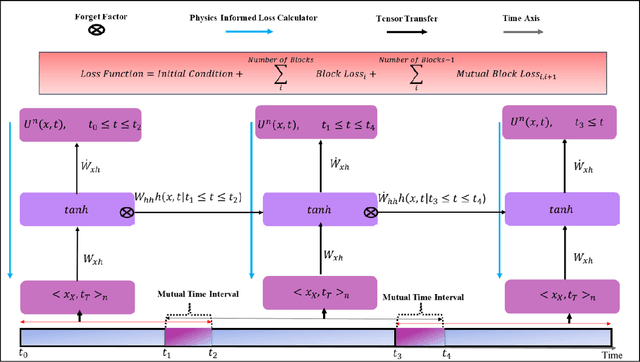

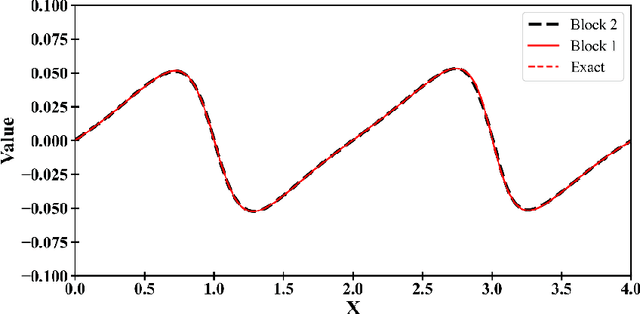
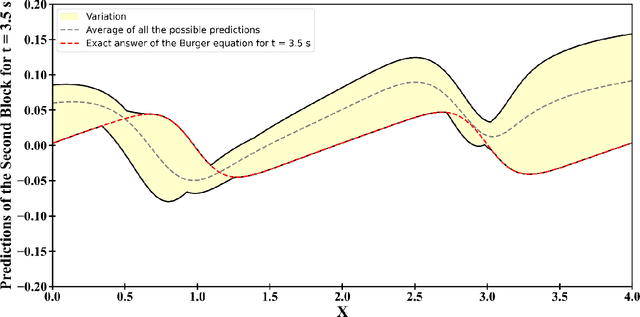
Solving unsteady partial differential equations (PDEs) using recurrent neural networks (RNNs) typically requires numerical derivatives between each block of the RNN to form the physics informed loss function. However, this introduces the complexities of numerical derivatives into the training process of these models. In this study, we propose modifying the structure of the traditional RNN to enable the prediction of each block over a time interval, making it possible to calculate the derivative of the output with respect to time using the backpropagation algorithm. To achieve this, the time intervals of these blocks are overlapped, defining a mutual loss function between them. Additionally, the employment of conditional hidden states enables us to achieve a unique solution for each block. The forget factor is utilized to control the influence of the conditional hidden state on the prediction of the subsequent block. This new model, termed the Mutual Interval RNN (MI-RNN), is applied to solve three different benchmarks: the Burgers equation, unsteady heat conduction in an irregular domain, and the Green vortex problem. Our results demonstrate that MI-RNN can find the exact solution more accurately compared to existing RNN models. For instance, in the second problem, MI-RNN achieved one order of magnitude less relative error compared to the RNN model with numerical derivatives.
Feature Enforcing PINN : A Framework to Learn the Underlying-Physics Features Before Target Task
Aug 17, 2023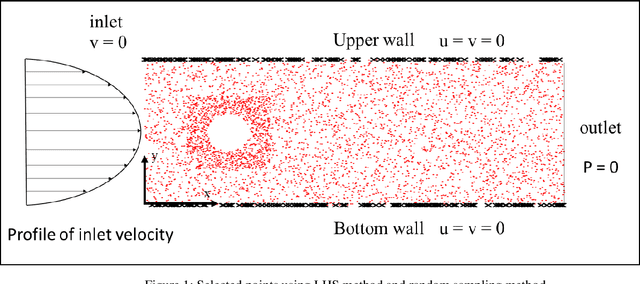

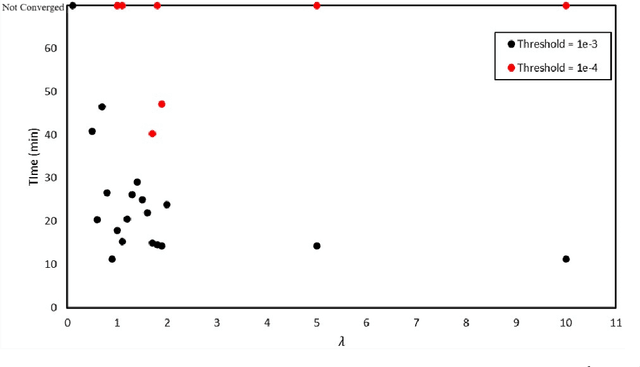

In this work, a new data-free framework called Feature Enforcing Physics Informed Neural Network (FE-PINN) is introduced. This framework is capable of learning the underlying pattern of any problem with low computational cost before the main training loop. The loss function of vanilla PINN due to the existence of two terms of partial differential residuals and boundary condition mean squared error is imbalanced. FE-PINN solves this challenge with just one minute of training instead of time-consuming hyperparameter tuning for loss function that can take hours. The FE-PINN accomplishes this process by performing a sequence of sub-tasks. The first sub-task learns useful features about the underlying physics. Then, the model trains on the target task to refine the calculations. FE-PINN is applied to three benchmarks, flow over a cylinder, 2D heat conduction, and an inverse problem of calculating inlet velocity. FE-PINN can solve each case with, 15x, 2x, and 5x speed up accordingly. Another advantage of FE-PINN is that reaching lower order of value for loss function is systematically possible. In this study, it was possible to reach a loss value near 1e-5 which is challenging for vanilla PINN. FE-PINN also has a smooth convergence process which allows for utilizing higher learning rates in comparison to vanilla PINN. This framework can be used as a fast, accurate tool for solving a wide range of Partial Differential Equations (PDEs) across various fields.