 Add to Chrome
 Add to Firefox
 Add to Edge
Wiring the 'Why': A Unified Taxonomy and Survey of Abductive Reasoning in LLMs
Apr 09, 2026
Regardless of its foundational role in human discovery and sense-making, abductive reasoning--the inference of the most plausible explanation for an observation--has been relatively underexplored in Large Language Models (LLMs). Despite the rapid advancement of LLMs, the exploration of abductive reasoning and its diverse facets has thus far been disjointed rather than cohesive. This paper presents the first survey of abductive reasoning in LLMs, tracing its trajectory from philosophical foundations to contemporary AI implementations. To address the widespread conceptual confusion and disjointed task definitions prevalent in the field, we establish a unified two-stage definition that formally categorizes prior work. This definition disentangles abduction into \textit{Hypothesis Generation}, where models bridge epistemic gaps to produce candidate explanations, and \textit{Hypothesis Selection}, where the generated candidates are evaluated and the most plausible explanation is chosen. Building upon this foundation, we present a comprehensive taxonomy of the literature, categorizing prior work based on their abductive tasks, datasets, underlying methodologies, and evaluation strategies. In order to ground our framework empirically, we conduct a compact benchmark study of current LLMs on abductive tasks, together with targeted comparative analyses across model sizes, model families, evaluation styles, and the distinct generation-versus-selection task typologies. Moreover, by synthesizing recent empirical results, we examine how LLM performance on abductive reasoning relates to deductive and inductive tasks, providing insights into their broader reasoning capabilities. Our analysis reveals critical gaps in current approaches--from static benchmark design and narrow domain coverage to narrow training frameworks and limited mechanistic understanding of abductive processes...

Colloquial Persian POS Corpus: A Novel Corpus for Colloquial Persian Part of Speech Tagging
Oct 01, 2023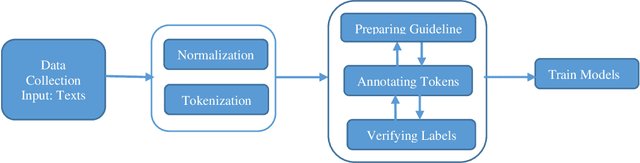
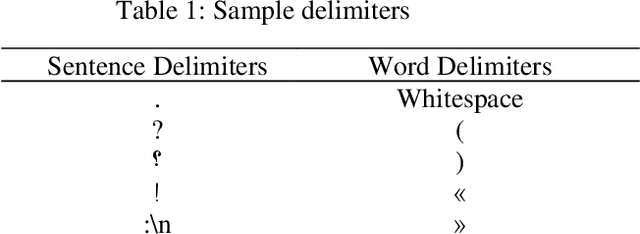
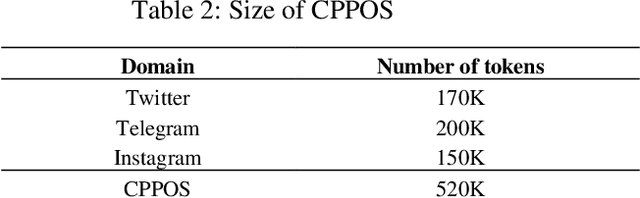
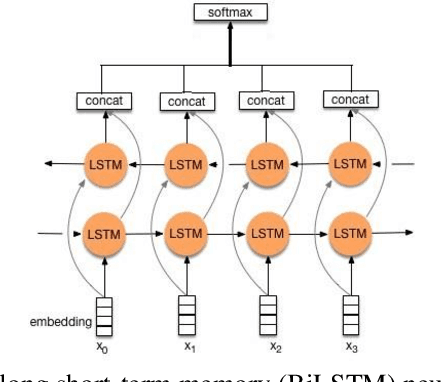
Introduction: Part-of-Speech (POS) Tagging, the process of classifying words into their respective parts of speech (e.g., verb or noun), is essential in various natural language processing applications. POS tagging is a crucial preprocessing task for applications like machine translation, question answering, sentiment analysis, etc. However, existing corpora for POS tagging in Persian mainly consist of formal texts, such as daily news and newspapers. As a result, smart POS tools, machine learning models, and deep learning models trained on these corpora may not perform optimally for processing colloquial text in social network analysis. Method: This paper introduces a novel corpus, "Colloquial Persian POS" (CPPOS), specifically designed to support colloquial Persian text. The corpus includes formal and informal text collected from various domains such as political, social, and commercial on Telegram, Twitter, and Instagram more than 520K labeled tokens. After collecting posts from these social platforms for one year, special preprocessing steps were conducted, including normalization, sentence tokenizing, and word tokenizing for social text. The tokens and sentences were then manually annotated and verified by a team of linguistic experts. This study also defines a POS tagging guideline for annotating the data and conducting the annotation process. Results: To evaluate the quality of CPPOS, various deep learning models, such as the RNN family, were trained using the constructed corpus. A comparison with another well-known Persian POS corpus named "Bijankhan" and the Persian Hazm POS tool trained on Bijankhan revealed that our model trained on CPPOS outperforms them. With the new corpus and the BiLSTM deep neural model, we achieved a 14% improvement over the previous dataset.