 Add to Chrome
 Add to Firefox
 Add to Edge
InterPol: De-anonymizing LM Arena via Interpolated Preference Learning
Mar 16, 2026
Strict anonymity of model responses is a key for the reliability of voting-based leaderboards, such as LM Arena. While prior studies have attempted to compromise this assumption using simple statistical features like TF-IDF or bag-ofwords, these methods often lack the discriminative power to distinguish between stylistically similar or within-family models. To overcome these limitations and expose the severity of vulnerability, we introduce INTERPOL, a model-driven identification framework that learns to distinguish target models from others using interpolated preference data. Specifically, INTERPOL captures deep stylistic patterns that superficial statistical features miss by synthesizing hard negative samples through model interpolation and employing an adaptive curriculum learning strategy. Extensive experiments demonstrate that INTERPOL significantly outperforms existing baselines in identification accuracy. Furthermore, we quantify the real-world threat of our findings through ranking manipulation simulations on Arena battle data.

Link Quality-Guaranteed Minimum-Cost Millimeter-Wave Base Station Deployment
Aug 05, 2021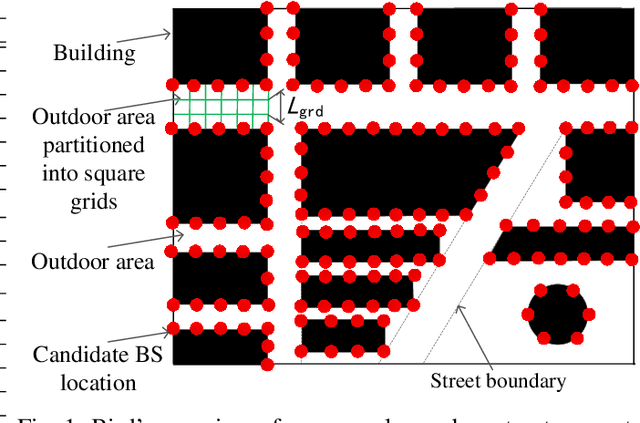
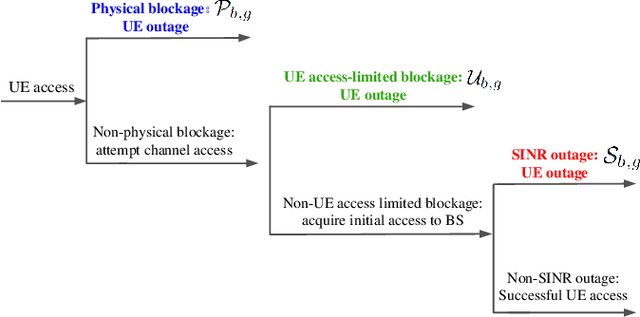
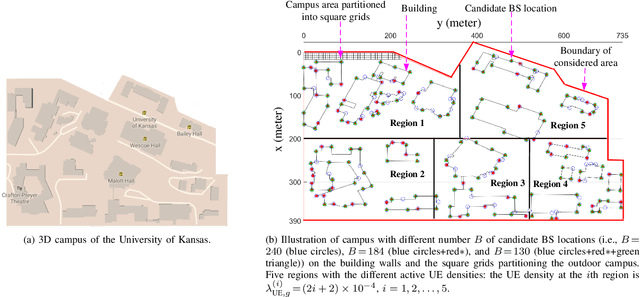
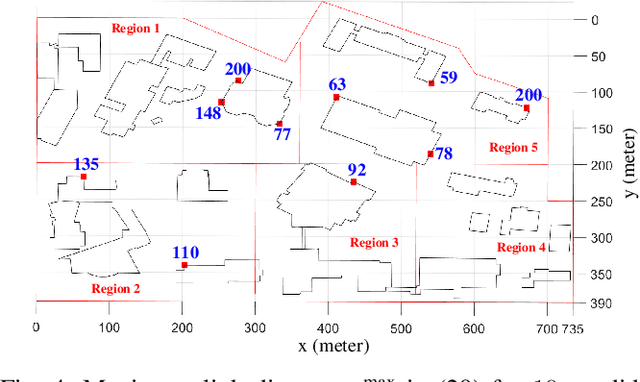
Today's growth in the volume of wireless devices coupled with the promise of supporting data-intensive 5G-&-beyond use cases is driving the industry to deploy more millimeter-wave (mmWave) base stations (BSs). Although mmWave cellular systems can carry a larger volume of traffic, dense deployment, in turn, increases the BS installation and maintenance cost, which has been largely ignored in their utilization. In this paper, we present an approach to the problem of mmWave BS deployment in urban environments by minimizing BS deployment cost subject to BS association and user equipment (UE) outage constraints. By exploiting the macro diversity, which enables each UE to be associated with multiple BSs, we derive an expression for UE outage that integrates physical blockage, UE access-limited blockage, and signal-to-interference-plus-noise-ratio (SINR) outage into its expression. The minimum-cost BS deployment problem is then formulated as integer non-linear programming (INP). The combinatorial nature of the problem motivates the pursuit of the optimal solution by decomposing the original problem into the two separable subproblems, i.e., cell coverage optimization and minimum subset selection subproblems. We provide the optimal solution and theoretical justifications for each subproblem. The simulation results demonstrating UE outage guarantees of the proposed method are presented. Interestingly, the proposed method produces a unique distribution of the macro-diversity orders over the network that is distinct from other benchmarks.