 Add to Chrome
 Add to Firefox
 Add to Edge
Predicting Wind Loads on Container Ships in Harbor Environments through Multi-Fidelity Modeling
Apr 24, 2026
Modern container ships face higher wind loads due to increased windage areas, making accurate predictions of wind loads essential for mooring design. Existing empirical models, largely developed for container ships with smaller windage areas and simpler geometrical configurations than those of modern large-scale vessels, often lack accuracy and do not account for the influence of nearby structures. This study proposes a multi-fidelity surrogate modelling framework for the prediction of wind-load coefficients, combining empirical correlations with simplified and detailed CFD models for ships in open-sea and harbor environments. The approach relies on recursive co-kriging to consistently fuse information across fidelity levels, enabling accurate predictions at a reduced computational cost. A sensitivity analysis is used to identify the most influential geometric parameters, and the resulting reduced parameter space is explored through sequential sampling to efficiently construct the training database. The surrogate models are validated over a wide range of loading configurations and for two distinct harbor environments. The results demonstrate that the multi-fidelity approach significantly improves prediction accuracy compared to single-fidelity models, while substantially reducing the reliance on high-fidelity simulations. In particular, the proposed framework captures the dependence of wind loads on key geometric parameters and consistently outperforms traditional empirical correlations, providing a robust and efficient tool for engineering applications.

Reinforcement Twinning for Hybrid Control of Flapping-Wing Drones
May 21, 2025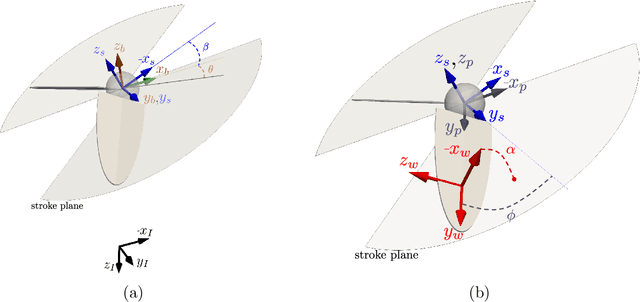
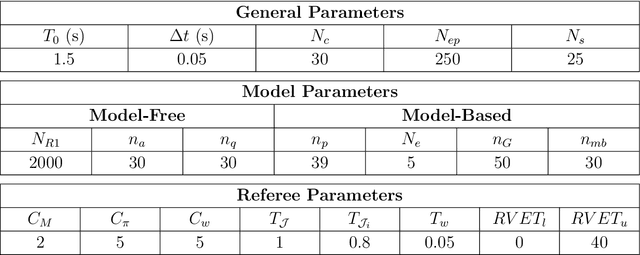
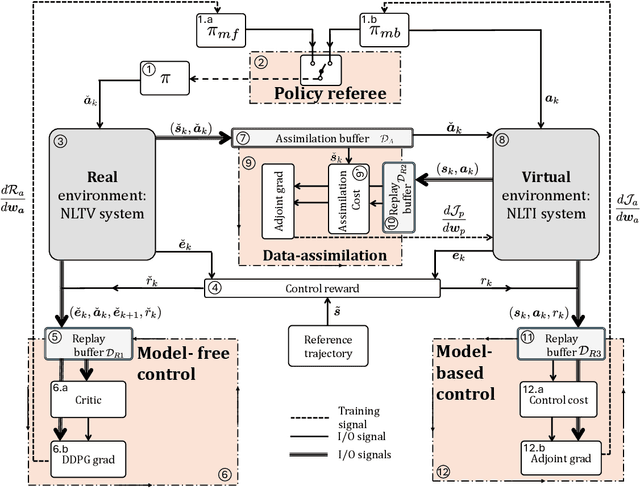
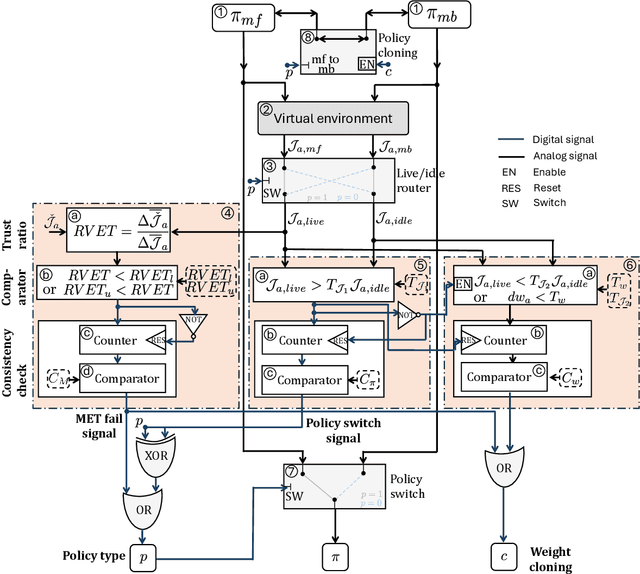
Controlling the flight of flapping-wing drones requires versatile controllers that handle their time-varying, nonlinear, and underactuated dynamics from incomplete and noisy sensor data. Model-based methods struggle with accurate modeling, while model-free approaches falter in efficiently navigating very high-dimensional and nonlinear control objective landscapes. This article presents a novel hybrid model-free/model-based approach to flight control based on the recently proposed reinforcement twinning algorithm. The model-based (MB) approach relies on an adjoint formulation using an adaptive digital twin, continuously identified from live trajectories, while the model-free (MF) approach relies on reinforcement learning. The two agents collaborate through transfer learning, imitation learning, and experience sharing using the real environment, the digital twin and a referee. The latter selects the best agent to interact with the real environment based on performance within the digital twin and a real-to-virtual environment consistency ratio. The algorithm is evaluated for controlling the longitudinal dynamics of a flapping-wing drone, with the environment simulated as a nonlinear, time-varying dynamical system under the influence of quasi-steady aerodynamic forces. The hybrid control learning approach is tested with three types of initialization of the adaptive model: (1) offline identification using previously available data, (2) random initialization with full online identification, and (3) offline pre-training with an estimation bias, followed by online adaptation. In all three scenarios, the proposed hybrid learning approach demonstrates superior performance compared to purely model-free and model-based methods.