 Add to Chrome
 Add to Firefox
 Add to Edge
GRD-Net: Generative-Reconstructive-Discriminative Anomaly Detection with Region of Interest Attention Module
Mar 08, 2026
Anomaly detection is nowadays increasingly used in industrial applications and processes. One of the main fields of the appliance is the visual inspection for surface anomaly detection, which aims to spot regions that deviate from regularity and consequently identify abnormal products. Defect localization is a key task, that usually is achieved using a basic comparison between generated image and the original one, implementing some blob-analysis or image-editing algorithms, in the post-processing step, which is very biased towards the source dataset, and they are unable to generalize. Furthermore, in industrial applications, the totality of the image is not always interesting but could be one or some regions of interest (ROIs), where only in those areas there are relevant anomalies to be spotted. For these reasons, we propose a new architecture composed by two blocks. The first block is a Generative Adversarial Network (GAN), based on a residual autoencoder (ResAE), to perform reconstruction and denoising processes, while the second block produces image segmentation, spotting defects. This method learns from a dataset composed of good products and generated synthetic defects. The discriminative network is trained using a ROI for each image contained in the training dataset. The network will learn in which area anomalies are relevant. This approach guarantees the reduction of using pre-processing algorithms, formerly developed with blob-analysis and image-editing procedures. To test our model we used challenging MVTec anomaly detection datasets and an industrial large dataset of pharmaceutical BFS strips of vials. This set constitutes a more realistic use case of the aforementioned network.
* Peer-reviewed journal version published. 18 pages, 12 figures, 7 tables

Integration of deep generative Anomaly Detection algorithm in high-speed industrial line
Mar 08, 2026Industrial visual inspection in pharmaceutical production requires high accuracy under strict constraints on cycle time, hardware footprint, and operational cost. Manual inline inspection is still common, but it is affected by operator variability and limited throughput. Classical rule-based computer vision pipelines are often rigid and difficult to scale to highly variable production scenarios. To address these limitations, we present a semi-supervised anomaly detection framework based on a generative adversarial architecture with a residual autoencoder and a dense bottleneck, specifically designed for online deployment on a high-speed Blow-Fill-Seal (BFS) line. The model is trained only on nominal samples and detects anomalies through reconstruction residuals, providing both classification and spatial localization via heatmaps. The training set contains 2,815,200 grayscale patches. Experiments on a real industrial test kit show high detection performance while satisfying timing constraints compatible with a 500 ms acquisition slot.
Automatic Setting of DNN Hyper-Parameters by Mixing Bayesian Optimization and Tuning Rules
Jun 03, 2020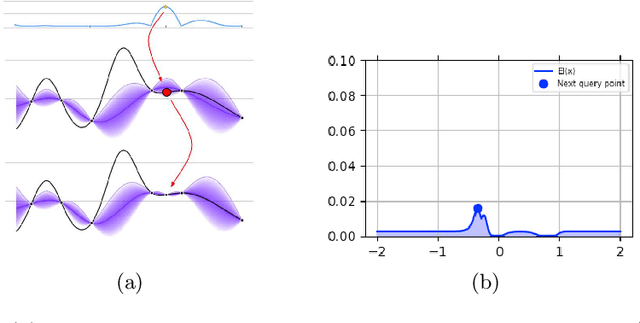
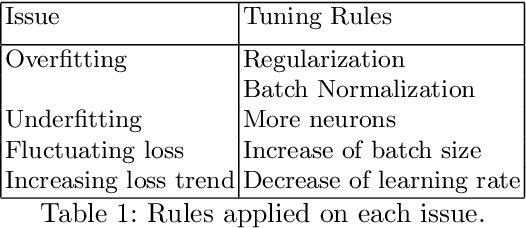
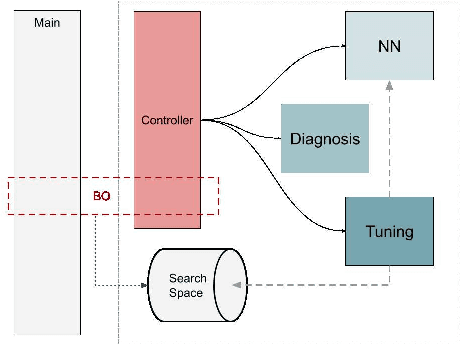
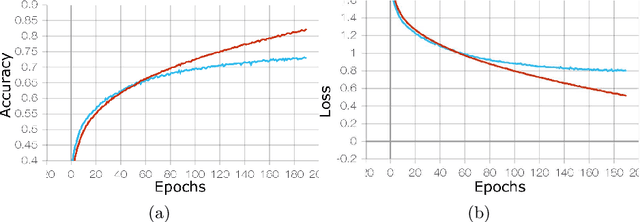
Deep learning techniques play an increasingly important role in industrial and research environments due to their outstanding results. However, the large number of hyper-parameters to be set may lead to errors if they are set manually. The state-of-the-art hyper-parameters tuning methods are grid search, random search, and Bayesian Optimization. The first two methods are expensive because they try, respectively, all possible combinations and random combinations of hyper-parameters. Bayesian Optimization, instead, builds a surrogate model of the objective function, quantifies the uncertainty in the surrogate using Gaussian Process Regression and uses an acquisition function to decide where to sample the new set of hyper-parameters. This work faces the field of Hyper-Parameters Optimization (HPO). The aim is to improve Bayesian Optimization applied to Deep Neural Networks. For this goal, we build a new algorithm for evaluating and analyzing the results of the network on the training and validation sets and use a set of tuning rules to add new hyper-parameters and/or to reduce the hyper-parameter search space to select a better combination.