 Add to Chrome
 Add to Firefox
 Add to Edge
VADAOrchestra: Neurosymbolic Orchestration of Adaptive Reasoning Workflows
Jun 24, 2026
Decision-making in real-world settings rarely follows a fixed script. Instead, it unfolds as a dynamic reasoning process in which the appropriate course of action evolves as new context and data become available. Traditional Business Process Management systems provide rigor, determinism, and auditability, yet they generally struggle to adapt their execution at runtime. Conversely, agentic systems based on Large Language Models (LLMs) bring flexibility to decision-making, but they are inherently opaque, often unreliable, and suffer from significant scalability constraints when operating over large datasets. To combine these complementary paradigms, we introduce VADAOrchestra, a neurosymbolic framework that models complex workflows as evolving reasoning processes. The framework adopts a hybrid approach: given a user query and a collection of data sources, an LLM-based orchestrator incrementally plans and adapts the workflow. This is encoded as a logic program in a fragment of Datalog+/- where predicates correspond to tool invocations and rules represent both predefined domain dependencies and logic constructs synthesized on demand to manipulate intermediate results. All logical inference tasks are then executed by a state-of-the-art Datalog+/- symbolic engine. This approach provides a verifiable reasoning trace, supporting the auditability and reproducibility of the entire process. Furthermore, by decoupling high-level orchestration from symbolic inference, it addresses scalability concerns, enabling complex reasoning over large datasets through targeted data querying. We evaluate VADAOrchestra on real-world financial use cases, demonstrating faithfulness, scalability, and explainability compared to standard agentic architectures.

Privacy-Preserving Synthetically Augmented Knowledge Graphs with Semantic Utility
Oct 16, 2024
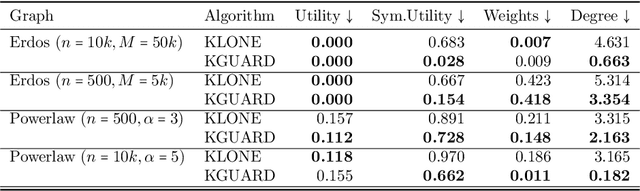
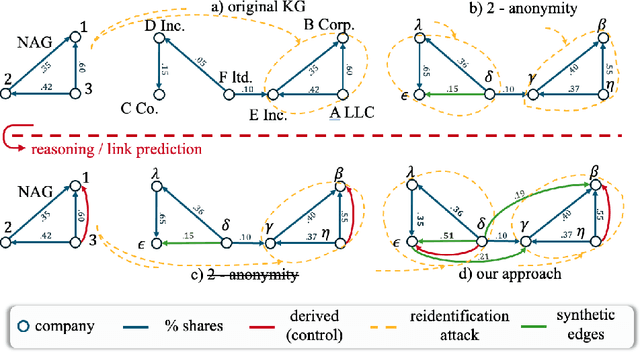
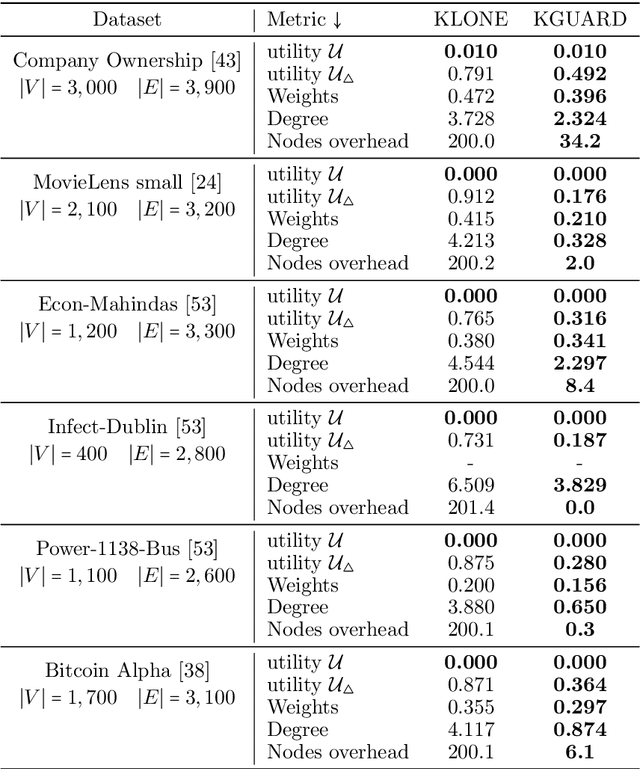
Knowledge Graphs (KGs) have recently gained relevant attention in many application domains, from healthcare to biotechnology, from logistics to finance. Financial organisations, central banks, economic research entities, and national supervision authorities apply ontological reasoning on KGs to address crucial business tasks, such as economic policymaking, banking supervision, anti-money laundering, and economic research. Reasoning allows for the generation of derived knowledge capturing complex business semantics and the set up of effective business processes. A major obstacle in KGs sharing is represented by privacy considerations since the identity of the data subjects and their sensitive or company-confidential information may be improperly exposed. In this paper, we propose a novel framework to enable KGs sharing while ensuring that information that should remain private is not directly released nor indirectly exposed via derived knowledge, while maintaining the embedded knowledge of the KGs to support business downstream tasks. Our approach produces a privacy-preserving synthetic KG as an augmentation of the input one via the introduction of structural anonymisation. We introduce a novel privacy measure for KGs, which considers derived knowledge and a new utility metric that captures the business semantics we want to preserve, and propose two novel anonymization algorithms. Our extensive experimental evaluation, with both synthetic graphs and real-world datasets, confirms the effectiveness of our approach achieving up to a 70% improvement in the privacy of entities compared to existing methods not specifically designed for KGs.