 Add to Chrome
 Add to Firefox
 Add to Edge
"Trust Junk" Leads to Unjustified Support for Highly Discriminatory Predictive Models
Jul 14, 2026
The persuasive power of data visualizations can go awry: for instance, in an explainable AI (XAI) context, visualizations can produce over-trust of predictive models. In this paper, we use a crowdsourced study to show that providing accurate (but superfluous or irrelevant) data in a model explanation can, in fact, result in unjustified trust and other positive beliefs about a model, even when the model is patently discriminatory and unfair. Our results suggest that XAI designers and developers need to consider the implicit or explicit rhetorics of their work, and beware of the potential of visualizations to imbue models with unearned trust.

User Ex Machina : Simulation as a Design Probe in Human-in-the-Loop Text Analytics
Jan 06, 2021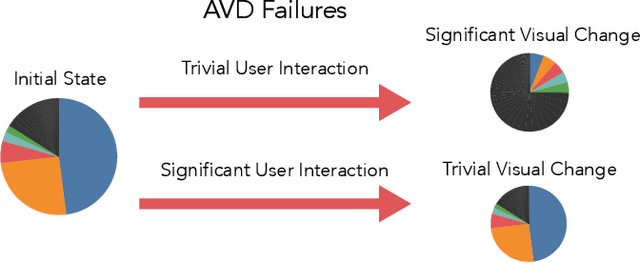
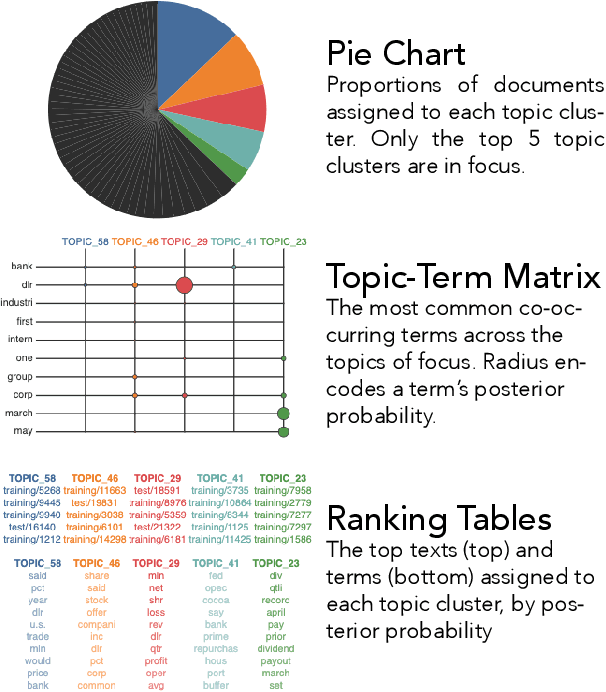
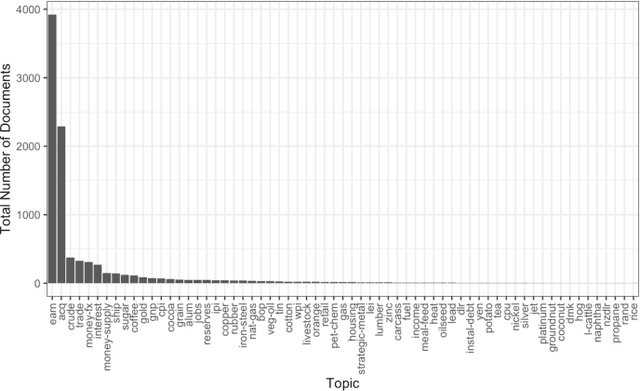
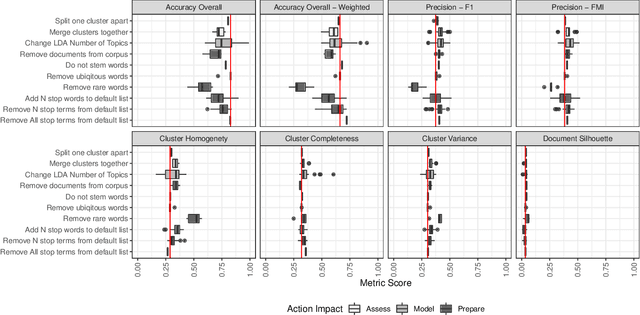
Topic models are widely used analysis techniques for clustering documents and surfacing thematic elements of text corpora. These models remain challenging to optimize and often require a "human-in-the-loop" approach where domain experts use their knowledge to steer and adjust. However, the fragility, incompleteness, and opacity of these models means even minor changes could induce large and potentially undesirable changes in resulting model. In this paper we conduct a simulation-based analysis of human-centered interactions with topic models, with the objective of measuring the sensitivity of topic models to common classes of user actions. We find that user interactions have impacts that differ in magnitude but often negatively affect the quality of the resulting modelling in a way that can be difficult for the user to evaluate. We suggest the incorporation of sensitivity and "multiverse" analyses to topic model interfaces to surface and overcome these deficiencies.