 Add to Chrome
 Add to Firefox
 Add to Edge
Improving segmentation of retinal arteries and veins using cardiac signal in doppler holograms
Nov 18, 2025
Doppler holography is an emerging retinal imaging technique that captures the dynamic behavior of blood flow with high temporal resolution, enabling quantitative assessment of retinal hemodynamics. This requires accurate segmentation of retinal arteries and veins, but traditional segmentation methods focus solely on spatial information and overlook the temporal richness of holographic data. In this work, we propose a simple yet effective approach for artery-vein segmentation in temporal Doppler holograms using standard segmentation architectures. By incorporating features derived from a dedicated pulse analysis pipeline, our method allows conventional U-Nets to exploit temporal dynamics and achieve performance comparable to more complex attention- or iteration-based models. These findings demonstrate that time-resolved preprocessing can unlock the full potential of deep learning for Doppler holography, opening new perspectives for quantitative exploration of retinal hemodynamics. The dataset is publicly available at https://huggingface.co/datasets/DigitalHolography/

Choroidal vasculature imaging with laser Doppler holography
Jun 01, 2021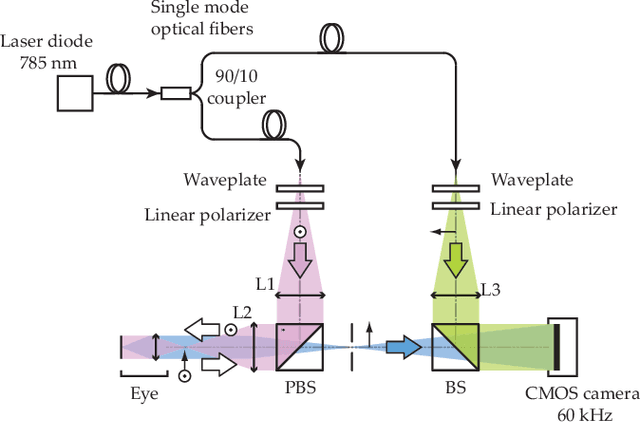
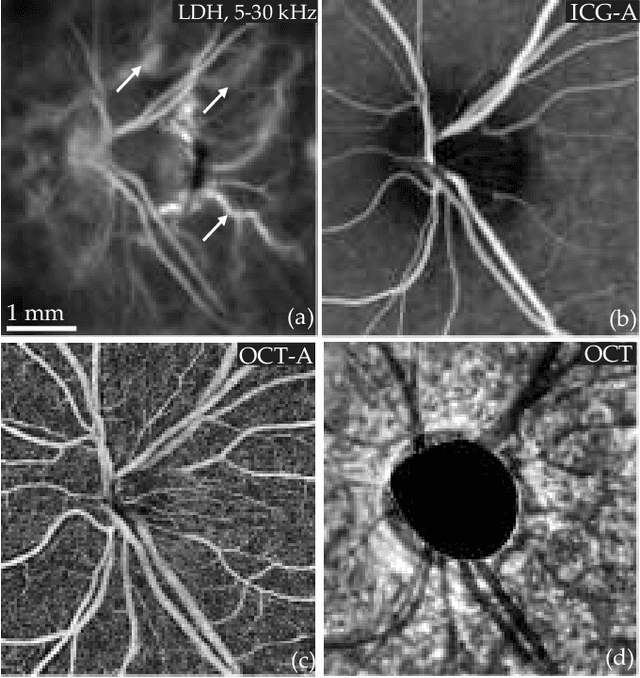
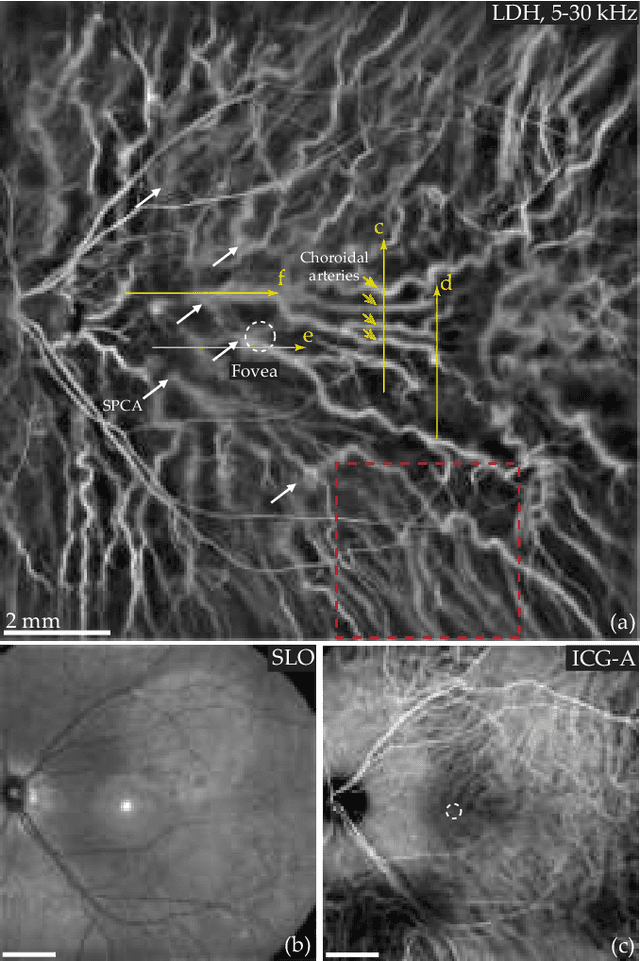
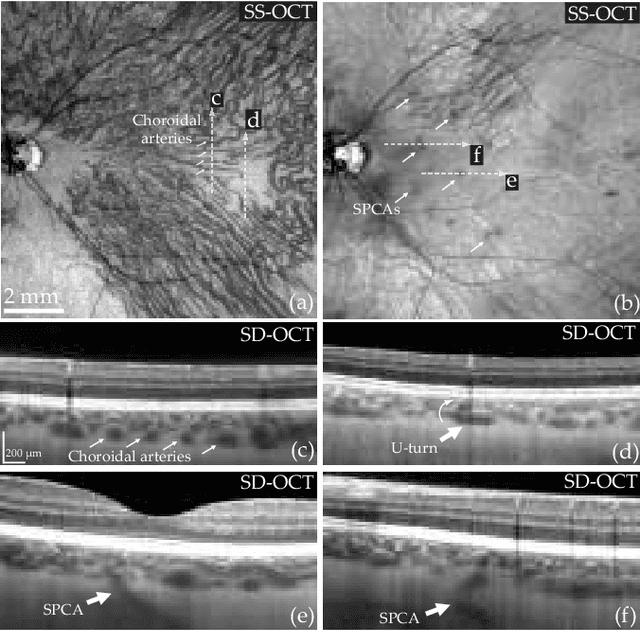
The choroid is a highly vascularized tissues supplying the retinal pigment epithelium and photoreceptors. Its implication in retinal diseases is gaining increasing interest. However, investigating the anatomy and flow of the choroid remains challenging. Here we show that laser Doppler holography provides high contrast imaging of choroidal vessels in humans, with a spatial resolution comparable to state of the art indocyanine green angiography and optical coherence tomography. Additionally, laser Doppler holography contributes to sort out choroidal arteries and veins by using a power Doppler spectral analysis. We thus demonstrate the potential of laser Doppler holography to improve our understanding of the anatomy and flow of the choroidal vascular network.
Compressed Sensing with off-axis frequency-shifting holography
Apr 29, 2010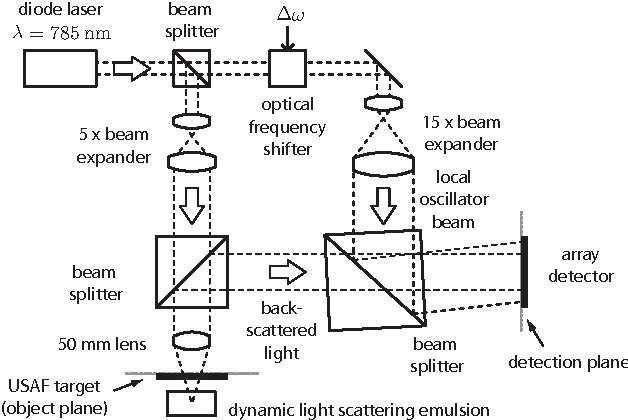
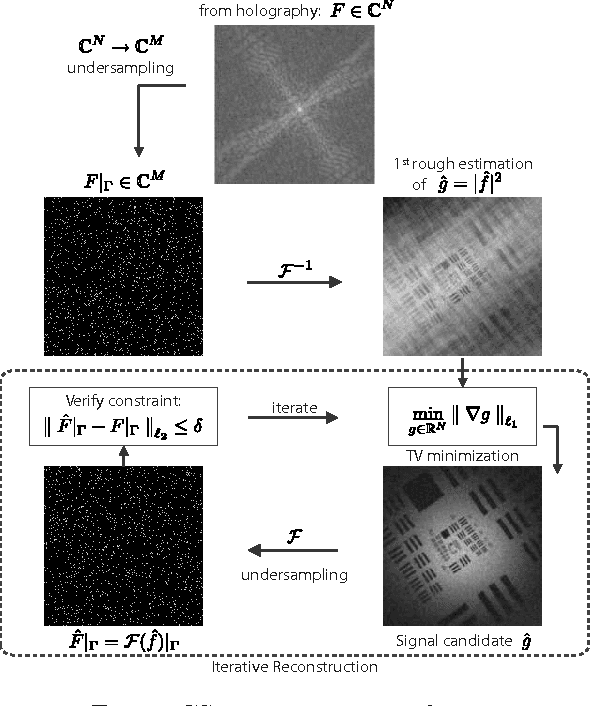
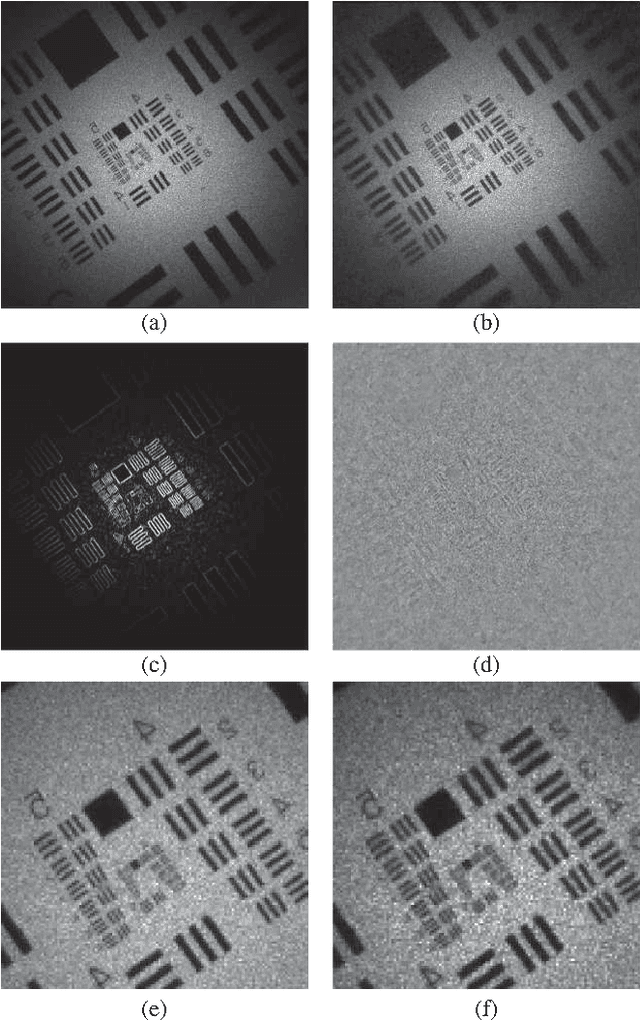
This work reveals an experimental microscopy acquisition scheme successfully combining Compressed Sensing (CS) and digital holography in off-axis and frequency-shifting conditions. CS is a recent data acquisition theory involving signal reconstruction from randomly undersampled measurements, exploiting the fact that most images present some compact structure and redundancy. We propose a genuine CS-based imaging scheme for sparse gradient images, acquiring a diffraction map of the optical field with holographic microscopy and recovering the signal from as little as 7% of random measurements. We report experimental results demonstrating how CS can lead to an elegant and effective way to reconstruct images, opening the door for new microscopy applications.