 Add to Chrome
 Add to Firefox
 Add to Edge
Learning Agile Intruder Interception using Differentiable Quadrotor Dynamics
Jul 02, 2026
This paper presents a methodology for learning a control policy to intercept an intruder using the 3D direction unit vector to the intruder and the interceptor state. Prior deep reinforcement learning approaches assume either relative position or distance to the intruder is available, but this information is not readily accessible in real-world applications that employ passive, monocular camera sensors. Instead, we propose a solution that leverages an analytical policy gradient method using differentiable quadrotor dynamics to learn agile interception at speeds up to 10 m/s. The proposed approach outperforms baseline methods that utilize simplified point mass dynamics by an average of 30%.

Auto Detecting Cognitive Events Using Machine Learning on Pupillary Data
Oct 18, 2024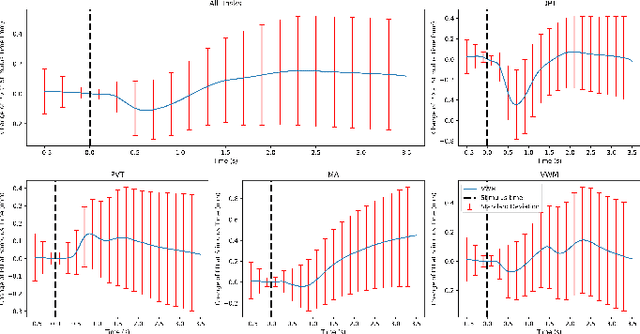

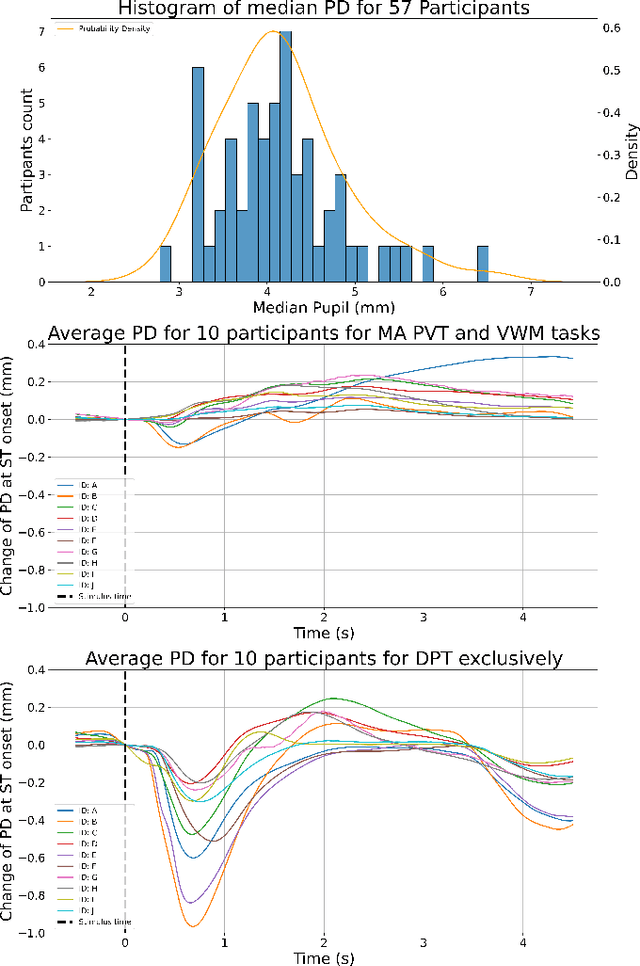
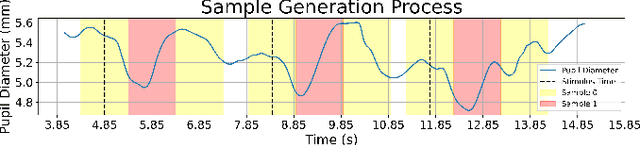
Assessing cognitive workload is crucial for human performance as it affects information processing, decision making, and task execution. Pupil size is a valuable indicator of cognitive workload, reflecting changes in attention and arousal governed by the autonomic nervous system. Cognitive events are closely linked to cognitive workload as they activate mental processes and trigger cognitive responses. This study explores the potential of using machine learning to automatically detect cognitive events experienced using individuals. We framed the problem as a binary classification task, focusing on detecting stimulus onset across four cognitive tasks using CNN models and 1-second pupillary data. The results, measured by Matthew's correlation coefficient, ranged from 0.47 to 0.80, depending on the cognitive task. This paper discusses the trade-offs between generalization and specialization, model behavior when encountering unseen stimulus onset times, structural variances among cognitive tasks, factors influencing model predictions, and real-time simulation. These findings highlight the potential of machine learning techniques in detecting cognitive events based on pupil and eye movement responses, contributing to advancements in personalized learning and optimizing neurocognitive workload management.