 Add to Chrome
 Add to Firefox
 Add to Edge
Enabling clinical use of foundation models in histopathology
Feb 25, 2026
Foundation models in histopathology are expected to facilitate the development of high-performing and generalisable deep learning systems. However, current models capture not only biologically relevant features, but also pre-analytic and scanner-specific variation that bias the predictions of task-specific models trained from the foundation model features. Here we show that introducing novel robustness losses during training of downstream task-specific models reduces sensitivity to technical variability. A purpose-designed comprehensive experimentation setup with 27,042 WSIs from 6155 patients is used to train thousands of models from the features of eight popular foundation models for computational pathology. In addition to a substantial improvement in robustness, we observe that prediction accuracy improves by focusing on biologically relevant features. Our approach successfully mitigates robustness issues of foundation models for computational pathology without retraining the foundation models themselves, enabling development of robust computational pathology models applicable to real-world data in routine clinical practice.

Assessment of algorithms for mitosis detection in breast cancer histopathology images
Nov 21, 2014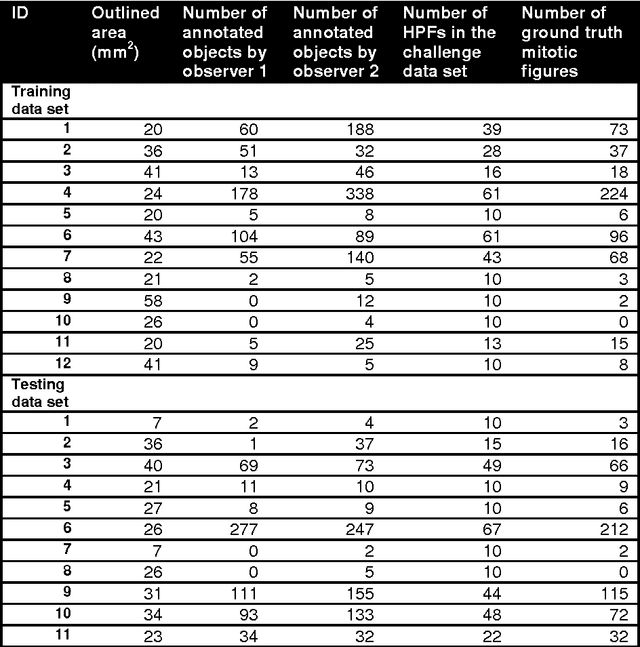
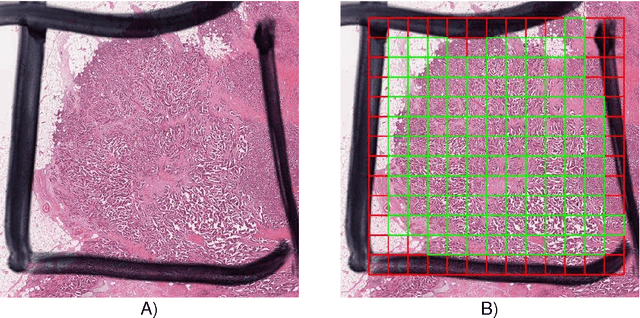
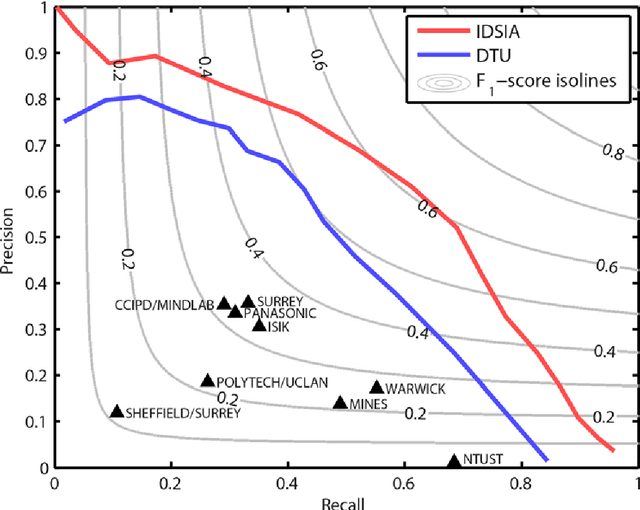
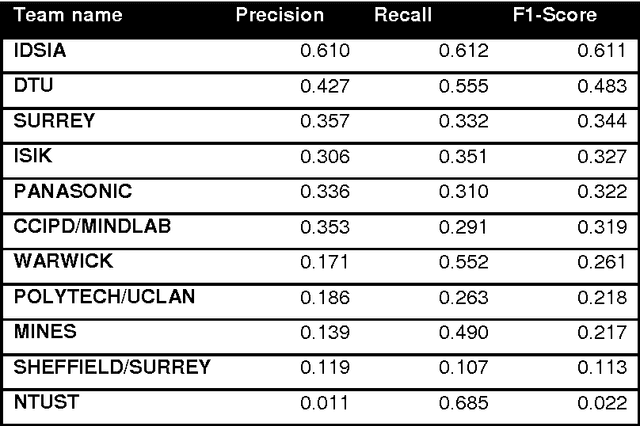
The proliferative activity of breast tumors, which is routinely estimated by counting of mitotic figures in hematoxylin and eosin stained histology sections, is considered to be one of the most important prognostic markers. However, mitosis counting is laborious, subjective and may suffer from low inter-observer agreement. With the wider acceptance of whole slide images in pathology labs, automatic image analysis has been proposed as a potential solution for these issues. In this paper, the results from the Assessment of Mitosis Detection Algorithms 2013 (AMIDA13) challenge are described. The challenge was based on a data set consisting of 12 training and 11 testing subjects, with more than one thousand annotated mitotic figures by multiple observers. Short descriptions and results from the evaluation of eleven methods are presented. The top performing method has an error rate that is comparable to the inter-observer agreement among pathologists.