 Add to Chrome
 Add to Firefox
 Add to Edge
Co-Optimization of Analog Kolmogorov-Arnold Networks for Low-Power Function Approximation in Flexible Electronics
Jun 26, 2026
Wearable devices and Internet of Things (IoT) sensors require on-sensor processing of biosignals and environmental data, including computationally demanding operations such as nonlinear activation functions for neural network inference, sensor calibration curves to map raw readings to physical units, and signal preprocessing functions like logarithmic compression and power operations for feature extraction. These functions exhibit significant complexity, often involving transcendental operations and multivariate dependencies that are costly to implement digitally. Analog function approximation provides a power-efficient alternative by performing these computations in the analog domain, thereby reducing the energy overhead associated with analog-to-digital conversion and subsequent digital processing. Flexible Electronics (FE) present a particularly attractive platform for wearable applications due to mechanical flexibility and low-cost fabrication, but impose strict constraints on circuit density and power consumption, making efficient analog implementations critical but challenging. This work introduces Analog Kolmogorov-Arnold Networks (AKANs), developed via hardware-software co-optimization, to approximate these complex multivariate functions accurately under hardware imperfections. Our method incorporates circuit-level error modeling during training and applies pruning at both software and hardware levels to reduce area and power. Validation across multiple benchmarks demonstrates that our proposed pruning methodology not only reduces hardware cost but can also improve approximation accuracy by regularizing spline parameters. Results show up to 55% area and 50% power savings, with average reductions of nearly 30% across datasets, highlighting AKANs as a robust and generalizable framework for low-power analog function approximation in FE.

Few-Shot Testing: Estimating Uncertainty of Memristive Deep Neural Networks Using One Bayesian Test Vector
May 29, 2024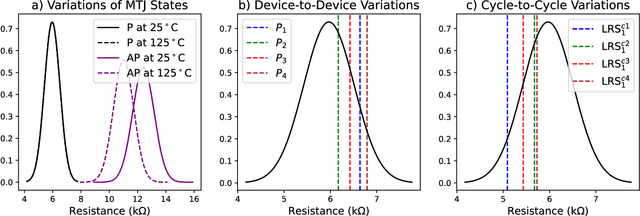
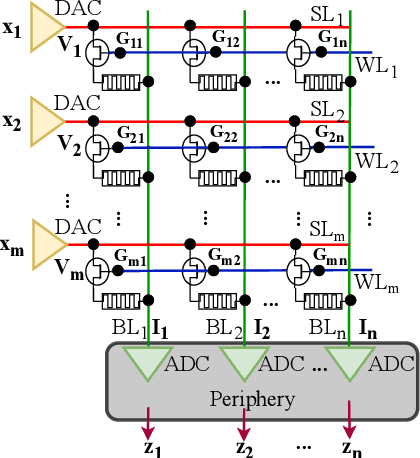
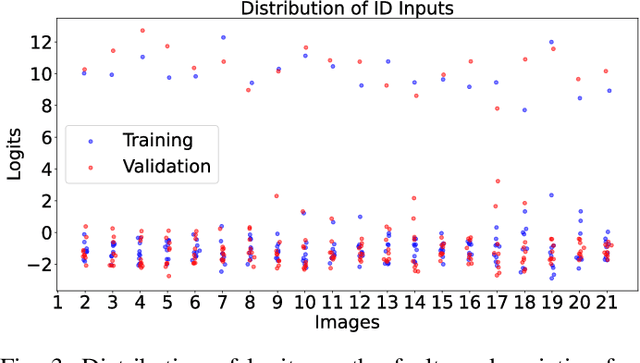
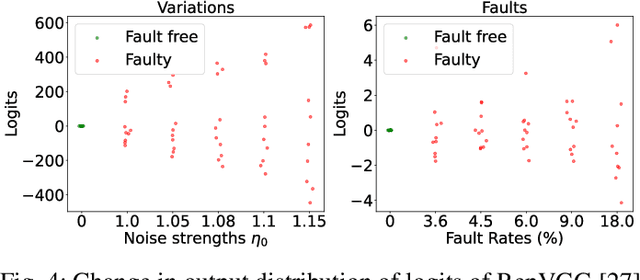
The performance of deep learning algorithms such as neural networks (NNs) has increased tremendously recently, and they can achieve state-of-the-art performance in many domains. However, due to memory and computation resource constraints, implementing NNs on edge devices is a challenging task. Therefore, hardware accelerators such as computation-in-memory (CIM) with memristive devices have been developed to accelerate the most common operations, i.e., matrix-vector multiplication. However, due to inherent device properties, external environmental factors such as temperature, and an immature fabrication process, memristors suffer from various non-idealities, including defects and variations occurring during manufacturing and runtime. Consequently, there is a lack of complete confidence in the predictions made by the model. To improve confidence in NN predictions made by hardware accelerators in the presence of device non-idealities, in this paper, we propose a Bayesian test vector generation framework that can estimate the model uncertainty of NNs implemented on memristor-based CIM hardware. Compared to the conventional point estimate test vector generation method, our method is more generalizable across different model dimensions and requires storing only one test Bayesian vector in the hardware. Our method is evaluated on different model dimensions, tasks, fault rates, and variation noise to show that it can consistently achieve $100\%$ coverage with only $0.024$ MB of memory overhead.
Dependability Analysis of Data Storage Systems in Presence of Soft Errors
Dec 23, 2021


In recent years, high availability and reliability of Data Storage Systems (DSS) have been significantly threatened by soft errors occurring in storage controllers. Due to their specific functionality and hardware-software stack, error propagation and manifestation in DSS is quite different from general-purpose computing architectures. To our knowledge, no previous study has examined the system-level effects of soft errors on the availability and reliability of data storage systems. In this paper, we first analyze the effects of soft errors occurring in the server processors of storage controllers on the entire storage system dependability. To this end, we implemented the major functions of a typical data storage system controller, running on a full stack of storage system operating system, and developed a framework to perform fault injection experiments using a full system simulator. We then propose a new metric, Storage System Vulnerability Factor (SSVF), to accurately capture the impact of soft errors in storage systems. By conducting extensive experiments, it is revealed that depending on the controller configuration, up to 40% of cache memory contains end-user data where any unrecoverable soft errors in this part will result in Data Loss (DL) in an irreversible manner. However, soft errors in the rest of cache memory filled by Operating System (OS) and storage applications will result in Data Unavailability (DU) at the storage system level. Our analysis also shows that Detectable Unrecoverable Errors (DUEs) on the cache data field are the major cause of DU in storage systems, while Silent Data Corruptions (SDCs) in the cache tag and data field are mainly the cause of DL in storage systems.