 Add to Chrome
 Add to Firefox
 Add to Edge
A Lightweight and Explainable DenseNet-121 Framework for Grape Leaf Disease Classification
Feb 12, 2026
Grapes are among the most economically and culturally significant fruits on a global scale, and table grapes and wine are produced in significant quantities in Europe and Asia. The production and quality of grapes are significantly impacted by grape diseases such as Bacterial Rot, Downy Mildew, and Powdery Mildew. Consequently, the sustainable management of a vineyard necessitates the early and precise identification of these diseases. Current automated methods, particularly those that are based on the YOLO framework, are often computationally costly and lack interpretability that makes them unsuitable for real-world scenarios. This study proposes grape leaf disease classification using Optimized DenseNet 121. Domain-specific preprocessing and extensive connectivity reveal disease-relevant characteristics, including veins, edges, and lesions. An extensive comparison with baseline CNN models, including ResNet18, VGG16, AlexNet, and SqueezeNet, demonstrates that the proposed model exhibits superior performance. It achieves an accuracy of 99.27%, an F1 score of 99.28%, a specificity of 99.71%, and a Kappa of 98.86%, with an inference time of 9 seconds. The cross-validation findings show a mean accuracy of 99.12%, indicating strength and generalizability across all classes. We also employ Grad-CAM to highlight disease-related regions to guarantee the model is highlighting physiologically relevant aspects and increase transparency and confidence. Model optimization reduces processing requirements for real-time deployment, while transfer learning ensures consistency on smaller and unbalanced samples. An effective architecture, domain-specific preprocessing, and interpretable outputs make the proposed framework scalable, precise, and computationally inexpensive for detecting grape leaf diseases.

Enhancing IoT Cyber Attack Detection in the Presence of Highly Imbalanced Data
May 15, 2025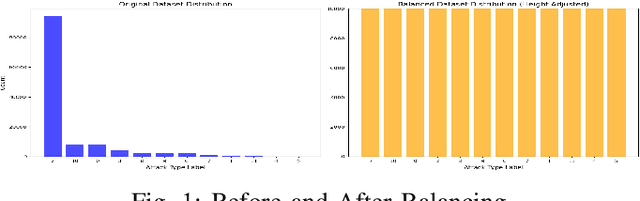
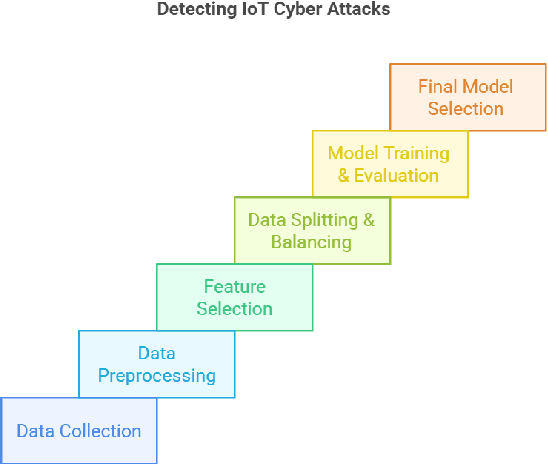
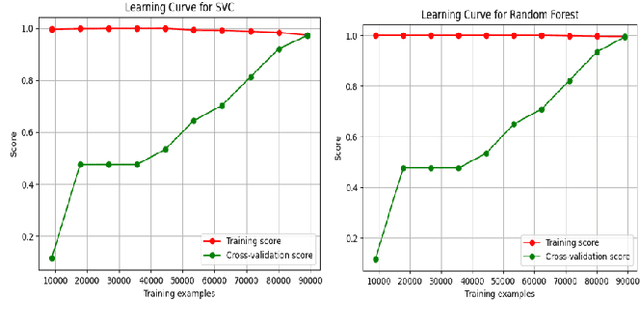
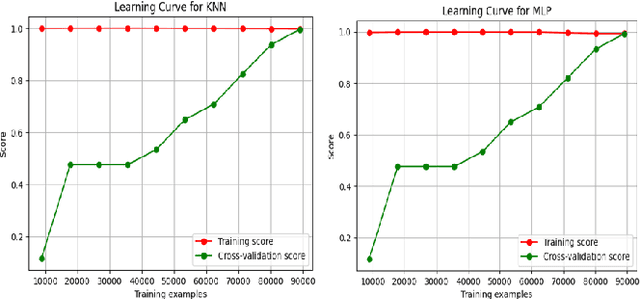
Due to the rapid growth in the number of Internet of Things (IoT) networks, the cyber risk has increased exponentially, and therefore, we have to develop effective IDS that can work well with highly imbalanced datasets. A high rate of missed threats can be the result, as traditional machine learning models tend to struggle in identifying attacks when normal data volume is much higher than the volume of attacks. For example, the dataset used in this study reveals a strong class imbalance with 94,659 instances of the majority class and only 28 instances of the minority class, making it quite challenging to determine rare attacks accurately. The challenges presented in this research are addressed by hybrid sampling techniques designed to improve data imbalance detection accuracy in IoT domains. After applying these techniques, we evaluate the performance of several machine learning models such as Random Forest, Soft Voting, Support Vector Classifier (SVC), K-Nearest Neighbors (KNN), Multi-Layer Perceptron (MLP), and Logistic Regression with respect to the classification of cyber-attacks. The obtained results indicate that the Random Forest model achieved the best performance with a Kappa score of 0.9903, test accuracy of 0.9961, and AUC of 0.9994. Strong performance is also shown by the Soft Voting model, with an accuracy of 0.9952 and AUC of 0.9997, indicating the benefits of combining model predictions. Overall, this work demonstrates the value of hybrid sampling combined with robust model and feature selection for significantly improving IoT security against cyber-attacks, especially in highly imbalanced data environments.