 Add to Chrome
 Add to Firefox
 Add to Edge
Motor Imagery Classification Using Feature Fusion of Spatially Weighted Electroencephalography
Nov 14, 2025
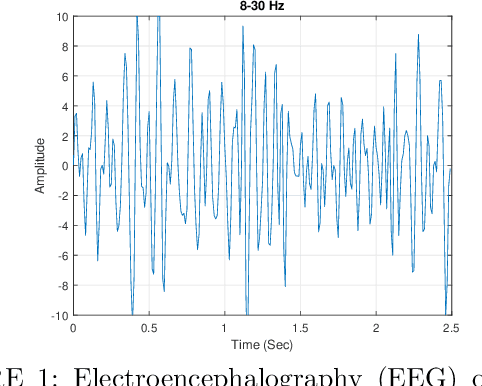
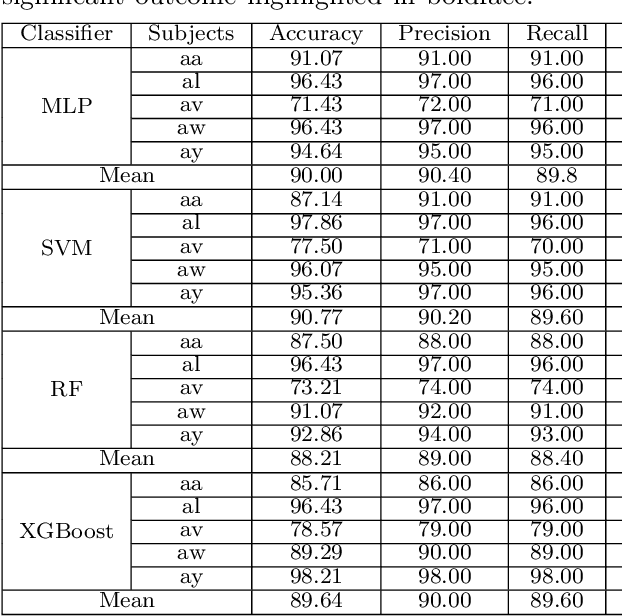
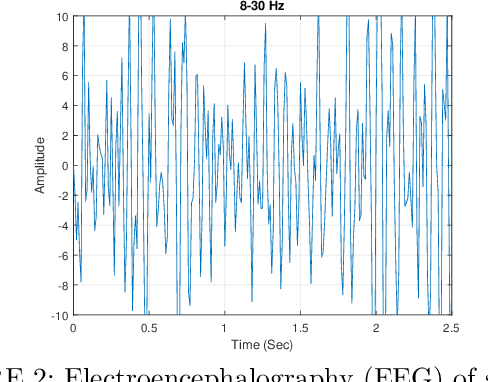
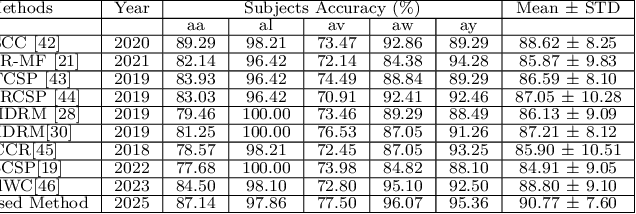
A Brain Computer Interface (BCI) connects the human brain to the outside world, providing a direct communication channel. Electroencephalography (EEG) signals are commonly used in BCIs to reflect cognitive patterns related to motor function activities. However, due to the multichannel nature of EEG signals, explicit information processing is crucial to lessen computational complexity in BCI systems. This study proposes an innovative method based on brain region-specific channel selection and multi-domain feature fusion to improve classification accuracy. The novelty of the proposed approach lies in region-based channel selection, where EEG channels are grouped according to their functional relevance to distinct brain regions. By selecting channels based on specific regions involved in motor imagery (MI) tasks, this technique eliminates irrelevant channels, reducing data dimensionality and improving computational efficiency. This also ensures that the extracted features are more reflective of the brain actual activity related to motor tasks. Three distinct feature extraction methods Common Spatial Pattern (CSP), Fuzzy C-means clustering, and Tangent Space Mapping (TSM), are applied to each group of channels based on their brain region. Each method targets different characteristics of the EEG signal: CSP focuses on spatial patterns, Fuzzy C means identifies clusters within the data, and TSM captures non-linear patterns in the signal. The combined feature vector is used to classify motor imagery tasks (left hand, right hand, and right foot) using Support Vector Machine (SVM). The proposed method was validated on publicly available benchmark EEG datasets (IVA and I) from the BCI competition III and IV. The results show that the approach outperforms existing methods, achieving classification accuracies of 90.77% and 84.50% for datasets IVA and I, respectively.

Emotion Recognition from Microblog Managing Emoticon with Text and Classifying using 1D CNN
Jan 08, 2023Microblog, an online-based broadcast medium, is a widely used forum for people to share their thoughts and opinions. Recently, Emotion Recognition (ER) from microblogs is an inspiring research topic in diverse areas. In the machine learning domain, automatic emotion recognition from microblogs is a challenging task, especially, for better outcomes considering diverse content. Emoticon becomes very common in the text of microblogs as it reinforces the meaning of content. This study proposes an emotion recognition scheme considering both the texts and emoticons from microblog data. Emoticons are considered unique expressions of the users' emotions and can be changed by the proper emotional words. The succession of emoticons appearing in the microblog data is preserved and a 1D Convolutional Neural Network (CNN) is employed for emotion classification. The experimental result shows that the proposed emotion recognition scheme outperforms the other existing methods while tested on Twitter data.
* 9 pages, 3 figures, 5 tables, journal paper